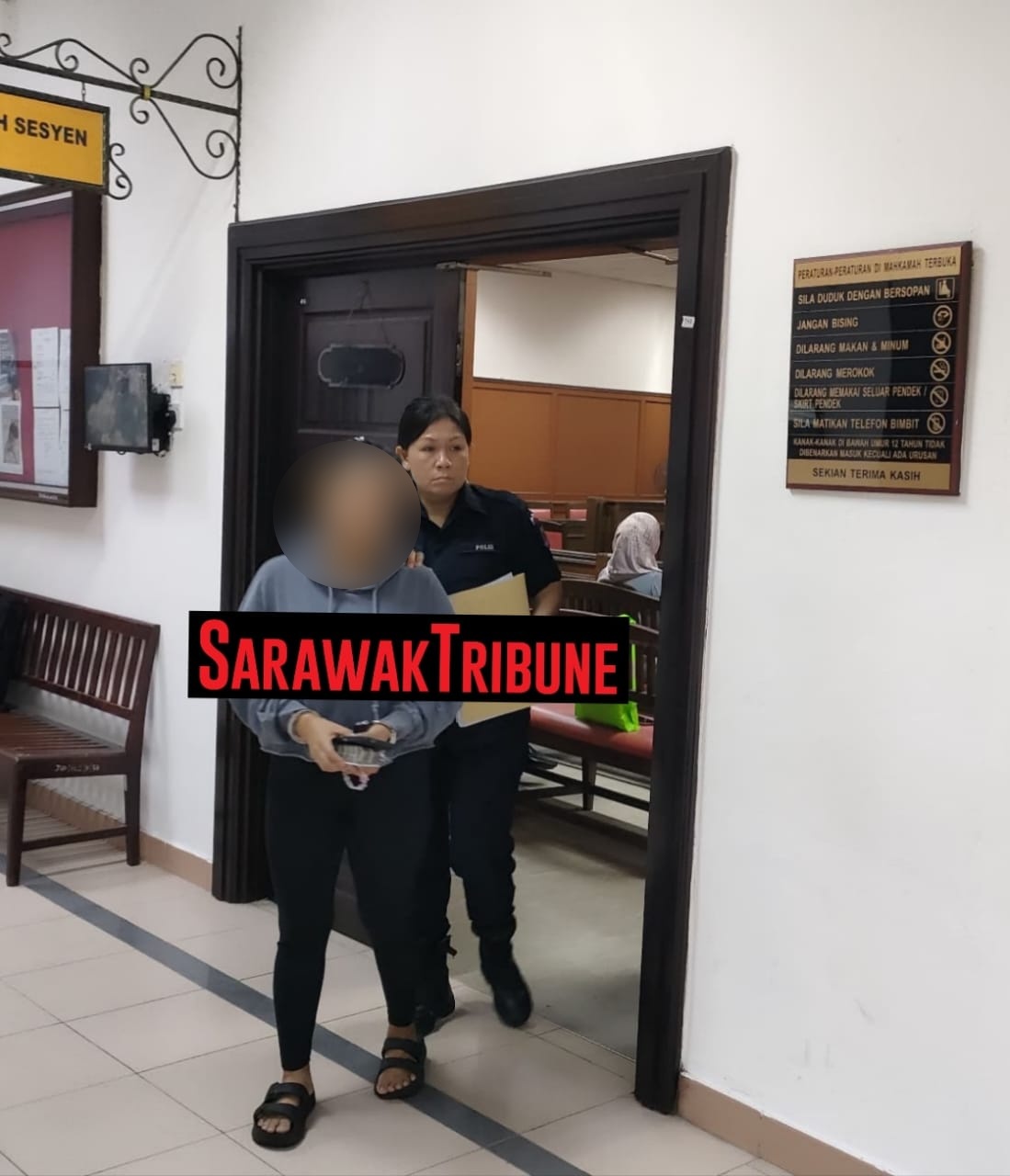
KUCHING: An Indonesian woman was sentenced by two separate courts here for entering Malaysia without valid travel documents and dealing in a gaming machine used for online gambling.
In the Sessions Court, 29-year-old Maysura was sentenced to two months jail after pleading guilty before Judge Iris Awen Jon to a charge under Section 6(1)(c) of the Immigration Act 1959/63.
The offence is punishable under Section 6(3) of the same Act, which carries a fine of up to RM10,000, imprisonment for up to five years, or both, and is also liable to whipping.
The court ordered the sentence to take effect from the date of her arrest on Jun 27.
She was also ordered to be referred to the Immigration Department upon completing her prison sentence.
The charge stated that she was found without a valid pass lawfully issued for her entry into Malaysia at a convenience store near Bandar Baru Semariang, at about 1.55 pm on Jun 27.
According to the facts of the case, a police team from the Kuching Criminal Investigation Department, arrested Maysura during an operation at the premises.
Investigations revealed that she failed to produce any valid travel documents.
A subsequent check with the Immigration Department also found no recent immigration records or lawful entry into Malaysia.
In a separate proceeding before Magistrate Ling Hui Chuan, Maysura again pleaded guilty to dealing with a gaming machine under Section 4B(a) of the Common Gaming Houses Act 1953.
The magistrate imposed a fine of RM10,000, in default two months’ jail on the accused.
The charge stemmed from the same police operation at the convenience store, where officers found her conducting online gambling activities using an Oppo mobile phone, which was certified by a gaming expert as a gaming machine under the Act.
Police also seized an Oppo mobile phone, RM30 in cash, a mobile printer and a piece of paper containing identification and password details believed to be linked to the gambling operation.
Deputy Public Prosecutor Chuah Kai Sheng and Muhammad Afiq Safly Nor Kazly prosecuted, while the accused was unrepresented in both cases.