“If there is something to pardon in everything, there is also something to condemn.” – Friedrich Nietzsche, German philosopher
MANY of us will surely be asking “why on earth should Jho Low be pardoned?”
It is a question that deserves only one answer – he should not.
To millions of Malaysians, Jho Low is not simply another businessman caught in legal trouble. He is the alleged mastermind behind the infamous 1MDB scandal, a financial catastrophe that embarrassed Malaysia before the entire world and became synonymous with greed, corruption and the abuse of public trust.
If there is one individual who should be made to answer before the courts, it is Jho Low. Instead, he remains a fugitive.
He has not surrendered himself. He has not appeared in court to answer the charges against him. He has not spent even a single day in prison.
Yet there was speculation that he could become one of hundreds of people considered for a presidential pardon by US President Donald Trump in conjunction with America’s 250th Independence Day celebrations on July 4.
Fortunately, the celebration came and went without Jho Low receiving such extraordinary clemency. That is exactly how it should have ended.
The idea that one of the world’s most wanted financial fugitives could receive a presidential pardon before facing justice would have been nothing short of outrageous.
According to United States prosecutors, approximately USD4.5 billion was siphoned from 1Malaysia Development Berhad (1MDB), making it one of the largest financial frauds ever uncovered.
Money intended to promote Malaysia’s development allegedly financed luxury yachts, private jets, multimillion-dollar mansions, priceless artwork, expensive jewellery, Hollywood films and extravagant lifestyles enjoyed by a privileged few.
While the accused allegedly lived like royalty, ordinary Malaysians paid the price.
The financial scandal badly damaged Malaysia’s international reputation. Investor confidence suffered. Public institutions lost credibility. Malaysians watched in disbelief as their country’s name became global shorthand for grand corruption.
The damage went far beyond money. It eroded public trust in government and shook confidence in the administration of justice itself.
That is why accountability matters. Justice cannot begin until the accused appears before the court.
A pardon is traditionally associated with mercy shown after legal accountability has taken place. It is generally extended to those who have accepted responsibility, demonstrated remorse or served at least part of their sentence.
Jho Low satisfies none of these conditions. Instead, he remains a fugitive while authorities from several countries continue searching for him. So why should anyone even contemplate granting him mercy?
Prime Minister Datuk Seri Anwar Ibrahim deserves credit for stating Malaysia’s position clearly and without ambiguity.
Even if the United States were to pardon Jho Low for offences falling within its jurisdiction, Malaysia’s position would remain unchanged. Our authorities would continue pursuing him under Malaysian law.
That is exactly the right response.
Malaysia’s criminal justice system cannot be subordinated to decisions made elsewhere. Crimes allegedly committed against Malaysians must ultimately be answered before Malaysian courts.
Anything less would make a mockery of the rule of law.
The issue extends beyond one man. Should someone accused of orchestrating one of history’s biggest financial scandals be allowed to escape justice because of wealth, influence or political connections?
Should fugitives learn that if they evade capture long enough, political intervention may eventually rescue them? Should ordinary citizens continue believing that the law applies equally to everyone? These questions answer themselves.
There is another important consideration. Investigators across Malaysia, the United States, Singapore, Switzerland and several other jurisdictions invested years tracing complicated financial transactions, freezing assets and recovering billions of dollars linked to the 1MDB affair. It became one of the largest and most complex international anti-money laundering investigations ever undertaken.
To pardon the alleged architect of that scheme before he even stands trial would undermine years of painstaking international cooperation against financial crime.
It would also send precisely the wrong message to future fraudsters.
Financial criminals already operate across borders, exploiting legal loopholes and moving stolen money through sophisticated international networks. Governments around the world have spent decades strengthening cooperation to ensure such criminals cannot escape accountability.
Granting clemency to a fugitive of Jho Low’s notoriety would weaken that global effort.
Mercy has its place in every justice system. But mercy without accountability is not justice. It is privilege.
Jho Low should first return to Malaysia. He should face every charge brought against him. He should receive a fair and transparent trial, with every opportunity to defend himself in accordance with the law. If acquitted, so be it. If convicted, he should serve whatever sentence the courts deem appropriate.
That is how justice works. Not by disappearing across international borders while allegedly enjoying wealth that investigators say was stolen from the public.
For years, Malaysians have heard stories about luxury yachts, champagne parties, Hollywood celebrities and unimaginable extravagance. Behind those headlines lies a far more painful reality: billions of dollars that should have benefited the Malaysian people allegedly ended up enriching a tiny circle of individuals.
Schools could have been built. Hospitals could have been upgraded. Infrastructure could have been improved. Instead, Malaysia inherited one of the greatest financial scandals in its history.
There is an old principle that has stood the test of time: no one should be above the law. That principle must apply equally to the poor and the powerful, to ordinary citizens and to billionaires, to political leaders and to those who once moved effortlessly among the global elite.
Jho Low has been running from justice for far too long. He deserves his day in court — not a presidential pardon.
The principle is simple, timeless and one that Malaysians understand instinctively: if you do the crime, you should do the time.
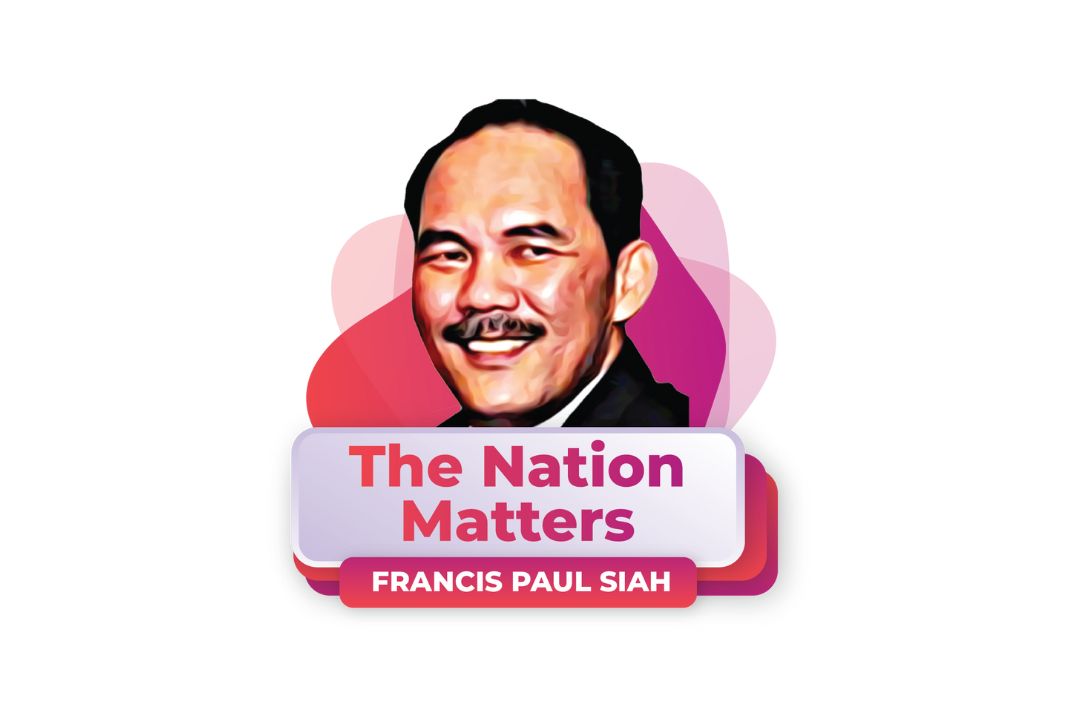
The views expressed here are those of the columnist and do not necessarily represent the views of Sarawak Tribune. He can be reached at sirsiah@gmail.com.