
IT was a typical Saturday morning in a quiet café at Jalan Song, Kuching, where regulars gathered over kopi and kaya toast to trade stories about the week.
But on that particular morning, the conversation at our table was anything but ordinary. The topic was the newly passed Cybercrimes Bill 2026, a sweeping piece of legislation that had stirred both relief and unease across Malaysia.
For some around the table, the Bill represented a long-overdue shield against the digital dangers of modern life.
“The old Computer Crimes Act was written before smartphones even existed,” my friend Alex remarked. “It couldn’t possibly protect us from today’s scams, AI deepfakes or identity theft.”
Others, however, worried aloud about whether the law’s broad powers might open the door to government overreach.
The government’s stance is clear: that the law contains strict checks and balances, stressing that AI-generated content will not be deemed illegal unless criminal intent is proven. Authorities argue that rapid preservation of digital evidence is essential since data can vanish in milliseconds.
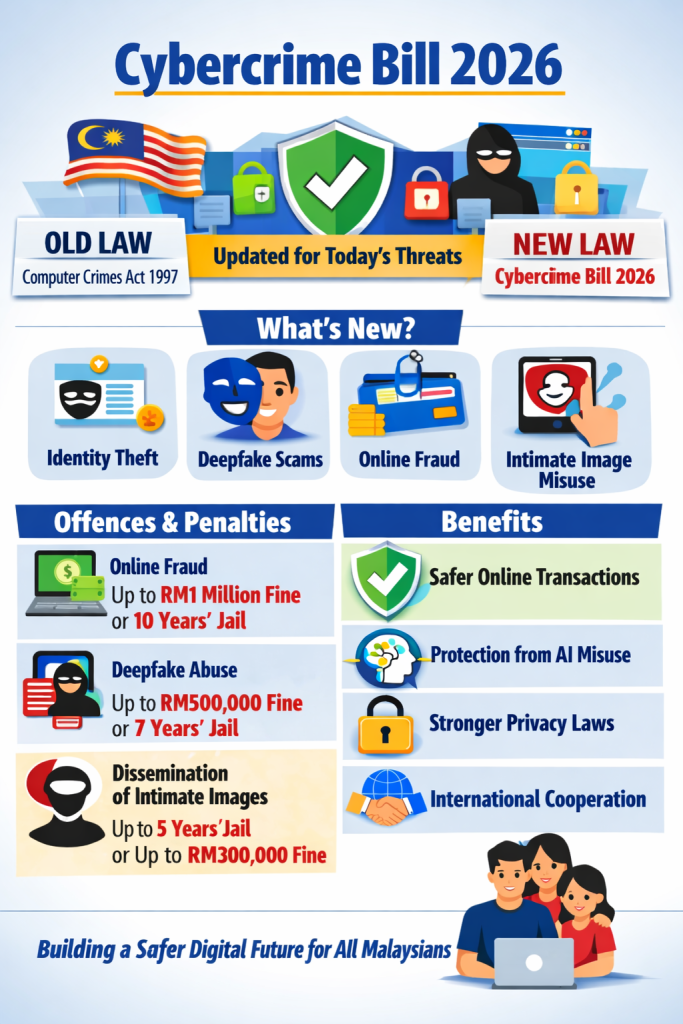
Three major contents of the Bill
The Cybercrimes Bill 2026 introduced three major provisions that directly benefit citizens. Clause 17 criminalises computer-related fraud, covering acts such as altering or deleting data to deceive individuals or institutions. With penalties of up to RM1 million in fines and ten years’ imprisonment, it reflects the seriousness of financial cybercrime.
For Malaysians, this means stronger protection against scams, phishing and identity theft, boosting confidence in online banking, e-commerce and digital transactions while supporting the nation’s move toward a cashless economy.
Clauses 23 and 24 tackle the malicious use of AI-generated content and intimate image abuse. Clause 23 targets deepfakes while Clause 24 criminalises revenge porn, including AI-generated material. Penalties range from RM300,000 to RM500,000 in fines and up to seven years in prison.
These measures safeguard dignity, privacy and mental well-being, ensuring victims of digital exploitation can seek justice and reinforcing the principle that digital rights are human rights.
Clause 25 protects critical infrastructure such as healthcare, utilities, and emergency services. Severe penalties, including up to 40 years’ imprisonment, deter cyberattacks, ensuring uninterrupted access to essential services and strengthening national security resilience.
Benefits and values of implementing the Cybercrime Bill
One of the most significant promises of the Cybercrimes Bill 2026 lies in its ability to deliver enhanced digital safety for ordinary Malaysians.
For years, citizens have been vulnerable to scams, fraud and identity theft that drained savings and caused emotional harm. With the new law, these threats are directly addressed, giving people stronger protection against financial exploitation and restoring confidence in everyday online activities such as banking, shopping and digital communication.
Equally important is the safeguarding of human dignity in the digital space. By criminalising revenge porn and the malicious use of deepfake technology, the bill ensures that individuals’ privacy and mental well-being are protected.
Victims of intimate image abuse, who previously struggled to find justice under outdated laws, now have clear legal recourse. This marks a turning point in recognising that digital rights are inseparable from human rights.
The legislation also strengthens national security resilience. By imposing severe penalties on cyberattacks against critical infrastructure – such as power grids, hospitals and emergency services – the bill ensures that essential systems remain secure and uninterrupted. For citizens, this translates into tangible safety: reliable electricity, clean water, functioning healthcare, and emergency response systems that cannot be easily disrupted by cybercriminals or hostile actors.
Beyond immediate protections, the bill fosters public trust in technology. Clear and enforceable laws against cybercrime encourage both individuals and businesses to adopt digital solutions with greater confidence.
Malaysians can engage in e-commerce, digital payments and online innovation knowing that the law is on their side. This trust is vital for the country’s transition toward a fully digital economy.
The Cybercrimes Bill 2026 positions Malaysia within the global community as a responsible digital economy. By aligning with international standards, the country signals to investors and partners that it takes cybersecurity seriously. This not only attracts foreign investment but also fosters innovation, ensuring Malaysia remains competitive in the digital age.
These provisions show that the bill is not merely a legal upgrade but a social safeguard. It protects citizens from modern threats, upholds dignity, secures national infrastructure, builds trust in technology and strengthens Malaysia’s standing on the global stage.
A social contract for digital trust
The Cybercrimes Bill 2026 offers Malaysians protection against online banking fraud, identity theft and AI‑driven manipulation. Yet, its strength lies not in its clauses but in how responsibly authorities enforce them. Digital trust must coexist with privacy and free expression.
More than legal reform, the Bill represents a social safeguard for the digital era – a pact between citizens and the state. Whether it becomes a shield for protection or a sword of restriction depends on vigilant lawmakers and engaged citizens.
Its success rests on citizens’ awareness, education and participation, ensuring that security, freedom and trust advance together in Malaysia’s connected future.
DISCLAIMER:
The views expressed here are those of the writer and do not necessarily represent the views of Sarawak Tribune. The writer can be reached at drjohnlau@gmail.com.