DARO: Homebuyers under Sarawak’s affordable housing programme will soon have the option of installing subsidised rooftop solar systems, allowing them to reduce electricity bills and potentially earn income by selling excess electricity back to the grid.
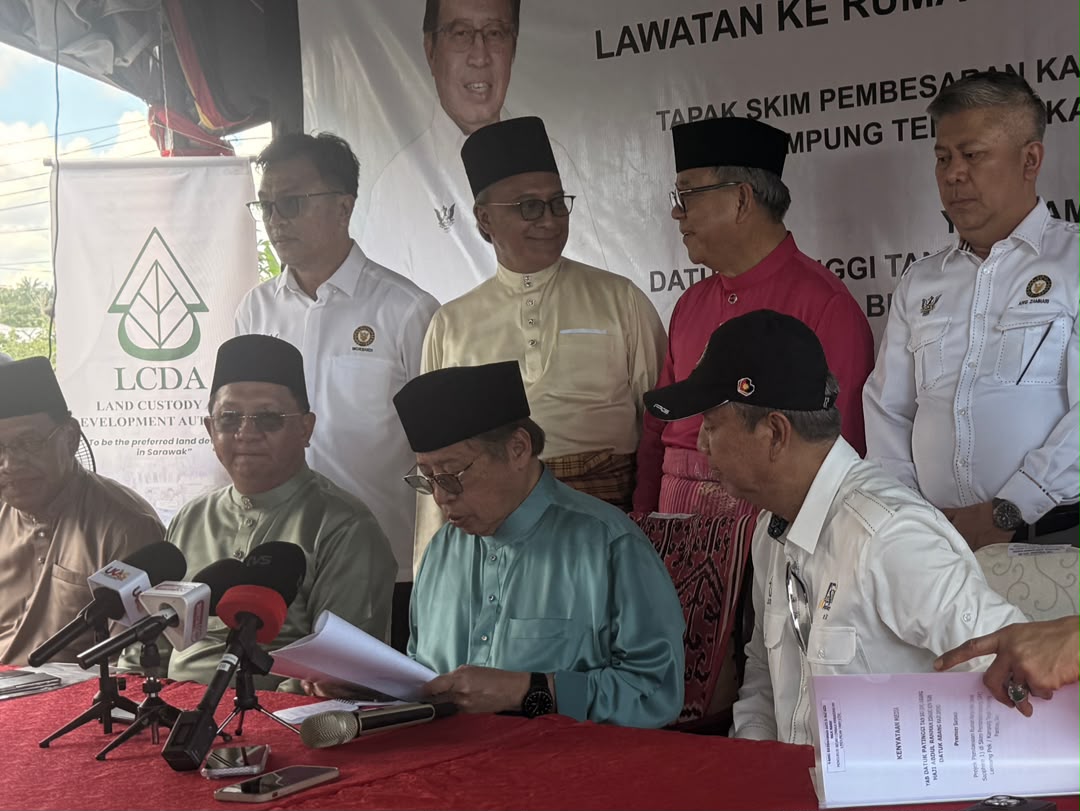
Premier Datuk Patinggi Tan Sri Abang Johari Tun Openg said the initiative forms part of the Sarawak Government’s efforts to integrate renewable energy into housing developments while lowering the long-term cost of home ownership.
He said buyers will be offered an optional rooftop solar package costing approximately RM29,000, with the state government subsidising 50 per cent of the installation cost.
This means homeowners will only need to contribute about RM15,000, increasing the selling price of the house to around RM165,000, despite the actual cost exceeding RM170,000.
“The government wants more people to enjoy this technology without having to bear the full cost. This is not just about owning a home but about reducing the cost of living over the long term,” he said after a visit to the SPK Kampung Pantai Daro affordable housing project today.
Abang Johari explained that electricity generated by the rooftop solar panels would first be used to power the house while any surplus electricity could be exported to the grid under the Net Energy Metering (NEM) programme.
The excess electricity would be purchased by SESCO, with the value credited directly into the homeowner’s electricity account.
“In some cases, homeowners may not even have to pay electricity bills because the electricity they generate offsets their own consumption,” he said.
Abang Johari pointed out that the initiative transforms solar energy from merely an environmental solution into a practical way for households to reduce monthly expenses while creating additional value from their homes.
Responding to questions from reporters, he explained that each house equipped with the solar package would have two electricity meters.
He said the system works by allowing solar panels to absorb sunlight, with an inverter converting the energy into electricity before distributing it throughout the house.
“One meter records electricity supplied by SESCO while the second measures surplus electricity exported from the rooftop solar system back to the national grid,” he added.
“Any excess electricity generated beyond the household’s needs is automatically channelled back into the grid and recorded through the export meter.”
Abang Johari said the solar panels have an expected lifespan of around 20 years, with only routine maintenance and occasional replacement of certain components required.
“Modern solar systems are increasingly monitored digitally and supported by smart technologies, including artificial intelligence, enabling easier and more efficient system monitoring and maintenance,” he added.