Part three of six parts series
When a child is diagnosed with cancer, the first battle is not always fought in the treatment room.
For many families, it begins in the quiet moment after a doctor delivers the diagnosis, when parents are still trying to understand what has been said while their minds begin racing with questions they are not yet ready to ask.
It is in that moment that life changes, not only for the child undergoing treatment but for the entire family.
Sarawak Children’s Cancer Society’s (SCCS) support services manager Lee Ming Ming has witnessed this reality unfold many times.
Together with her four-member team, she provides emotional support not only to children undergoing treatment but also to their parents, caregivers and, more recently, their siblings.
“We are here to be with the children and their families throughout this whole journey.”
Lee, who holds a counselling degree from Universiti Malaysia Sarawak (UNIMAS), is now in her third year with SCCS.
For her, the work is rooted in a simple but deeply meaningful purpose – to give hope and help families feel less alone.
“I have always wanted to give hope and motivation to the people around me.”
Fear, denial and the unknown
Lee said there is no single way for parents to react when they are told their child has cancer but fear, denial and worry are among the most common emotions.
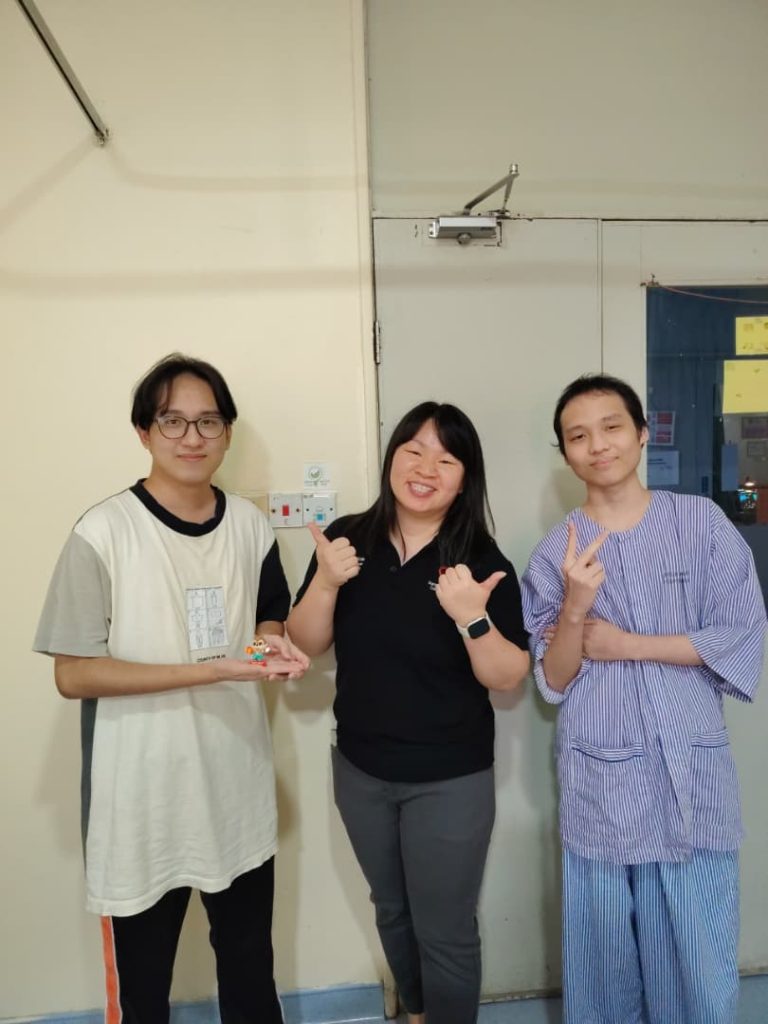
She said some parents struggle to accept the diagnosis at first while others are overwhelmed by what they think they know about cancer.
“When people hear the word cancer, they often think the survival rate is very low. They do not really understand what childhood cancer is.”
For families from outside Kuching, Lee said the emotional shock is often followed almost immediately by practical concerns.
Some are told that they need to travel to Kuching for treatment, not only for a few weeks but possibly for months or even years.
This means leaving behind their homes, routines, work arrangements and, in some cases, other children.
“They worry about their other children, their finances, and what will happen when they come to Kuching. At that point, many of them do not know about SCCS yet.
“There is a great deal of fear of the unknown which is understandable as this is a situation no parent would ever expect to face.”
Once families are introduced to SCCS at the hospital, the support team begins walking alongside them by helping them understand the services available, guiding them through the early stage of the journey and assuring them that they do not have to face it alone.
When parents carry the weight differently
Lee said mothers and fathers often carry the emotional weight of a child’s diagnosis differently.
She observed that mothers tend to be more expressive with their emotions whereby they are not afraid to cry, share their worries and speak openly about their fears.
On the other hand, fathers often keep their emotions inside, choosing instead to appear calm or strong for the family.
“That does not mean they do not care. Some fathers are very caring and protective but they express it differently.”
In most cases, Lee said mothers become the primary caregivers, staying with the child throughout treatment and managing the day-to-day emotional and practical demands of the journey.
However, when fathers take on the caregiver role, she said SCCS pays closer attention to ensure that they too receive the emotional support they need.
“Through counselling sessions and monthly parent support groups, caregivers are given a safe space to speak, listen and slowly process what they are going through.
“Sometimes those who are quiet at first will begin to open up when they hear other caregivers sharing the same worries because they realise they are not alone.
“For many parents, hearing another caregiver voice the same fears can be deeply validating. It reminds them that their sadness, anger, confusion and exhaustion are not signs of weakness but part of a painful journey shared by many others.”
Children see the journey differently
While parents often think about the future, treatment risks and possible outcomes, Lee pointed out that children tend to experience the journey differently depending on their age and level of understanding.
For younger children, especially those below seven, the diagnosis may not be fully understood.
Some only know that they are sick so they need to go to the hospital and no longer have to attend school for the time being.
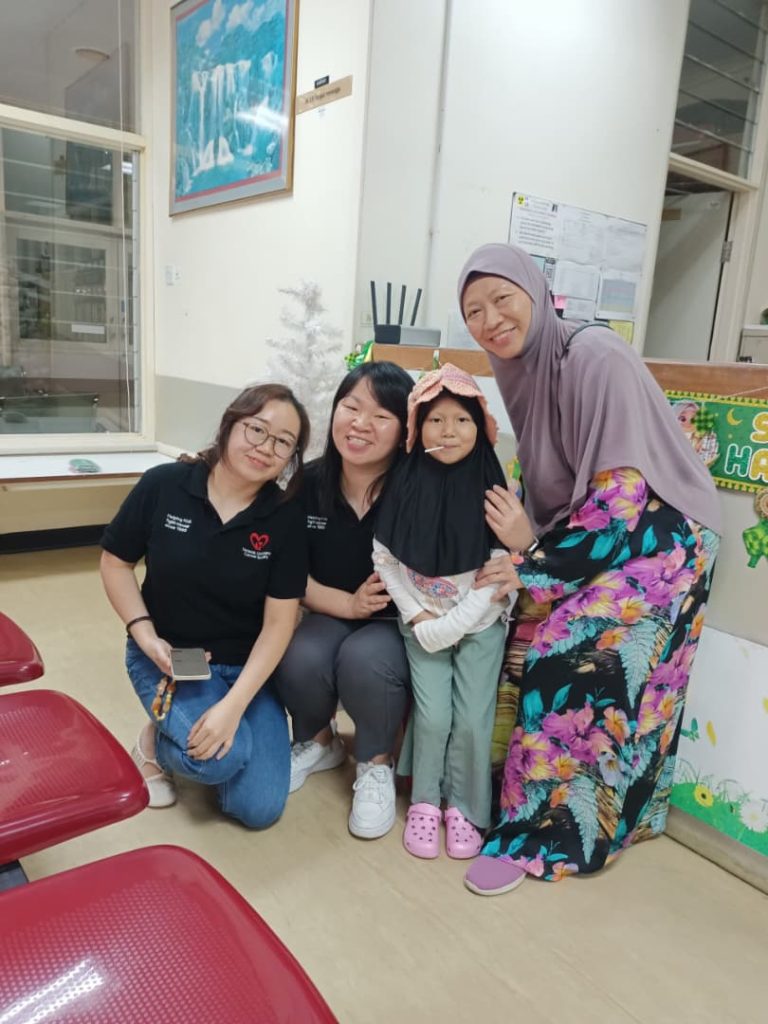
“They may even feel happy because there are many toys at SCCS’s halfway home for them to play with and they receive a lot of attention from their parents.”
As for older children, Lee said they may begin to develop a deeper understanding of what is happening to them.
She noted that teenagers, in particular, may worry about their appearance, hair loss, self-esteem, studies and whether they will be able to return to normal life after treatment.
“Some of them search online to better understand their condition. They want to know why they need certain medication or surgery.”
Even then, Lee said many children remain more present-focused than adults.
She said the innocence of a child allows them to focus on the moment rather than dwell on uncertainties.
“The children think about treatment, getting better and going home whereas their parents tend to think of all the possibilities and consequences.”
This difference often reflects the way children process difficult experiences.
While adults may carry the weight of imagined futures and worst-case scenarios, many children focus on what is directly in front of them – the next treatment, the next hospital visit, or the hope of going home.
The siblings who suffer quietly
One area SCCS has begun paying closer attention to is the emotional wellbeing of siblings, whose struggles are often less visible in the early stage of a child’s cancer journey.
Lee said the impact on siblings is not always immediate.
She said it appears only months later, when teachers call parents to say that a child’s academic performance has dropped or that they have become withdrawn in class.
“In some families, older siblings suddenly take on adult-like responsibilities at home while one parent works and the other stays in Kuching as the caregiver. They may feel the burden and stress but have no space to share it.”
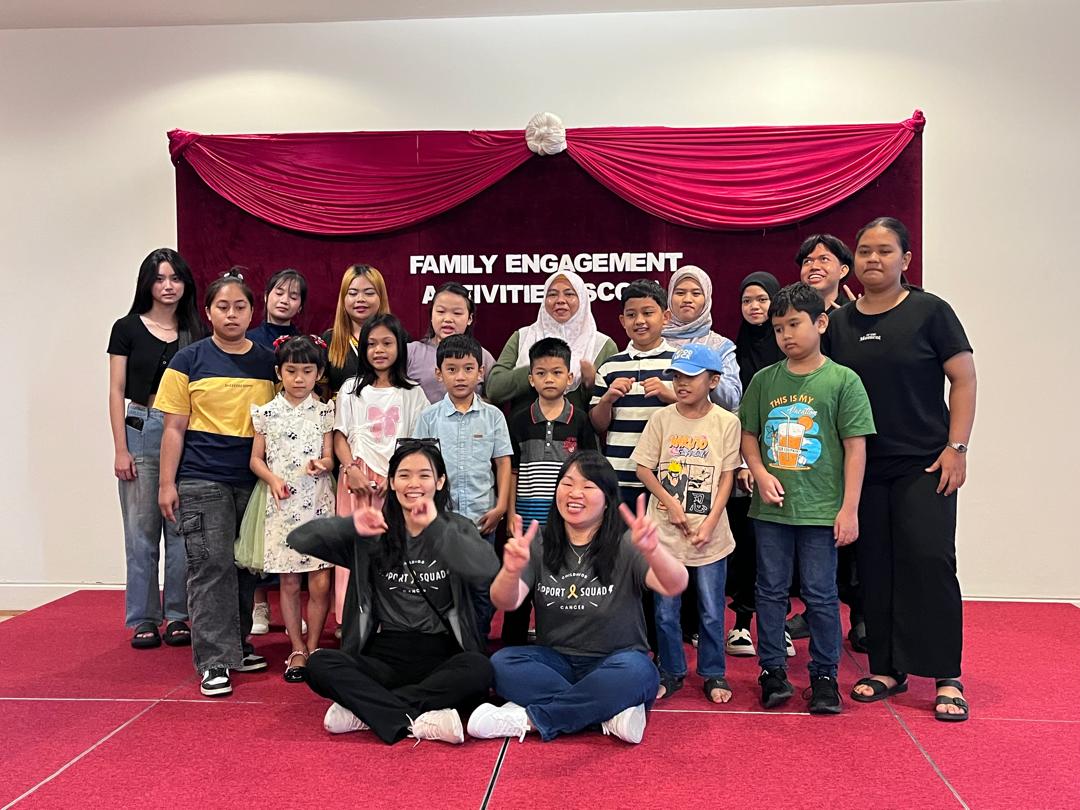
Last year, Lee said SCCS began extending support to siblings through family engagement activities.
She said the aim is to understand how much they know about childhood cancer and help them process the changes taking place within the family.
“I remember asking a young sibling who he thought was unwell in his family. The child answered, ‘My mother.’
“But in reality, it was his elder sister who was ill. To him, the mother’s absence from home made it seem as though she was the one who was ‘sick’.”
For Lee, the answer showed how deeply a child can be affected by separation even when they do not fully understand the reason behind it.
“This year, SCCS plans to organise a Siblings Day to help children better understand the journey, recognise their own emotions and see that they too are part of the family’s healing process.”
When treatment does not succeed
Not every journey ends in recovery, and for families whose children are diagnosed as palliative patients, SCCS’ role becomes even more delicate.
In such cases, Lee said her team conducts home visits and works closely with the family.
She said SCCS works with the palliative care team at Sarawak General Hospital (SGH) to ensure families receive medical guidance on what to expect as the child’s condition changes.
“No parent is ever ready to face that situation. But at least, with knowledge, they know what to do when certain symptoms happen.”
Through its Wishing Star Project, Lee said SCCS helps fulfil the child’s final wishes, within the available guidelines and budget.
After a child’s passing, SCCS continues supporting the family through bereavement assistance, support groups and its annual Memorial Day.
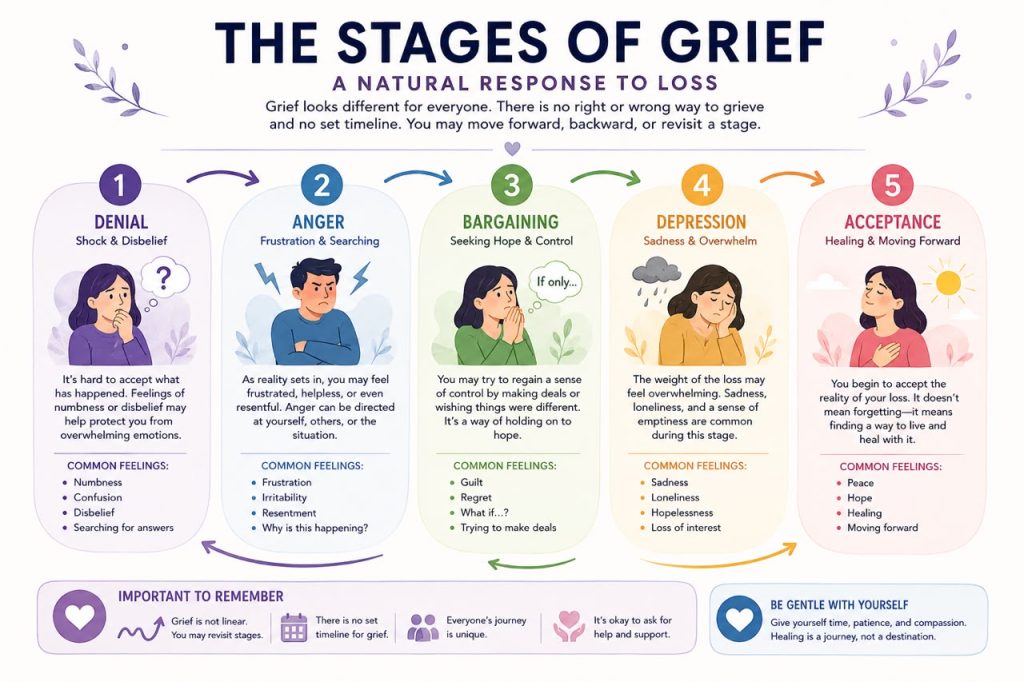
“Grief is never linear as it does not move neatly from sadness to acceptance, nor does it follow a fixed timeline. It goes up and down.
“Some parents cry, some become angry or withdrawn. All of that is normal and it is part of the process.”
Lee recalled a bereaved mother who attended a support group but sat silently throughout the session.
A year later, the same mother returned and slowly began to open up.
“For me, it was a good sign that she was willing to come back and sit there. Eventually, she started sharing and forming connections with other caregivers.
“The moment may have seemed small to others but for me, it reflected the slow and fragile nature of healing.”
Giving hope, even at the end
The emotional weight of the job is not lost on Lee.
There are children who recover and return home and there are also children who do not. Yet, every day, the support team continues to show up for families who need them.
Whenever the work becomes overwhelming, Lee said she turns to her team and her younger sister for support.
“I know I cannot remain in that sad moment for long because there are still many children, caregivers and families waiting for our support.
“Even at the end of life, there is still hope – the hope that families can still be together in the present and find a way to move forward.”
Among the children who left a lasting mark on her was Alicia, a cheerful girl from Kabong who would text her, share stories and ask when she would be at the SCCS halfway home.
Lee described Alicia as a caring and thoughtful child who often looked out for those around her.
“I was pregnant at the time so she would always remind me to be careful and help me carry things. After I gave birth, she would often text to ask how my baby and I were doing.”
When Alicia was admitted to the intensive care unit, Lee visited her, unaware that it would be the last time they would meet.
Two days later, Alicia passed away.
“Until today, I still remember that little girl. It still weighs on me, especially knowing that we have lost touch with her mother.”
A listener without judgement
For those hoping to become counsellors, Lee said the work requires patience, emotional strength and self-care.
Most importantly, she noted that people do not always need advice.
“Sometimes, they only need someone who can listen without judgement. To some, listening may seem small but to a parent going through the darkest period of their life, it can mean everything.”
In many ways, that quiet act of listening is what defines SCCS’ role beyond medical support.
It is not only about helping families navigate treatment, but about standing with them in the moments that are hardest to put into words – the silence after a diagnosis, the uncertainty that follows, and the long, often unseen emotional journey that comes after.
Because for many families, the battle does not begin in the treatment room and it does not end there either.
In Part Four of this special report, Sarawak Tribune shares the story of Christian Deo Dennis through the eyes of his mother, Bibiana Asim, offering a personal glimpse into the challenges, sacrifices and hope that have defined their journey through childhood cancer.