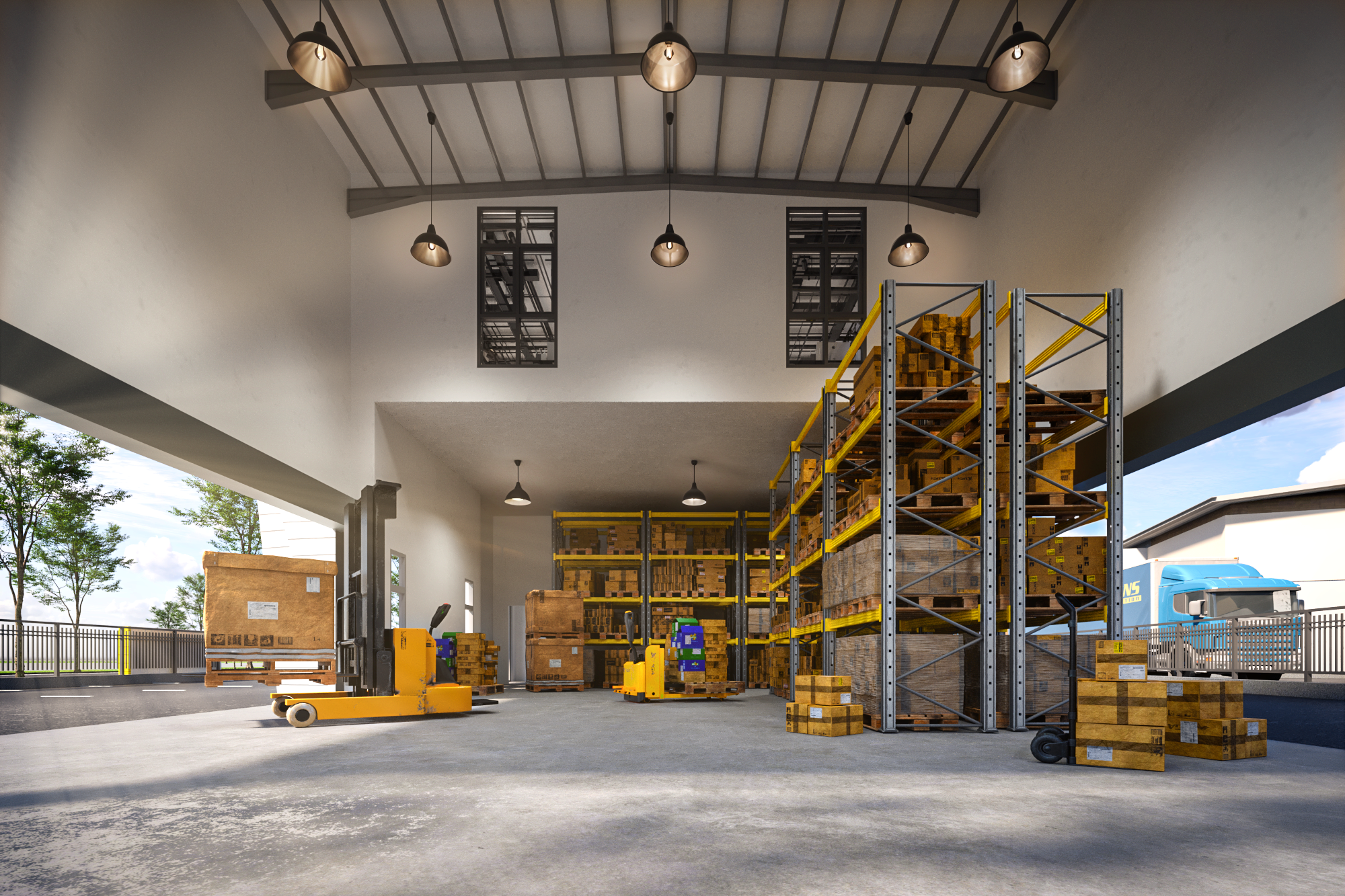
KUCHING: Sarawak’s industrial property market recorded higher-value transactions in the first quarter of 2026 despite fewer deals.
According to Knight Frank Malaysia’s Real Estate Highlights 1H2026 report, industrial transaction value rose 44.8 per cent to RM140.1 million from RM96.7 million a year earlier, while transaction volume declined 15.8 per cent to 96 deals from 114.
The firm said the divergence suggested buyers were shifting towards larger and more valuable industrial properties.
Miri accounted for much of the slowdown, with transaction volume falling 38.9 per cent from 54 to 33 deals.
Activity in Kuching remained relatively stable, while Bintulu recorded a 13.6 per cent increase.
Bintulu also posted the strongest growth in transaction value, rising 82.7 per cent, followed by Kuching at 55.1 per cent.
Miri recorded an 18.5 per cent decline. Knight Frank said the market continued to benefit from Sarawak’s long-term industrial expansion, supported by government investment in industrial parks, transport infrastructure and strategic industries.
The Sarawak Budget 2026 allocated RM154.6 million for industrial development, with about half earmarked for industrial parks.
The remainder will support trade and investment promotion through initiatives including Invest Sarawak and the Sarawak Trade and Tourism Offices.
The 13th Malaysia Plan also allocated RM183.1 million for 17 industrial park projects.
These initiatives complement major infrastructure projects such as the Pan Borneo Highway, the Sarawak-Sabah Link Road and the RM72.7 billion infrastructure programme under the 12th Malaysia Plan, strengthening connectivity, supply chains and access to industrial corridors.
Sarawak is also positioning itself for higher-value manufacturing under the Sarawak Digital Economy Blueprint 2030 and the Post-Covid-19 Development Strategy 2030.
Initiatives led by the Sarawak AI Centre aim to accelerate artificial intelligence, innovation and digital adoption across key industries.
The state’s semiconductor ambitions include the expansion of X-FAB’s RM3 billion manufacturing facility and a partnership between BLD Group and Curtin University Malaysia.
Knight Frank said Sarawak’s strategic location, renewable energy resources and investment-friendly environment would continue to enhance its appeal for technology and advanced manufacturing investments.
The industrial push is also being supported by improvements to the state’s maritime and logistics network.
Projects include the ongoing development of the Miri Deep Sea Port, planned upgrades at Kuching Port and the designation of Phase 1 of Samalaju Industrial Port as a Free Commercial Zone.
A joint venture between Permodalan Satok Bhd and Hub Carrier Sdn Bhd to transport methanol and chemical products is also expected to strengthen Sarawak’s petrochemical and maritime logistics capabilities.
Beyond manufacturing, the state is expanding into new growth sectors.
The Sarawak Biodiversity Centre is developing sustainable aviation fuel from palm oil as part of efforts to grow green technology and alternative energy industries.
Meanwhile, agriculture and food security initiatives under the 13th Malaysia Plan received RM326 million from the Sarawak government and RM158 million from the federal government to support downstream processing, value-added production and wider opportunities across the agroindustrial chain.
Knight Frank said external economic conditions could weigh on investment activity in the near term, although continued improvements in infrastructure, logistics capacity and higher-value industries would underpin longterm industrial demand.
Separately, Sarawak’s office market continued to expand, with new development remaining concentrated in Kuching and Miri.
The state recorded a cumulative office stock of 6.7 million square feet in the first quarter, while occupancy eased marginally to 88 per cent from 88.1 per cent in the preceding quarter.
Kuching’s office supply increased from 4.25 million square feet across 54 buildings in the first quarter of 2025 to 4.94 million square feet across 58 buildings a year later.
Miri’s stock grew from 610,000 square feet across seven buildings to 740,000 square feet across nine buildings.
Supply remained unchanged in Bintulu at 110,000 square feet across three buildings and in Samarahan at 260,000 square feet across two buildings. Samarahan recorded the highest occupancy rate at 97.5 per cent, followed by Kuching at 90.2 per cent.
Miri’s occupancy edged up from 70.2 per cent to 70.5 per cent, while Bintulu improved from 53 per cent to 56.6 per cent.
Knight Frank said the proposed Batang Baram Delta development could further strengthen Miri’s position as a regional business hub by expanding industrial and maritime activity, supporting future office demand.
Demand is expected to remain concentrated in Kuching and Miri as the state’s digital economy and development strategies continue to support growth in technology, professional services, manufacturing, energy and logistics.
The proposed New Kuching International Airport at Tanjung Embang and continued infrastructure investment under the 12th Malaysia Plan are also expected to improve connectivity, stimulate business activity and generate additional office demand.
Knight Frank said the airport forms part of a broader tourism infrastructure push as Sarawak’s hospitality sector continues to benefit from stronger visitor arrivals.
Visitor arrivals rose 4.5 per cent year-on-year to about 1.2 million during the first quarter. International travellers remained the main source of demand, while stronger domestic arrivals, particularly from Sabah, broadened the state’s tourism base.
Sarawak is targeting five million visitor arrivals in 2026, with Knight Frank noting that both visitor arrivals and tourism receipts during the first half exceeded last year’s levels.
International air connectivity also continued to improve through Batik Air Malaysia’s GuangzhouKuching charter service and Loong Air’s Shenzhen-Kuching route.
Business Events Sarawak is also promoting the state as a business events destination, supporting year-round visitor spending and accommodation demand.
Sarawak had 391 hotels offering 22,110 rooms, with one new hotel expected to add another 205 rooms.
Selected three- to five-star hotels recorded an average occupancy rate of 44.3 per cent during the first quarter, up from 42.7 per cent a year earlier, while the average daily room rate increased to RM225 from RM219.
Short-term rental activity remained centred in Kuching, which recorded 1,108 active listings.
Miri had 98 listings, suggesting visitor demand is gradually extending to secondary destinations.
Knight Frank also highlighted tourism projects including the Damai cruise terminal, the recognition of the Sarawak Delta Geopark as a Unesco Global Geopark and the opening of the Brooke Dockyard Industrial Heritage Museum.
More than 300 tourism-related events planned under Visit Malaysia 2026 are expected to provide additional support for the hospitality, retail, transport and food and beverage sectors.