KUCHING: Southeast Asia can no longer compete for foreign direct investment (FDI) on labour costs alone as investors increasingly favour integrated industrial ecosystems, policy certainty and world-class infrastructure.
Despite global FDI climbing six per cent to US$1.6 trillion in 2025, competition for investment has intensified as capital becomes increasingly concentrated in developed economies and high-technology sectors.
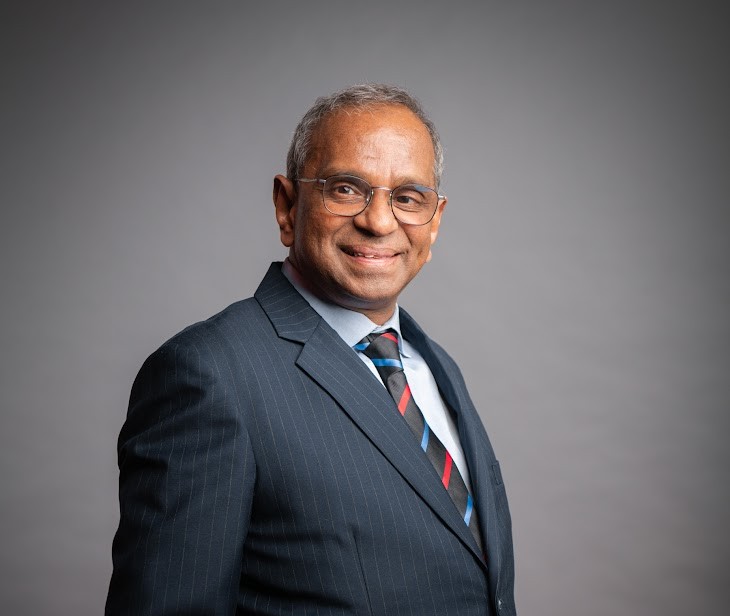
Centennial Asia Advisors chief executive officer Manu Bhaskaran said the UNCTAD World Investment Report 2026 showed Southeast Asia remained resilient but faced mounting pressure to strengthen its long-term competitiveness.
Asia attracted US$644 billion in FDI last year, making it the largest recipient among developing regions. However, announced greenfield investments declined eight per cent to US$348 billion, signalling softer future commitments across the region.
He said investors now place greater importance on regulatory certainty, dependable electricity, skilled workers, quality infrastructure and complete industrial ecosystems than inexpensive labour.
“The future of investment competition will be decided by industrial clusters, not countries,” he said.
Bhaskaran said Malaysia and Singapore continue to benefit from stable macroeconomic conditions and strong investment environments, with Malaysia leveraging its proximity to Singapore to attract semiconductor and data centre investments.
Although both countries saw fewer announced projects last year following exceptionally strong performances in 2023 and 2024, investment levels remained above those seen before the pandemic.
Thailand stood out as the region’s strongest performer, while Vietnam maintained healthy investment momentum. Indonesia and the Philippines, however, lost ground because of policy uncertainty, institutional weaknesses and infrastructure deficiencies.
He said another defining trend was the growing concentration of investment in billion-dollar technology projects.
Projects worth US$1 billion or more now account for 44 per cent of announced greenfield investment, twice the proportion seen in 2017.
Semiconductors, data centres and oil and gas are attracting a larger share of global capital, while investment in renewable energy, non-digital infrastructure and manufacturing linked to global value chains is expected to ease.
Bhaskaran also highlighted the expanding role of state-owned enterprises, whose overseas investments are increasingly driven by strategic national priorities instead of purely commercial considerations.
He urged Southeast Asian governments to deepen regional cooperation, strengthen industrial policies, improve education and skills development, and build globally competitive industrial clusters.