KUALA LUMPUR: Malaysia is calling for stronger regional cooperation to address ASEAN’s estimated US$200 billion annual investment requirement for the energy transition through 2030, with greater coordination needed to turn ambitious climate targets into bankable projects.
Malaysian Investment Development Authority (MIDA) chairman Tengku Datuk Seri Zafrul Abdul Aziz said the region did not lack ambition, but faced a capital coordination problem caused by fragmented regulations, lengthy project development processes and limited cross-border financing and risk-sharing mechanisms.
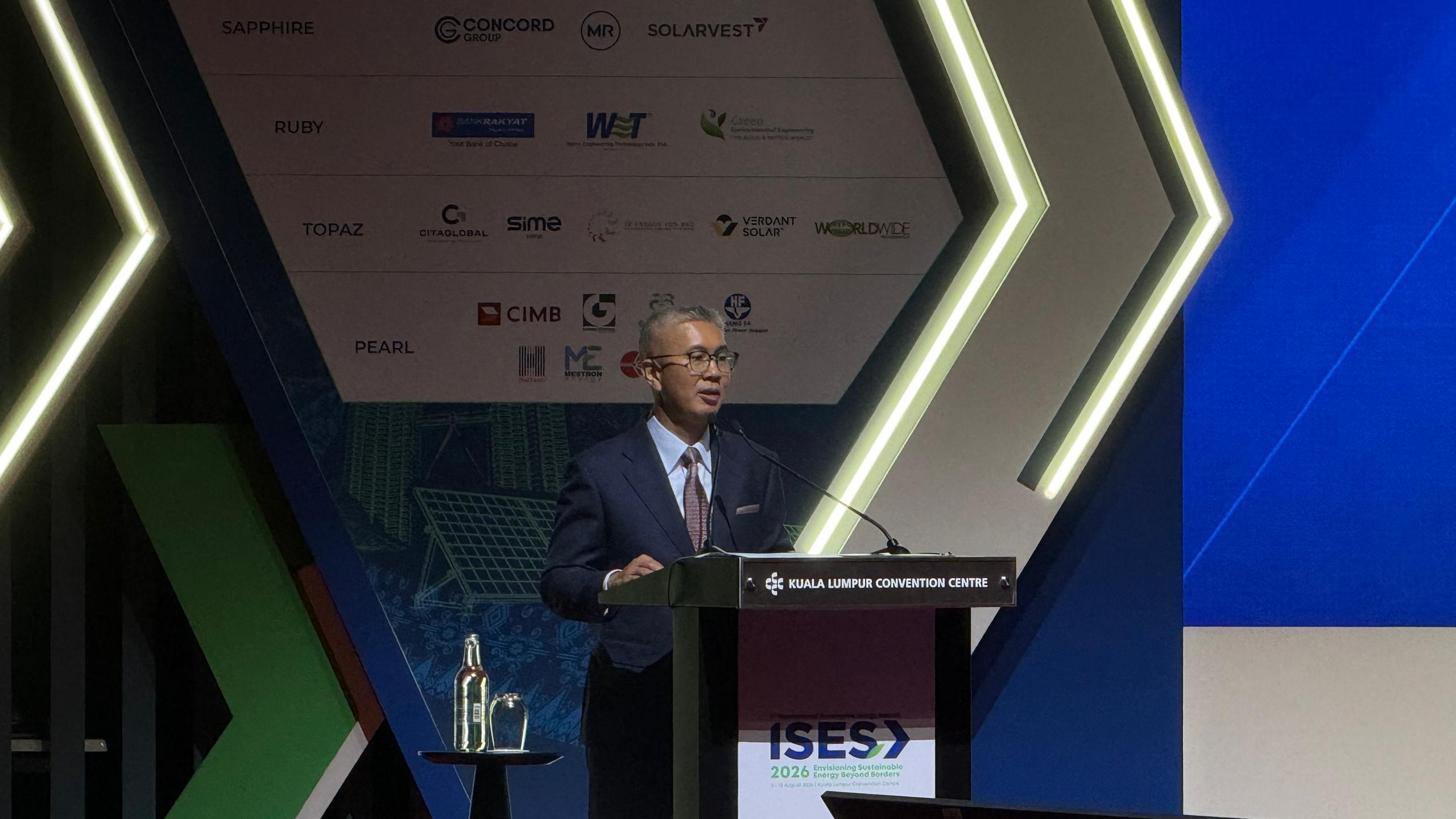
“We do not have an ambition problem. Every country has these targets. What we have is a capital coordination problem,” he said in his keynote speech at the 7th International Sustainable Energy Summit 2026 at the Kuala Lumpur Convention Centre here Tuesday.
Zafrul said eight out of 10 ASEAN economies had committed to net-zero targets, but progress remained slow as renewable energy projects often took too long to become bankable.
He said Malaysia had remained one of ASEAN’s consistent performers in approved renewable energy investments, with MIDA approving nearly RM10 billion in renewable energy investments between 2023 and 2025.
“This is not a favour we do for foreign investors. It is an investment in our own industrial survival,” he said.
He said energy security, investment flows and technological innovation would be decisive factors in determining the region’s economic competitiveness over the coming decade.
He pointed to recent global disruptions, including developments affecting the Strait of Hormuz, as reminders that energy security was no longer merely an energy-sector concern but a major determinant of economic resilience and national competitiveness.
For Malaysia, he said the government is preparing longer-term measures including strategic buffer stocks and diversified fuel import sources to strengthen resilience against future shocks.
Despite the challenges, Malaysia recorded 5.2 per cent economic growth in 2025, followed by growth of 5.4 per cent and 5.8 per cent in the first two quarters of 2026.
The country also recorded a record RM427 billion in approved investments last year, while improving 11 places to 23rd in the IMD World Competitiveness Ranking.
Zafrul said sustaining the momentum would depend partly on Malaysia’s ability to provide reliable, affordable and predictable energy supplies.
He highlighted the New Industrial Master Plan, Green Investment Strategy and National Energy Transition Roadmap (NETR) as key policy tools supporting the country’s transition.
Under the Green Investment Strategy, Malaysia is targeting RM305 billion in green investments by 2030 across areas including energy efficiency, renewable energy, hydrogen, bioenergy and carbon capture.
Meanwhile, the NETR is anchored by a RM2 billion seed fund and targets renewables accounting for 70 per cent of the energy mix by 2050, alongside the complete phase-out of coal-fired power plants by 2044.
However, Zafrul stressed that ambitious targets would need to be matched by capital.
“Ambition does not lay a single solar panel. Capital does,” he said.
He also highlighted opportunities in solar, hydropower, bioenergy, floating solar, ocean energy and hydrogen, while noting that Malaysia was increasingly using artificial intelligence to optimise energy demand, storage and grid efficiency.
He said ASEAN should also strengthen its position as a manufacturing hub for clean energy technologies, including batteries, solar modules, electric vehicles and related electronics.
“No nation, however strong, can build this resilience alone. Let us act with urgency, because every day we wait, we pay for it in terms of exposure. Let us also act with unity, because a fractured region is a vulnerable one, and a connected region is an unbreakable one,” he said.