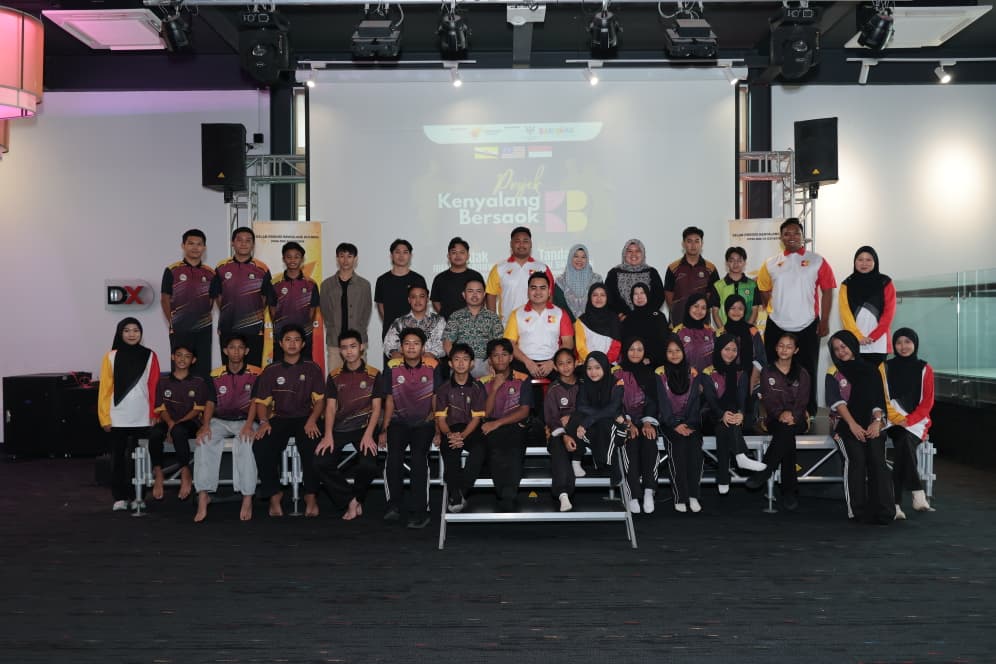
SIBU: Eleven young leaders from across Sarawak have strengthened their leadership capabilities and showcased the state’s growing pool of emerging leaders at the Junior Chamber International (JCI) Malaysia National Academy held at Johor Bahru recently.
Hosted by JCI Skudai Baru, the four-day academy commencing Aug 13 brought together aspiring leaders from different parts of Malaysia for intensive training aimed at preparing them for greater responsibilities within their respective Local Organisations and JCI Malaysia.
The Sarawak delegation comprised representatives from JCI Batu Kawa, JCI Damai, JCI Jalan Tanjung Kidurong, JCI Kuching, JCI Lutong, JCI Mandarin Repok Sarikei, JCI Miri, JCI Padawan, JCI Riam, JCI Seduan and JCI Sibu.
The programme covered a wide range of leadership competencies, including Emotional Intelligence, Teamwork, Public Speaking, Chairmanship and Parliamentary Procedure, as well as Professional Image, Presence and Credibility.
Facilitated by experienced JCI trainers, the sessions focused not only on theoretical knowledge but also on practical skills needed to communicate effectively, manage teams, chair meetings, make decisions and lead with confidence and professionalism.
The academy therefore provided participants with an opportunity to move beyond conventional leadership training by challenging them to develop greater self-awareness, strengthen collaboration and translate leadership principles into practical action.
Adding to the achievement of the Sarawak contingent, Ivy Kuan of JCI Lutong, Maggie Peh of JCI Sibu and Raymond Tie of Kelab Belia Senadin secured first runner-up in the Group Category.
Their achievement further highlighted the ability of Sarawak’s young leaders to perform strongly in a competitive national-level environment while working alongside participants with diverse experiences and perspectives.
The strong turnout from Sarawak also reflects JCI Malaysia Area Sarawak’s continued emphasis on leadership development and succession planning, particularly in preparing younger members to take on future leadership roles within their local organisations and the wider JCI movement.
Beyond the classroom, the academy served as a platform for participants to exchange ideas, build networks and develop a broader understanding of leadership through interaction with peers from across the country.
For the Sarawak participants, the experience represents more than a four-day training programme. It is part of a longer-term effort to cultivate confident, capable and socially responsible young leaders who can translate their personal development into meaningful contributions to their organisations and communities.
The participation and strong performance of the Sarawak delegation underscore the importance of investing in young leadership today to build stronger organisations and create greater community impact in the years ahead.