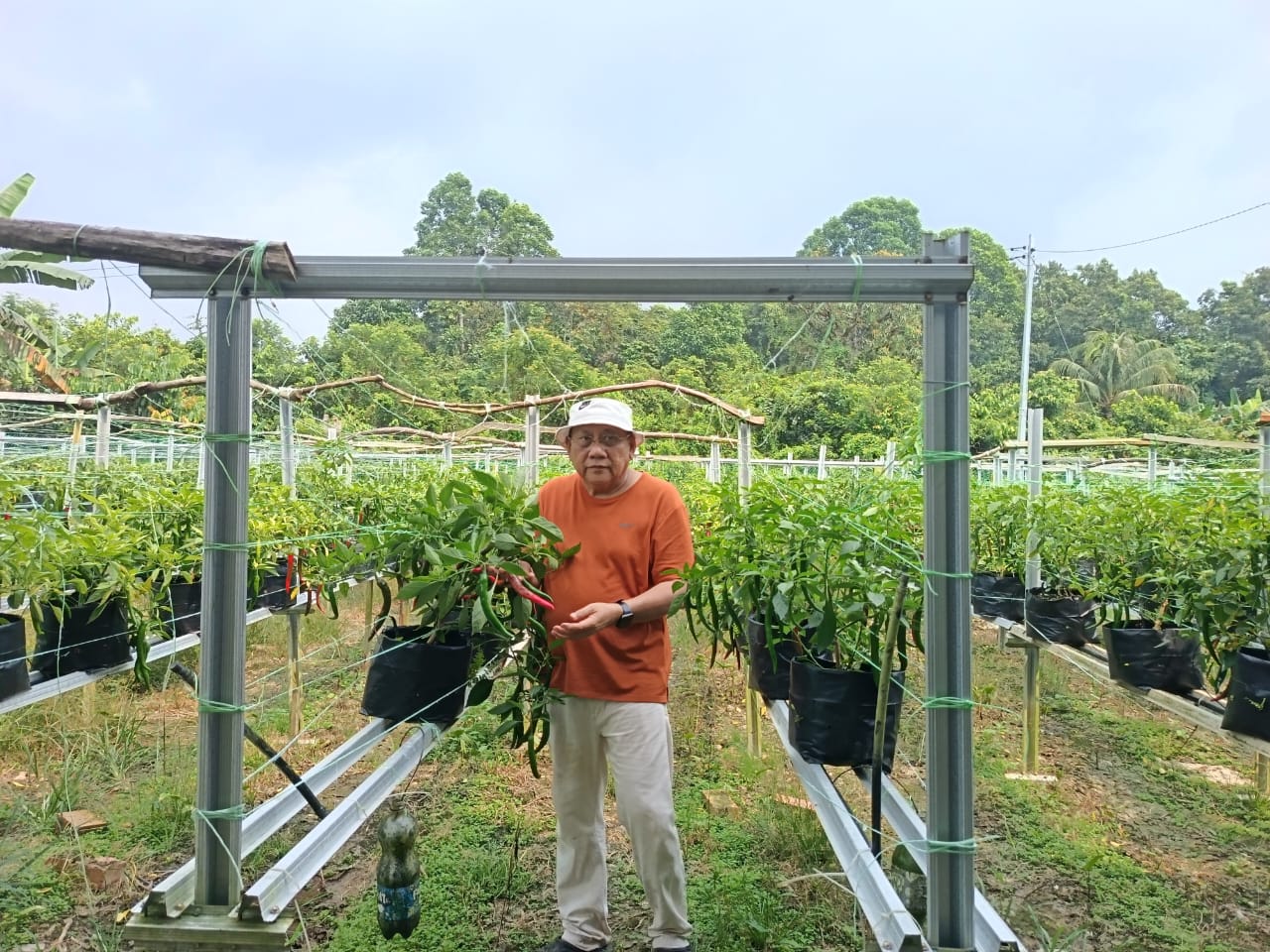
SIBU: Age is no barrier to starting something new for politician-turned-agropreneur Munan Laja.
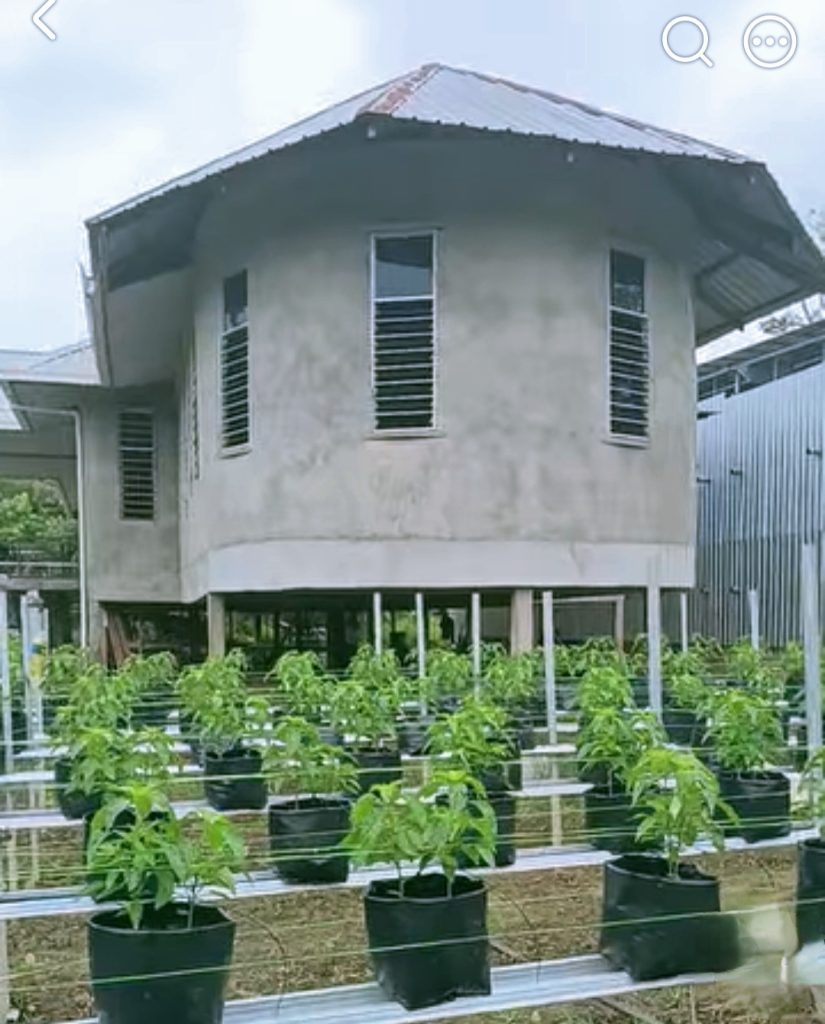
At 64, Munan does not regard himself as a retiree. Still physically fit and active, the Song native has ventured into chilli farming using the fertigation method, a system that delivers water and dissolved nutrients directly to plants, allowing him to better control their growth and nutrient requirements.
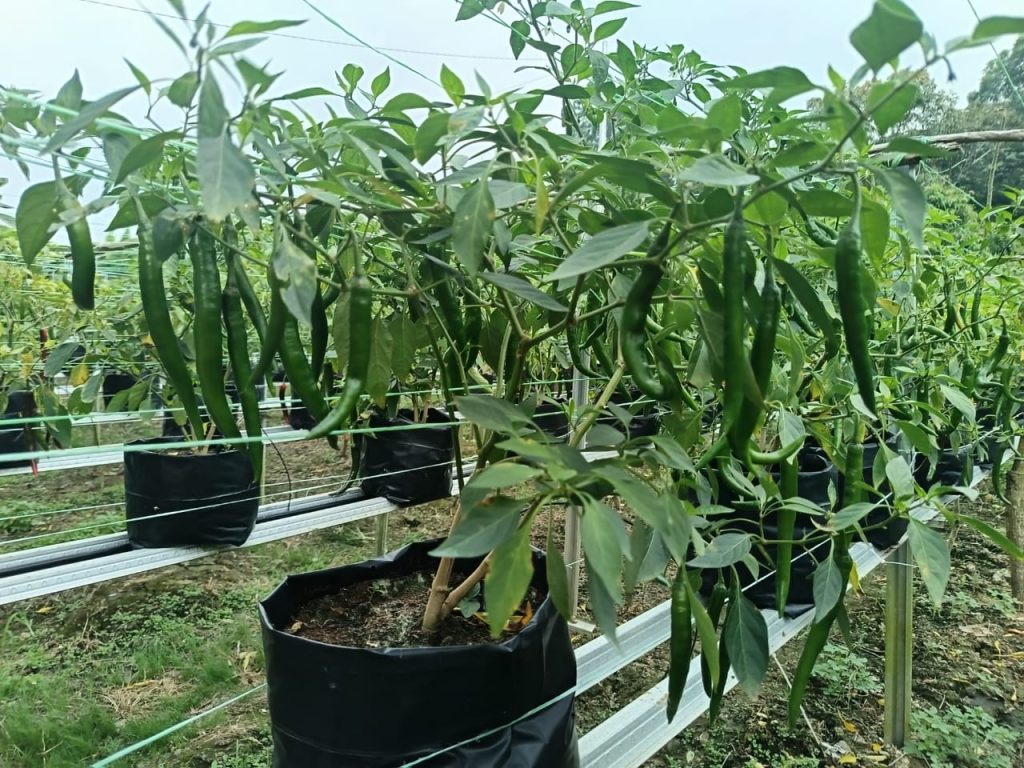
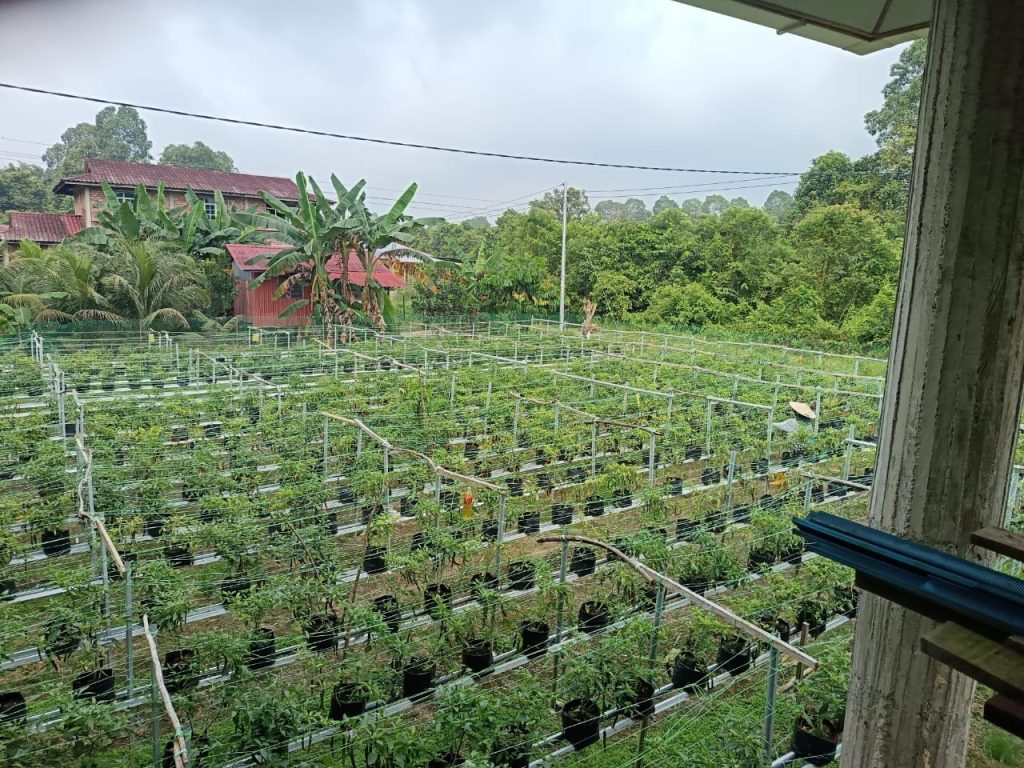
What began as a small-scale farming experiment less than a year ago has since developed into a sustainable source of income at his farm in Sungai Bidut here.
He was introduced to chilli farming through the Sejati MADANI project after his village was selected to participate.
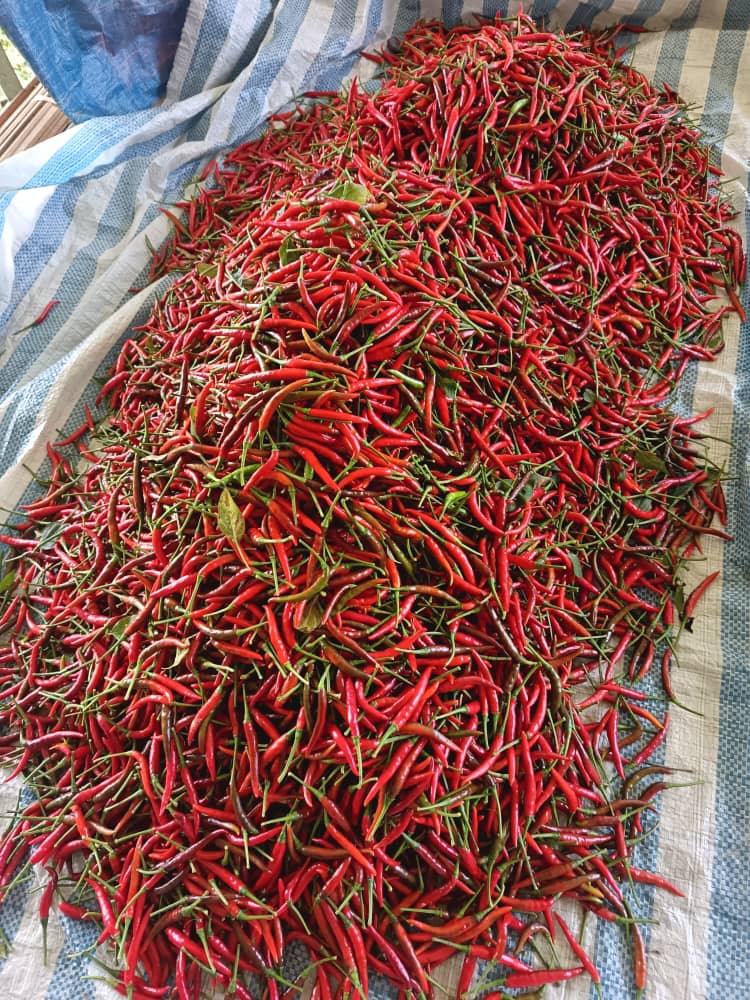
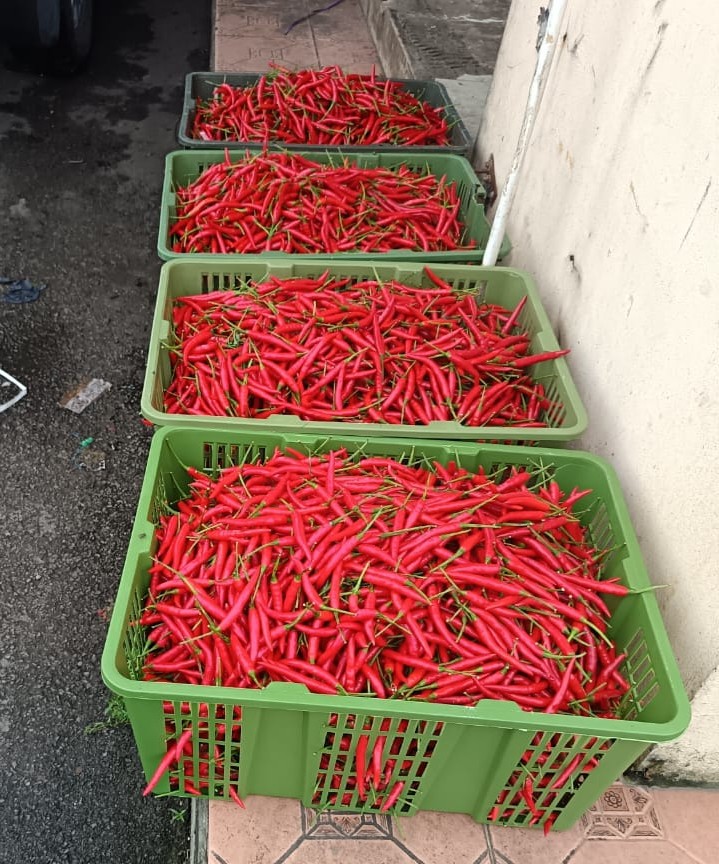
His farm currently has about 2,000 polybags of chilli plants, producing around 1,500kg of chillies a month, which he sells to supermarkets at between RM18 and RM20 per kg.
Munan said he chose chilli farming because of its relatively quick returns compared with other crops.
“This is something new for me. The main reason I chose chilli farming is that it is one of the fastest ways to generate income. It only takes about 65 days. You plant the chilli today and after about 65 days, you can start harvesting.
“That is one advantage of chilli farming. My durian trees, for example, have already been growing for seven years but have not produced any income yet.”
Another attraction is that chilli farming does not require a large area of land.
“Even half an acre is enough to plant about 2,000 polybags. If you plant oil palm, for example, you may need 10 or 20 acres of land. But for chilli farming, half an acre is enough to start.”
His current crop is his third planting cycle. According to Munan, a healthy chilli plant can continue producing for about six months before its productivity starts to decline, allowing about two cycles a year.
Among the biggest challenges are fungal diseases, insects, snails and grasshoppers, particularly at night. He follows a proper spraying schedule, regularly applying fungicide and insecticide.
Munan also raises his polybags about two feet above the ground using battens as the area is prone to flooding.
“By doing this, it is more hygienic and helps prevent pests and diseases. If you put the polybags directly on the ground, they are more easily attacked by pests.
“When the soil is too wet, it is not good for chilli plants. Raising the polybags helps reduce the impact of fungal diseases.”
Munan said the fertigation system had made the daily management of the farm easier, with water automatically programmed to drip every two hours.
He has invested about RM42,000 in the project, including iron structures and other materials.
Chillies are harvested every four days when the plants are producing well, with his son helping with distribution to supermarkets.
However, Munan said marketing remained an important consideration because of competition from imported chillies, particularly from Thailand and Vietnam.
“When a lot of imported chillies come into the market, it can affect the price of local produce.”
He also stressed that chillies were highly perishable and had to be marketed quickly after harvesting.
Despite the challenges, Munan has no plans to give up.
“No. The income comes in quite quickly, so you do not get too frustrated when you start seeing returns. You can harvest every week, sometimes twice a week.
“That gives you the motivation to continue even though there are challenges.”
He believes chilli farming is a practical option for those who do not own large tracts of agricultural land.
“I cannot go into oil palm because I do not have enough land. Oil palm also requires more physical work, especially during harvesting.
“Chilli farming is much easier. You simply pick the chillies when they are ready.”
For those, particularly members of the Dayak community, interested in agriculture, Munan encouraged them to start small, learn the fundamentals and seek advice from experienced farmers and the Agriculture Department.
“Chilli farming is a good investment and a worthwhile venture because it can generate income relatively quickly. You can start harvesting in about 65 to 70 days.
“For those who want to venture into agriculture, if you have land, learn first how to grow chillies. You can seek advice from the Agriculture Department or from farmers who have already been successful.
“Chilli farming can be quite challenging but if you know how to manage it, you do not need a large piece of land.”
Looking ahead, Munan plans to diversify his farm rather than depend solely on chillies.
Over the next five years, he hopes to expand the farm and introduce other crops, including different chilli varieties, vegetables and possibly rock melons.
“In farming, we cannot just do one variety. We have to have several varieties. If one has a problem, at least the others can still go on.

“If the price of one variety drops, at least the others can still survive.”For Munan, farming is more than a post-retirement activity. It is a new chapter that has given him an income, a reason to remain active and a renewed sense of purpose.