Rubber industry seeks higher value markets amid declining output and untapped plantations
KUCHING: Malaysia’s rubber industry is turning to sustainability and traceability to strengthen its competitiveness as declining domestic output and idle plantations erode its position as a major global producer.
Natural rubber production fell 12.9 per cent, or 49,836 tonnes, to 336,676 tonnes in 2025, according to the Malaysian Rubber Board (MRB), while about 400,000 hectares of the country’s estimated 1 million hectares under rubber remain untapped.
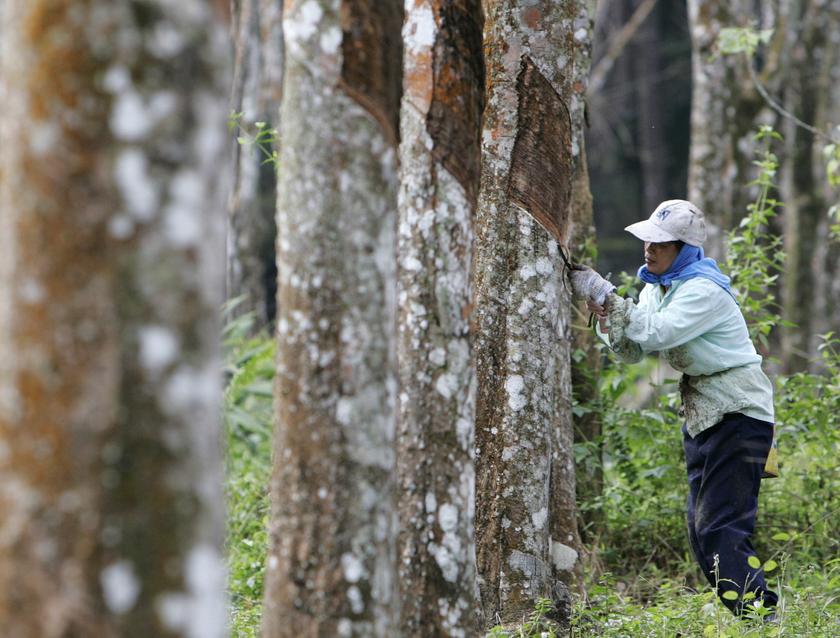
The decline has been attributed to ageing smallholders, weak returns and younger generations showing little interest in the physically demanding work of rubber tapping.
With Malaysia increasingly unable to compete with larger producers on volume, the industry is instead seeking an advantage in a market where buyers are placing greater value on rubber that can be verified as legally produced, deforestation-free and fully traceable.
MRB director-general Datuk Dr Zairossani said this could open the way for Malaysia to focus on niche, premium and sustainable rubber products.
“With the current demand, quality alone is not enough. You have to incorporate sustainability, and we see this as our next area of competitive advantage,” he said.
That shift is becoming increasingly important as international buyers, particularly in the tyre and glove industries, tighten requirements on suppliers amid their own sustainability commitments and the European Union Deforestation Regulation (EUDR).
Although implementation of the EUDR has been delayed until December, companies have continued developing traceability and compliance systems ahead of its enforcement.
Central to Malaysia’s response is the Malaysian Sustainable Natural Rubber (MSNR) standard, which is designed to meet international sustainability and traceability requirements.
The system allows rubber to be tracked from plantations through processing and ultimately to export.
Under the framework, smallholders use digital transaction permits containing land ownership and geolocation data, while processors and traders are required to record transactions through the MSNR Trace system.
Zairossani said such an approach is particularly suited to Malaysia’s fragmented rubber sector, where more than 90 per cent of cultivation is carried out by smallholders.
MSNR implementation is expected to be expanded to Sabah and Sarawak this year.
Malaysia has already demonstrated its ability to supply verified rubber, exporting its first 200 tonnes of MSNR-compliant rubber to the European Union in December 2024.
The bigger challenge, however, is ensuring there is enough domestic rubber to sell.
Malaysia requires an estimated 300,000 to 400,000 tonnes of latex annually, but domestic output stands at only about 40,000 tonnes, leaving the industry heavily dependent on imports.
Industry players believe premiums for sustainable rubber could provide an incentive for smallholders to resume tapping and bring idle plantations back into production.
Technically specified rubber meeting EUDR requirements is reportedly attracting premiums of between US$150 and US$350 per metric tonne.
For Malaysia, those premiums could make sustainability more than a compliance exercise. They could also provide an economic incentive to revive domestic production.
Unable to match major producers on scale, the industry is increasingly betting that its future competitiveness will depend on supplying rubber that commands greater value through sustainability, traceability and access to premium global markets.