WHEN a band walks onto a stage, the audience sees the lights, the instruments and the performance.
What they do not see are the years spent convincing club owners to give them a chance, performing for free to build a name, or travelling far from home with no guarantee of success.
They also do not see how difficult it can be to keep the same group together as the years pass, members grow older and life begins demanding more than music.
For Bigjamm Band, that journey has lasted 19 years.
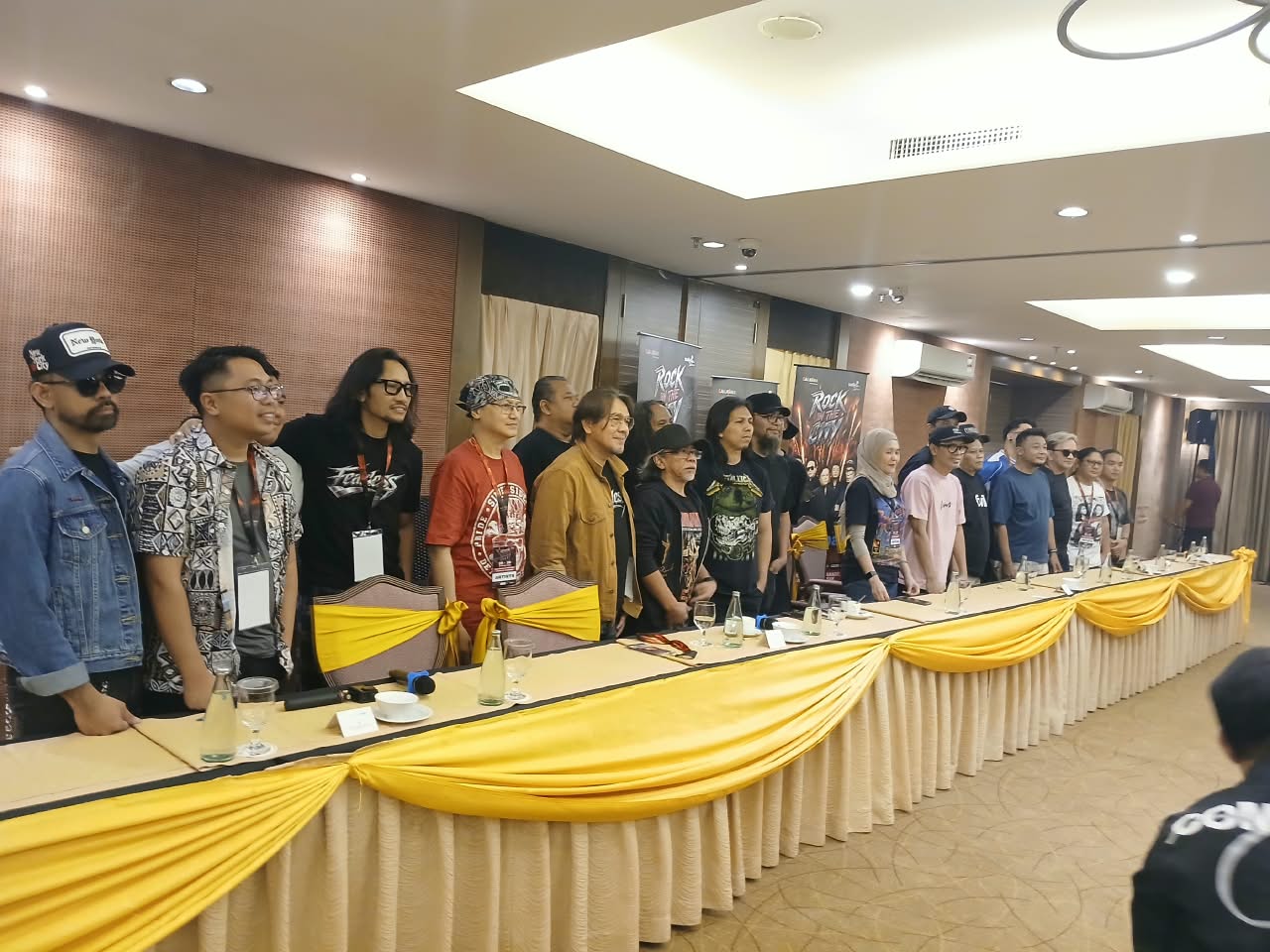
Formed in Kuching in 2007, Bigjamm began with eight Sarawakian musicians brought together by their love of music. Today, only three of the original members remain.

The line-up has changed over the years as members moved on and family responsibilities made it increasingly difficult to travel.
Yet, 19 years after it began, Bigjamm is still playing.
Behind the music is a story of friendship, sacrifice, long nights and a band that learned early that forming a group was one thing, while keeping it alive was another.
For band leader Stan AkaiDai, 48, the journey began long before Bigjamm.
Before forming the band, Stan was part of a two-piece act called AkaiDai, which began in 1996. During those years, he became friends with Mack Boom, and the two performed together in Battle of the Bands competitions and at wedding functions.
They had known each other for about three years when the idea of forming a larger band came about.
Mack founded Bigjamm and served as its drummer, while Stan was one of the band’s singers and also took on the role of managing the group, handling matters such as finances and contracts.
At the beginning, however, there was no grand ambition to become a band that would one day perform across Malaysia.
“It was just playing around for fun. We joined Battle of the Bands and played in clubs because we were interested in music,” Stan recalled.
The members came from different bands. Some formed the original core, while others joined after auditions and trial performances.
For Stan, talent was important, but so was commitment.
“If everything was okay, if the songs were good and they were committed to the work, then they joined the band,” he said.
Eventually, Bigjamm settled into an eight-member line-up comprising four singers and four backline musicians, including a keyboardist, drummer, guitarist and bassist.
But being able to play was only the beginning.
Like many young bands starting from scratch, Bigjamm had to find ways to get noticed.
“We really had to sell ourselves to the clubs,” Stan said.
Sometimes, that meant performing for free.
“Sometimes we played for free to promote ourselves,” he said.
When they did get paid, the amount could be as little as RM70 per person.
At the time, there were no social media platforms where musicians could simply upload a video and potentially reach thousands of people overnight. Building a reputation meant meeting club owners, speaking to people in the industry and entering competitions.
“You had to know the club owners and the people who had connections in the industry,” Stan said.
Today, Stan believes young musicians have more ways to promote themselves through platforms such as Facebook, Instagram and TikTok.
But while technology may have made it easier to be seen, Bigjamm’s journey changed when the group was encouraged to look beyond Sarawak.
The turning point came with a call from Andy Headhunters, a member of the well-known Sabah live band Headhunters. His encouragement for Bigjamm to travel to Sabah for an audition would eventually take the band beyond Sarawak.
For an eight-member band, however, travelling was expensive.
“It was too far and required a big budget,” Stan said.
There was no major sponsor paying for the journey. Travelling meant taking a financial risk while leaving home for opportunities that came with no guarantees.
Still, they decided to take the chance.
“Why don’t we try? Who knows, one day we might go far,” Stan recalled thinking.
In 2009, Bigjamm began travelling out of Sarawak to perform in other parts of Malaysia.
Over the years, the band’s journey took them to Kota Kinabalu, Kuala Lumpur, Johor Bahru, Ipoh, Labuan and Tawau, while they also continued performing in Kuching and Miri.
According to Stan, Bigjamm was the first band made up entirely of Sarawakian musicians to travel around Malaysia to perform. At the time, all eight members were from Sarawak.
Their lives became defined by contracts, some lasting six months and others extended for another six months. The band moved from one place to another, performing night after night while waiting to see where the next opportunity would take them.
Over time, their reputation grew.

From earning RM70 per person during their early days, Bigjamm eventually began securing contracts worth tens of thousands of ringgit.
Stan gave the example of a contract worth RM30,000 a month for the band. After an agent took RM2,000, the remaining RM28,000 was shared among the group.
Travelling, however, did more than improve their income.
It also made them better musicians.
The band travelled to Singapore, Thailand and Indonesia, where the members had opportunities to watch other bands perform and learn from them.
“We learned a lot from international bands. From there, we improved and improved,” Stan said.
Those experiences helped shape Bigjamm into a versatile band capable of performing different genres and songs in multiple languages.
As a club band, Stan said they had to be prepared for almost anything.
Rock, slow ballads and R&B were all part of the repertoire, along with songs in Malay, English, Iban, Indonesian, Chinese, Thai and Vietnamese.
“When you play in clubs, you have to learn everything. Even songs that you don’t like, you still have to learn,” he said.
The versatility they developed over the years eventually took Bigjamm beyond the club circuit.
Among the major events they have performed at were International Bike Week under Harley-Davidson in Johor Bahru in 2015, the SARXINDO concert in 2022, and Jom Heboh in 2024 and 2026.

Still, life as a travelling band was far from glamorous.
A typical club performance began at around 9.30pm and ended at about 1.30am. But the musicians could remain with customers after the performance before finally returning home.
“Sometimes we only slept at seven in the morning. We were like vampires,” Stan said.
After decades in music, he has become used to the schedule. For newcomers, however, the lifestyle can be exhausting.
“Those who are new will really feel it. They complain that they are sleepy, tired and exhausted because they have just started this life,” he said.
Then came his blunt assessment.
“Life as a club band is painful.”
There were transportation problems, too. Before e-hailing services and instant online transfers, getting home could sometimes become an adventure. Stan recalled occasions when the musicians did not have enough cash to pay for a taxi and had to call friends for help.
They also travelled in the back of pickup trucks.
Years later, those difficult moments have become part of the stories they can now laugh about.
But as the years passed, the freedom to travel also began to disappear.
When Bigjamm first started travelling, most of its members were young and single.
“Last time, all my band members were single. It was easy,” Stan said.
Today, many have families and responsibilities at home.
The band can still travel for events lasting two or three days, but long-term contracts outside Sarawak have become much more difficult to accept.

Stan said the group has received offers to perform elsewhere but has had to turn some down because of family commitments.
That challenge also changed the band’s identity.
Bigjamm began as a fully Sarawakian band, but finding musicians who were both capable and willing to travel for long periods eventually became difficult.
“There were people who could play, but they couldn’t travel with us,” Stan said.
The band eventually brought in musicians from Sabah and Indonesia.
“We had no choice. I had to choose those who could travel and join us,” he said.
Today, only three of the original members remain.
For Stan, the band’s survival has taught him that talent alone is not enough.
For those hoping to form a band, he has three words of advice: commitment, passion and discipline.
“Those three are very important,” he said.
There are rehearsals, new songs to learn and the difficult process of developing chemistry between musicians.
“It takes time. Even for Bigjamm, it took us around two or three years before the band became really tight and solid,” Stan said.
“Make sure the band is tight before you venture out.”
The band’s 19 years have also been marked by loss.
Mack, the founder of Bigjamm and Stan’s longtime friend, died in July 2021 at the age of 42.
For Stan, the loss was personal.
Mack was not simply the founder of the band. He was someone Stan had shared stages with even before Bigjamm was formed.
Stan remembered him as a simple and humble person.
“He wasn’t demanding,” he said.
But Mack also understood that making music involved both passion and practical realities.
“There were two things he always talked about. Becoming an artist and making money,” Stan recalled.
Mack did not live to see Bigjamm’s 19th year.
This year, as the band marks 19 years since its formation, its anniversary celebration will also pay tribute to its founder for the first time.
Yet the band continues to create new music.
In 2025, Bigjamm released ‘Merelakanmu’, which became a nine-time champion on Sarawak FM’s Carta 10. This year, the band released its second single, ‘Jelita’.
Despite the changing line-up, family responsibilities and the loss of its founder, Stan said Bigjamm will continue performing for as long as its members are able.
“We will continue our journey playing in clubs for as long as we are still able to,” he said.
From earning as little as RM70 per person in their early days to securing contracts worth up to RM30,000 a month, Bigjamm’s journey has taken the band far beyond the clubs where it began.
But after 19 years, Bigjamm is no longer the same group that first formed in 2007.
Members have come and gone. The stages have changed. The musicians who once travelled for months at a time have grown older, and one of the people who started it all is no longer there.
Yet, after everything, the music is still playing.