Through ‘Satu Suara, Seribu Warna’, the children of Tabika Perpaduan are discovering that loving a country begins not with grand words, but with friendship, shared experiences and learning to belong.
The Little Things That Make a Nation
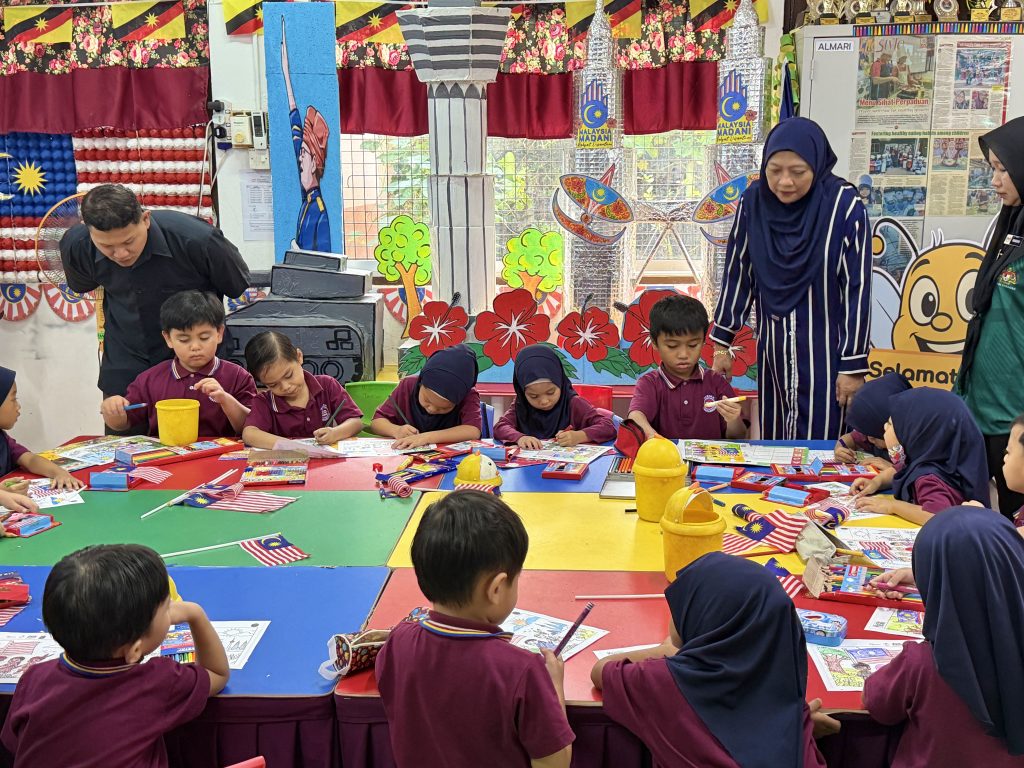
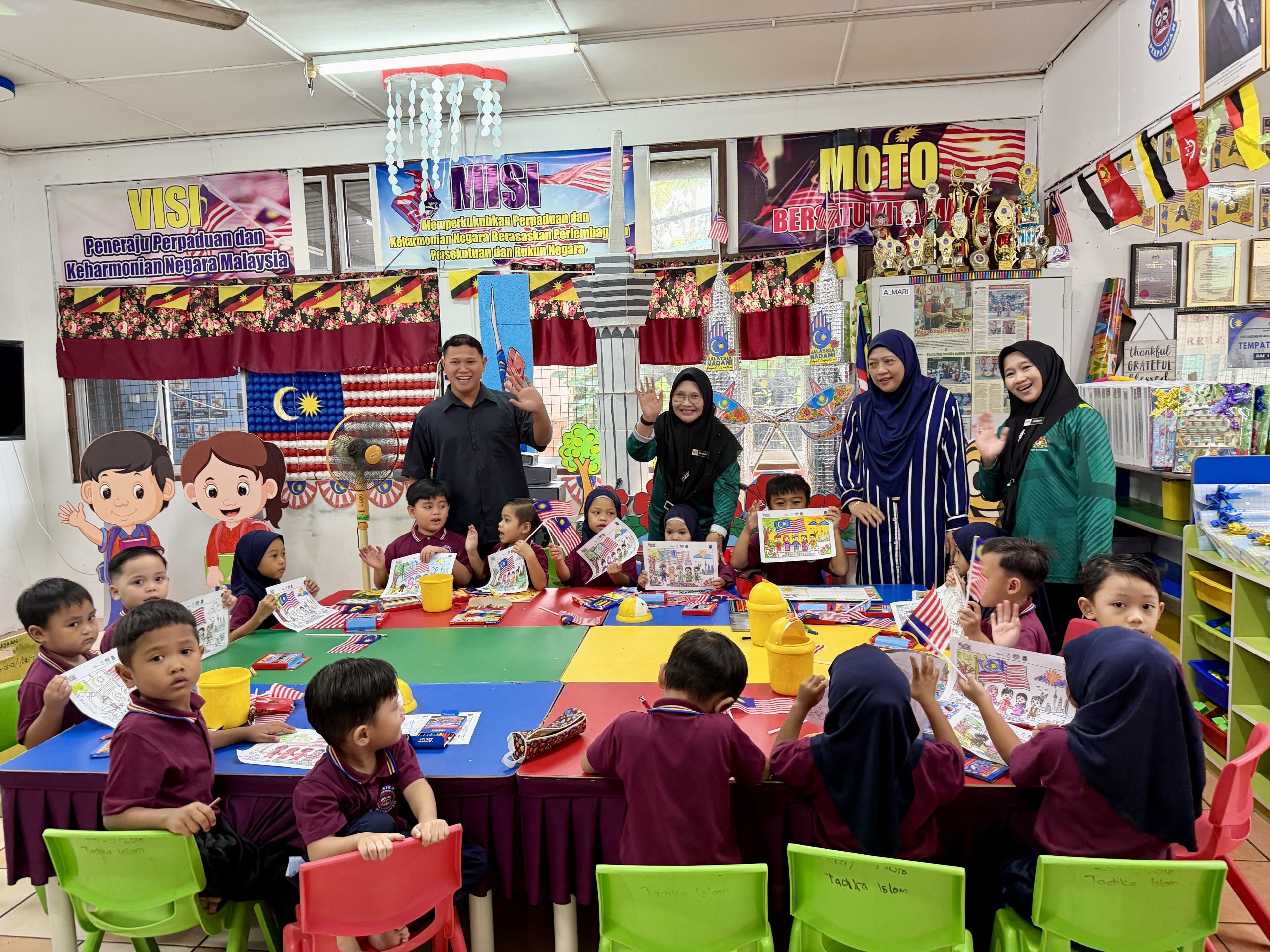
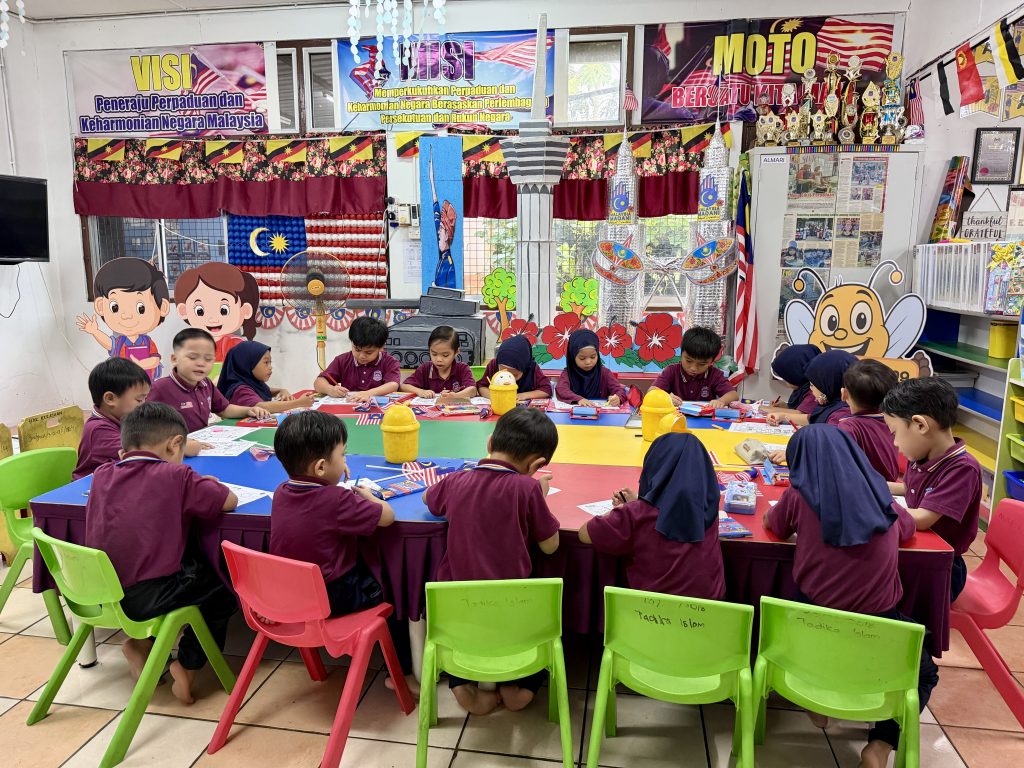
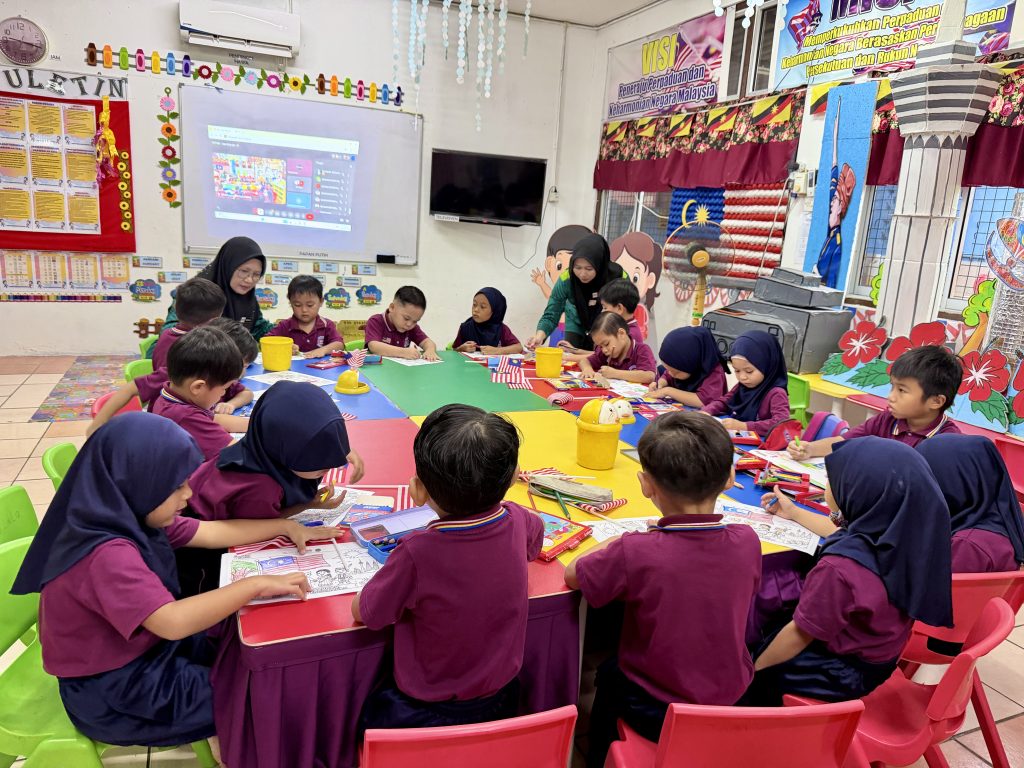
At nine in the morning, 17 young children in a classroom at Tabika Perpaduan Pinang Jawa, Kuching, were busy with a task that looked deceptively simple.
They were colouring.
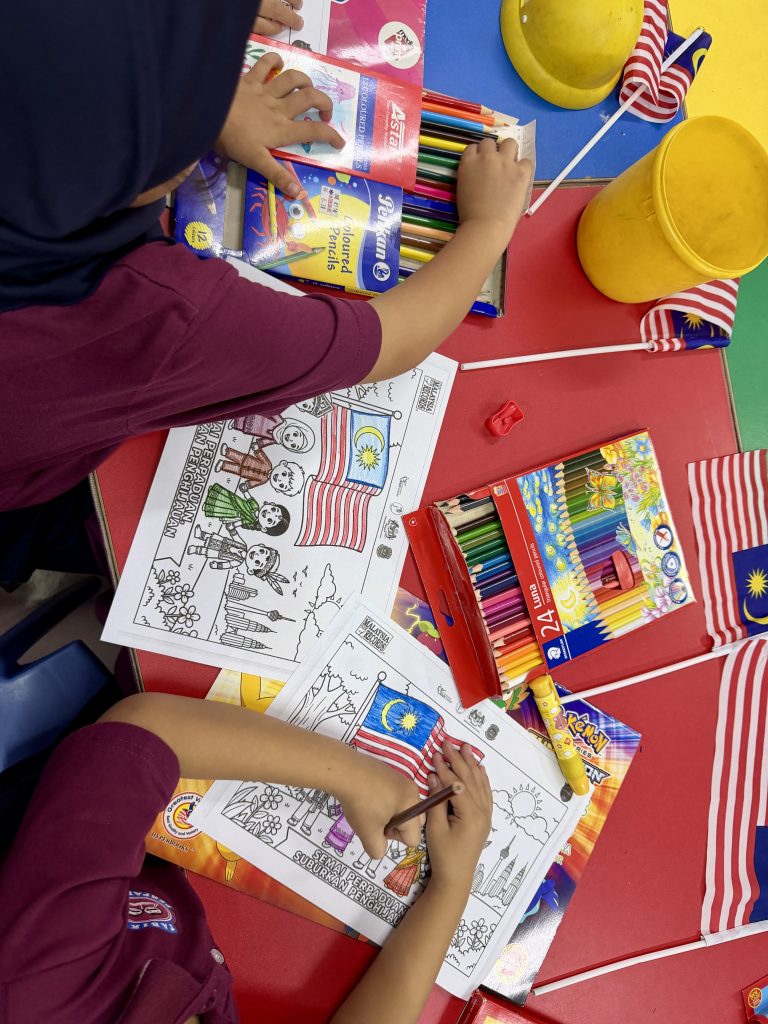
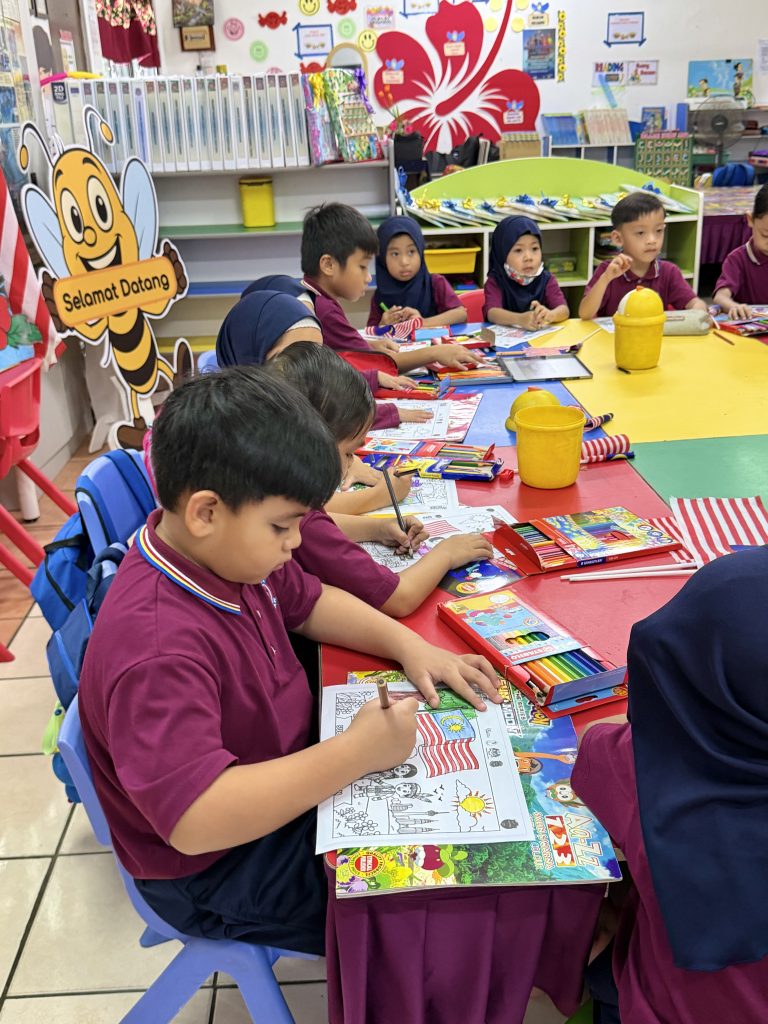
Colour pencils moved across sheets of paper as little hands filled in shapes, changed colours and carefully worked within the lines.
Some children were absorbed in their pictures; others glanced at what their friends were doing before returning to their own.
There was nothing particularly grand about the scene.
Yet that morning, the children were part of something taking place far beyond their classroom.
They were among pupils from Tabika Perpaduan nationwide participating simultaneously in the ‘Satu Suara, Seribu Warna’ programme, a special Merdeka and Hari Malaysia initiative organised by Pertubuhan Nadi Sihat in collaboration with the Department of National Unity and Integration (JPNIN).
Held under the theme “Patriotik, Perpaduan dan Penghijauan”, the nationwide colouring activity also aimed to set a new Malaysia Book of Records record for the largest participation of Tabika Perpaduan pupils in a colouring activity.
But at Tabika Perpaduan Pinang Jawa, the significance of the morning was not in the size of the record.
It was in what the children were learning without necessarily knowing they were learning it.
Where patriotism begins
For children aged four to six, patriotism is a rather large word.
They may know the Jalur Gemilang, recognise its colours, sing Negaraku or take part in Merdeka celebrations. But asking a preschooler to explain why a country should be loved is another matter altogether.
At Tabika Perpaduan, however, that idea begins much earlier — woven into how children learn about themselves and the people around them.
Established in 1976, Tabika Perpaduan was created to foster goodwill and unity among different communities. What began with 25 pilot classes has since grown into a nationwide early childhood education network.
Today, JPNIN lists the development of patriotism and unity among its objectives, with children encouraged to love the country and appreciate Malaysia’s racial and ethnic diversity.
While Tabika Perpaduan follows the national preschool curriculum, the Ministry of National Unity has also developed a Rukun Negara-based module, incorporating elements of nationhood and unity into teaching and learning.
In 2026, there are 1,781 Tabika Perpaduan classes nationwide, serving more than 34,000 pupils.
Back in the classroom, however, the lesson is easier to see than to explain.
It is there in the children sitting beside one another, each absorbed in the same activity but approaching it in their own way.
Because at this age, patriotism cannot always be about knowing the right words. Sometimes, the first lesson in loving a country begins with a box of colour pencils and a sheet of paper.
A thousand colours, one classroom
‘Satu Suara, Seribu Warna’ becomes more meaningful when seen through that lens. It is more than a colouring exercise.
The activity is shared. The theme is shared. But the colours are their own.
A child chooses one shade; another chooses something completely different. Some colour boldly, while others take their time, carefully filling each section.
The colours may be different. So are the children.
Yet they are all part of the same activity, sharing the same table, the same classroom and, for that morning, the same purpose.
Perhaps that is one of the simplest ways to introduce a child to unity.
Malaysia has never been one colour. It is a country of different communities, languages, traditions and ways of life.
Unity has never been about making those differences disappear, but about learning to live with them and recognising what they share.
For a preschool child, that lesson can begin at a table.
That morning, teacher Siti Khadijah Abol and assistant teacher Mordiah Mohd Apandi guided the pupils through the nationwide programme. Seventeen of the class’s 19 pupils took part.
Also in attendance was Suzana Busalam, head of Unit Pendidikan Awal Kanak-Kanak, JPNIN Sarawak, along with other JPNIN staff.
For the children, the national scale of the programme mattered less than the world immediately around them — their classmates, their colour pencils and the sheets they were colouring.
And perhaps that is where the real lesson lies.
Patriotism does not have to begin with a child understanding everything about a country. It can begin by giving them reasons to feel that they belong.
Even the programme’s environmental component, reflected in its “Patriotik, Perpaduan dan Penghijauan” theme, adds another dimension to that belonging: caring for the place they all call home.
The ideas may be simple now. They will become more complicated as the children grow.
The Malaysia they are growing into
One day, Merdeka will mean dates and historical events. Patriotism will become a more conscious choice. They will learn about the sacrifices that came before them and the responsibilities that come with citizenship.
For now, it may be enough that they are learning to sit together, create together and celebrate something together.
And to understand, in their own small way, that being Malaysian does not require everyone to be the same.
There is something fitting about Satu Suara, Seribu Warna taking place as Malaysia approaches another Merdeka celebration.
The country is preparing, once again, to remember its past and celebrate its independence. But Merdeka is also about looking forward.
If the future of a country is ultimately carried by the children growing up in it, then nation-building begins much earlier than most people think.
It begins in classrooms like Tabika Perpaduan Pinang Jawa.
Before a child can recite the Rukun Negara from memory. Before they understand the weight of the word “patriotism”. Before they know all the stories behind the flag.
For now, it might simply be a child choosing a colour and putting it on paper.
A friend sitting beside them. A shared activity taking place across thousands of classrooms.
One voice. A thousand colours.
And a generation quietly learning that all those colours can belong in the same picture.