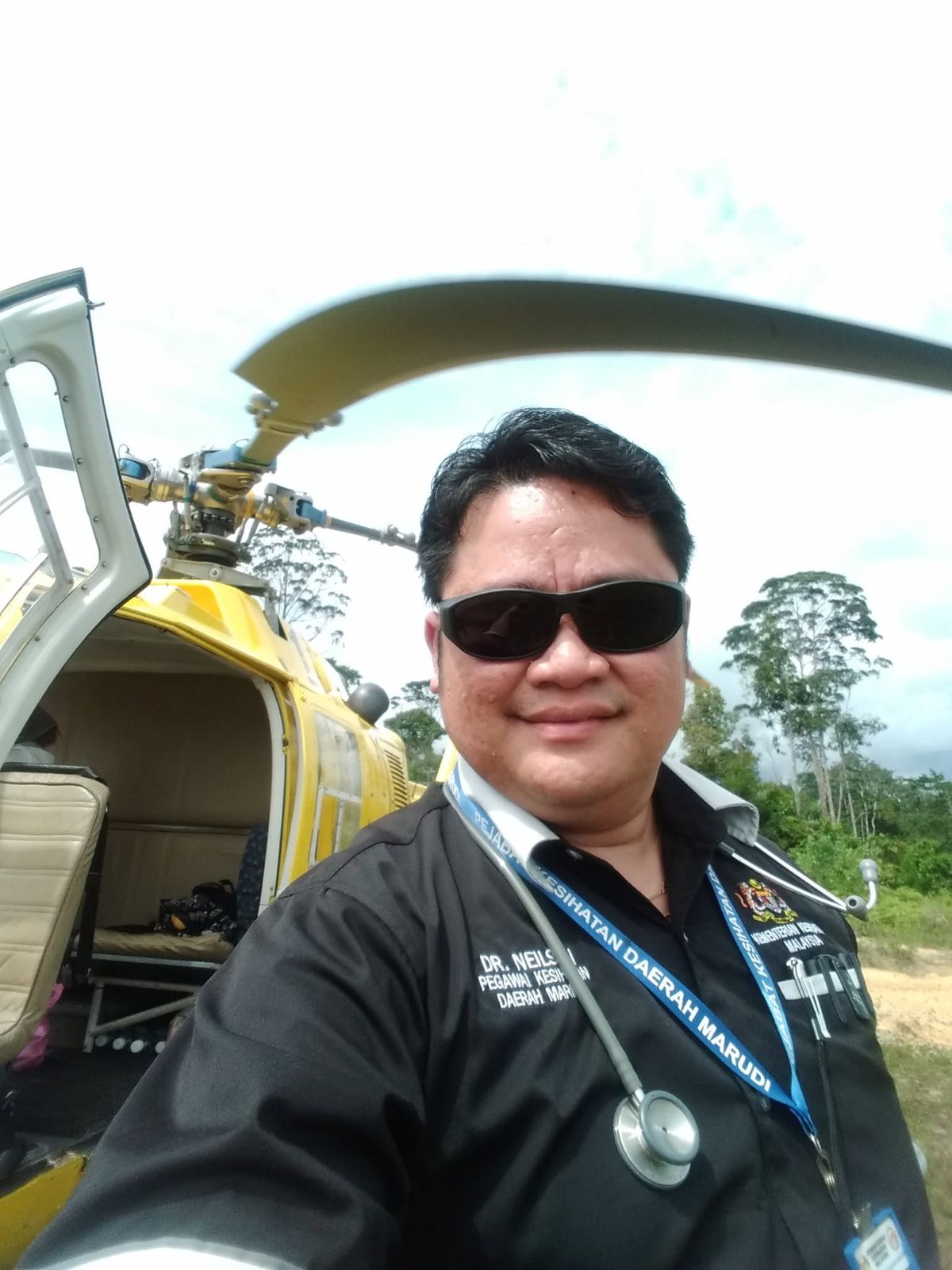
KUCHING: Years before becoming an associate professor at Universiti Malaysia Sarawak (UNIMAS), Dr Neilson Richard Seling boarded a Flying Doctor Service (FDS) helicopter for a journey he would never forget.
It was a journey that brought him home.
Following Tuesday’s (Sept 8) FDS helicopter crash near Long Lellang Airport, Dr Neilson shared a flashback of an earlier assignment in Ulu Baram — one that unexpectedly gave him the chance to return to Long Palai, the village where he had spent part of his childhood.
His recollection takes him back to a time when a relieving doctor was needed for an FDS assignment covering several Kenyah and Penan villages.
As he looked through the list of localities on the scheduled route, one name immediately caught his eye.
“Ehh… ada singgah di Long Palai (there’s a stop at Long Palai)”, he thought to himself.
Long Palai was his village and seeing this on the route, Dr Neilson volunteered for the assignment.
For him, it was more than another day of work. It was a rare chance to return to the place that had been part of his childhood — even if he would only be there for a few hours.
“For me, even if I only had the chance to step foot in Long Palai for a short while, that would already be enough,” he recalled.
Before reaching Long Palai, the FDS team stopped at several Penan villages, including Ba’ Abang, Ba’ Pakan and Ba’ Purau.
That afternoon, they departed from Long Jekitan, where they had stayed overnight, and continued towards Long Palai.
The plan appeared straightforward. The team expected no more than 20 patients and anticipated completing the visit within two hours before flying back to Miri by 4pm.
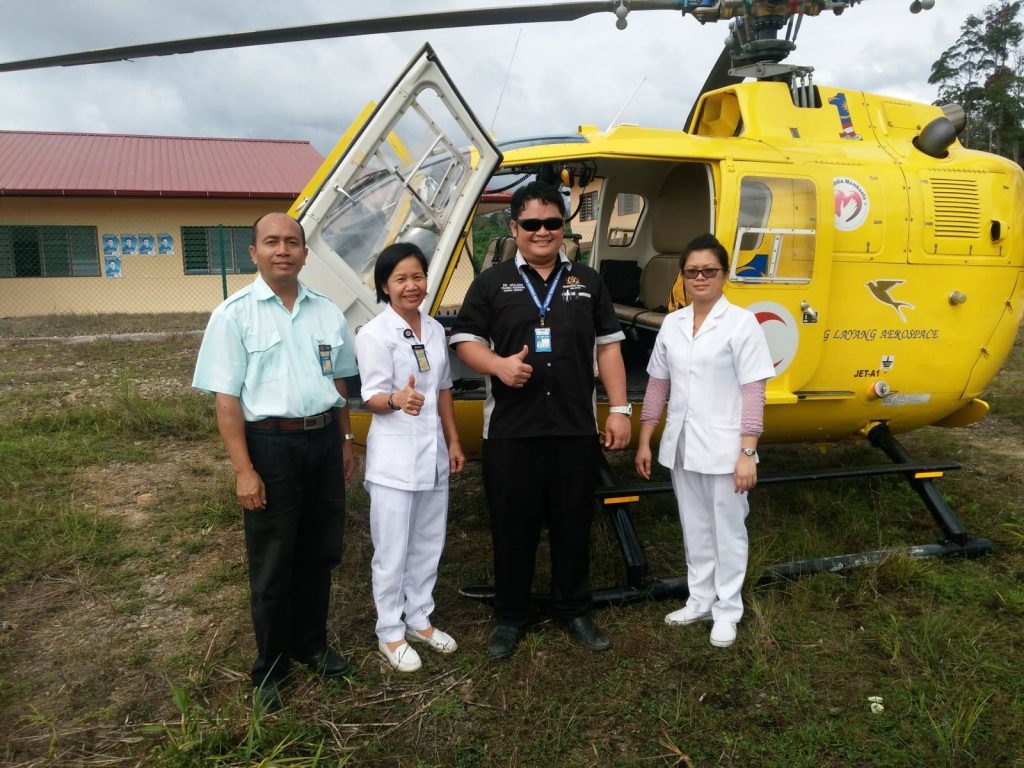
At around 2pm, the helicopter touched down on the Long Palai school field.
For the rest of the team, it was another landing on an FDS route but for Dr Neilson, it was home.
The team unloaded boxes of medicines and medical documents and made their way to the home of the village chief.
There was another surprise waiting for his colleagues — the village chief was Neilson’s late uncle, Martinus Mato.
As villagers greeted him warmly and his familiarity with the place became increasingly obvious, his colleagues began looking at him curiously.
That was when Dr Neilson finally told them: “Welcome to my kampung!”
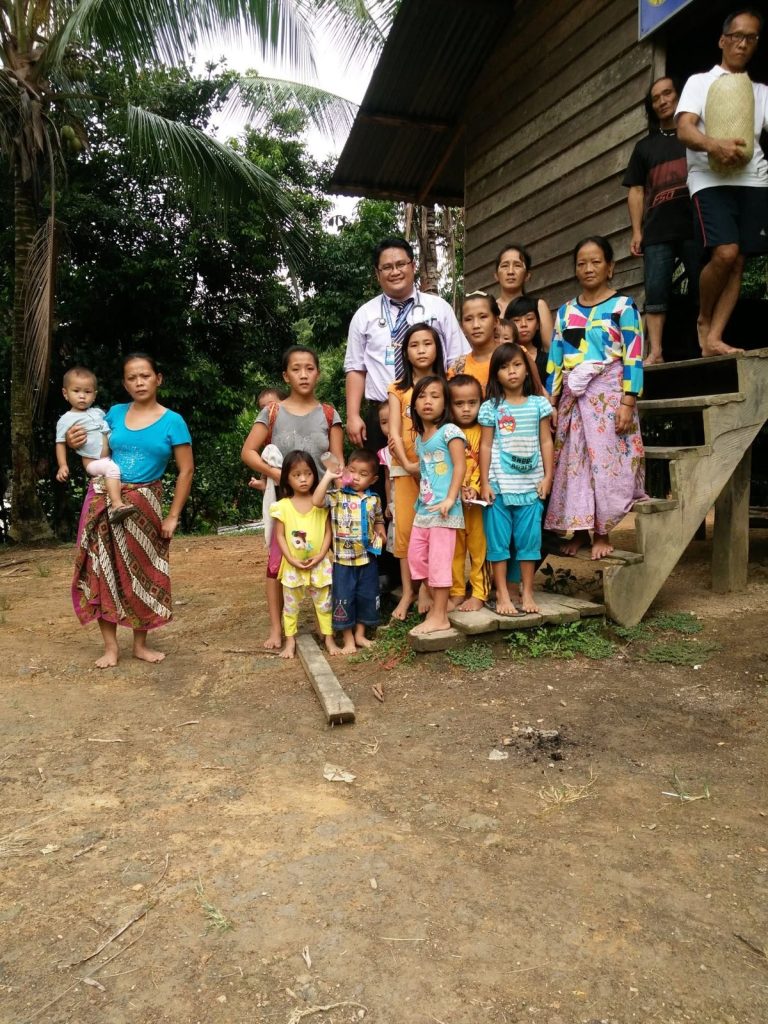
The villagers welcomed the team with handshakes and greetings, almost like they were welcoming dignitaries.
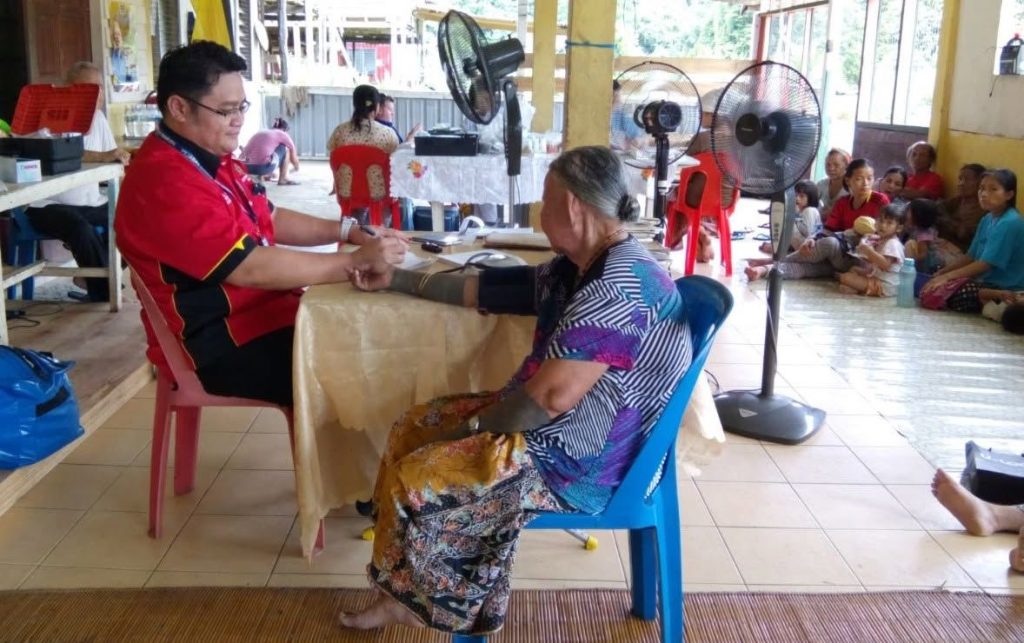
But the reunion had to wait as there were patients to see. At first, about 30 people were waiting, then more came.
Within an hour, the number had grown to more than 80 — far beyond what the medical team had expected and prepared for.
Soon, the team’s chief medical assistant quietly approached Dr Neilson.
“Doctor, we are going to run out of medicines. We did not expect this many patients,” he said.
There were still villagers waiting. For Dr Neilson, the thought of simply leaving them behind did not sit well.
“Surely we cannot just leave them. Why are we here in the first place? To treat people, right?,” he recalled telling his colleague.
They began looking for a solution. The nearest clinic was Long Jeeh Health Clinic, where they could obtain additional medicines.
Before they could settle the matter, however, their pilot approached with another problem: the team needed to leave.
Although the sky above Long Palai appeared clear, weather conditions along the helicopter’s route back were deteriorating.
The pilot explained that if they did not depart immediately, he would have to leave without the medical team and return for them the following morning.
Dr Neilson and his colleagues had a choice, but they chose to stay because there were still patients waiting for them.
His cousin, Robert Mato, then offered to take them by boat to Long Jeeh Health Clinic to collect more medicines.
The journey took about two hours, passing through the interior landscape and negotiating Liam Belulu, one of the major rapids along the route.
By the time they had collected the additional supplies and started their journey back to Long Palai, darkness had fallen.
Dr Neilson remembered watching his cousin navigate the river in almost complete darkness, without even a spotlight to guide the way.
It was the kind of ability that came not from maps or instruments, but from years of knowing the river and calling the interior home.
When they finally reached Long Palai, something else stayed with him.
“The villagers were still waiting. So, we unpacked our supplies and started again. Under fluorescent lights powered by a generator, the FDS session continued into the night.
“This time, we had enough medicine for everyone,” he said.
Yet for Dr Neilson, the consultations were unlike any ordinary clinic session.
He had returned as their doctor, but to many of those sitting across from him, he was still one of their own.
Instead of only Neilson asking about their health, the villagers began asking about him.
Inu denga uwek ngan amai ko, duktun? (How are your parents?)
Ti nyae ake kuma ida” (Send my regards.)
Kudak lepa anak ko, duktun? (How many children did he have?)
“Midan nai nabat ame kini la’a?” (When can you come and treat us again?)
For a while, the distance between doctor and patient disappeared.
Towards the end of the session, Dr Neilson gave a simple health talk as villagers gathered beneath the generator-powered lights.
It was in that familiar village, surrounded by familiar faces, that his journey seemed to come full circle.
The place where he had once been a child studying and growing up was now the place where he stood as a doctor, caring for the very community that had once cared for him.
“What began as just another FDS assignment unexpectedly became something much more personal. It brought me home and it reminded me where I came from.
“And it gave me an opportunity, even for just one night, to serve the very community where part of my own journey began,” he said.
Dr Neilson thanked his late uncle Martinus and the people of Long Palai for opening their homes to the medical team, as well as Robert, who has since become the village chief, for safely taking them to Long Jeeh and back.
He also remembered the staff of Long Jeeh Health Clinic who provided the additional medicines and his FDS colleagues who were willing to change their plans, stay overnight and continue serving the villagers.
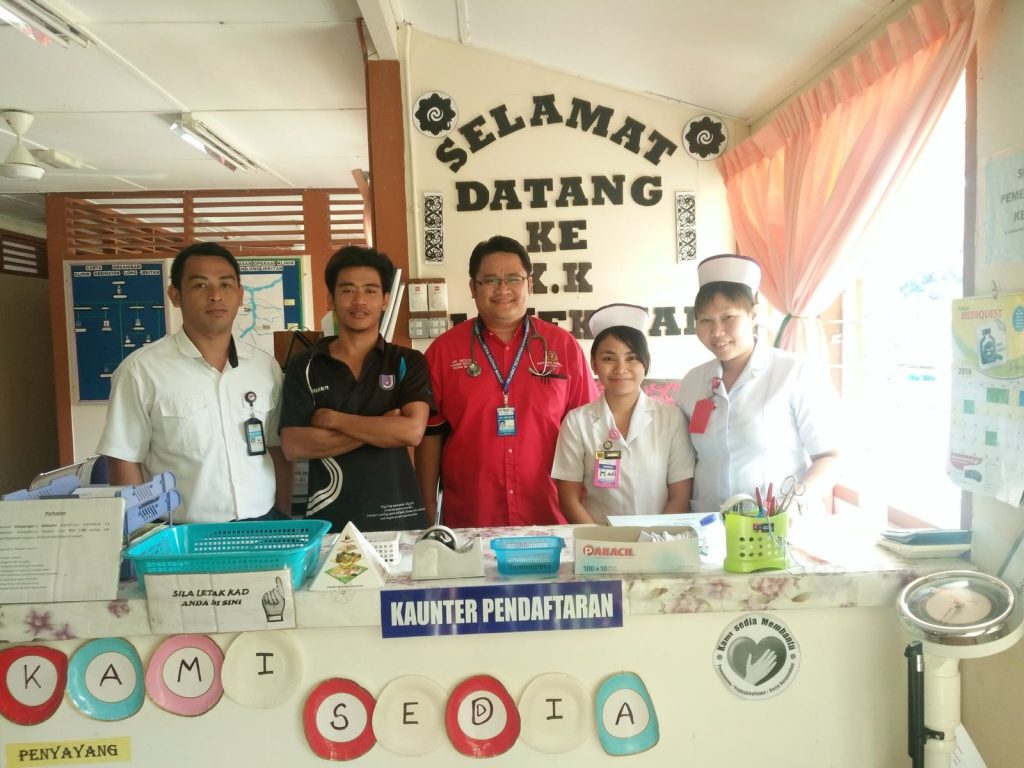
Looking back, Dr Neilson said the experience reminded him of one of the greatest privileges of being a doctor — to return to the place that nurtured him, not merely as someone who had come home, but as someone who could finally give something back.
Years later, as attention once again turns to the men and women who travel into Sarawak’s interior through the FDS, the memory of that journey remains with him.
A helicopter had taken him there as a doctor, but Long Palai had always been home.
“Long Palai, Ulu Baram. A small village, but forever a big part of my story,” he said.