Sediakan payung sebelum hujan
– Traditional Malay proverb
When we hear about cyberattacks, we usually think of online scams, stolen passwords or money disappearing from bank accounts. But have we ever thought about how a cyberattack might affect something as simple as buying food for dinner? It may sound strange. After all, what does a computer system have to do with the rice we cook, the vegetables we buy or the groceries we bring home? Perhaps more than we realise.

Recently, Prime Minister Datuk Seri Anwar Ibrahim highlighted growing global security concerns, including cyber threats and possible disruptions to essential services. On November 4, Malaysia’s National Cyber Security Agency (NACSA) also raised the national cybersecurity threat level from Low to Medium as a precautionary measure.
Naturally, such news may leave some of us wondering: Should we keep extra food at home? What if banking services suddenly become unavailable? Do we need to prepare for something? Personally, I think there is no harm in being a little more prepared. But being prepared does not mean we should start worrying or rushing to buy everything at the supermarket.
When was the last time you paid with cash?
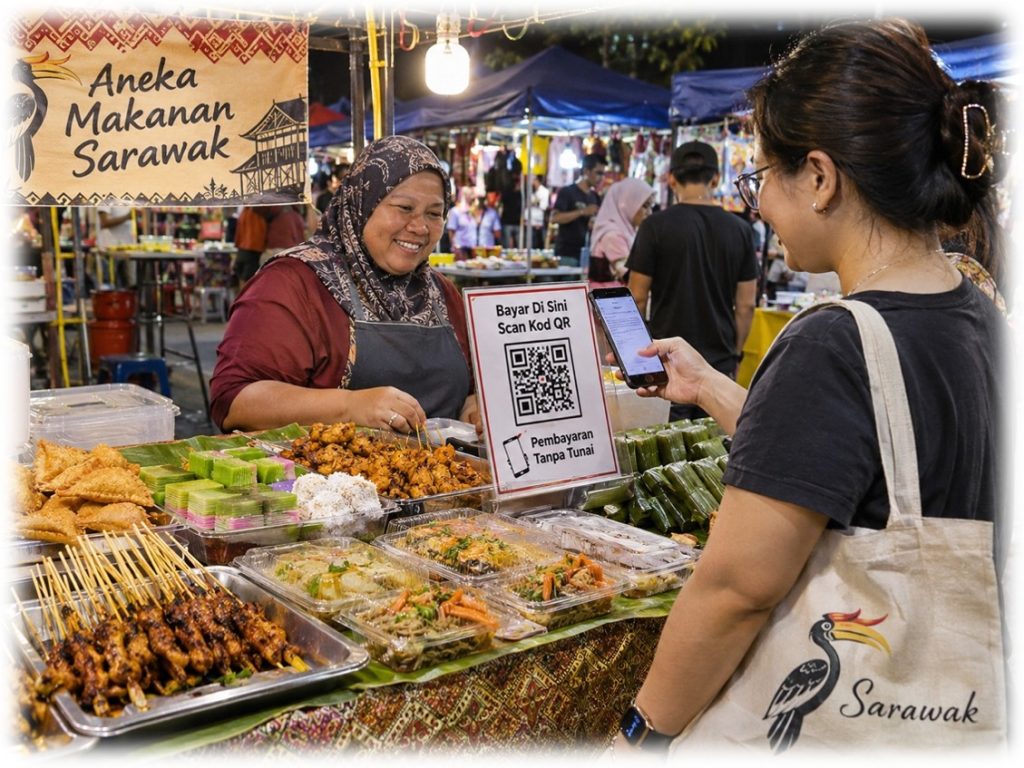
Think about our everyday routines. We stop at a coffee shop for breakfast, scan a QR code and pay. We visit the pasar malam to buy satay, kuih or vegetables, and there is another QR code waiting at the stall. Even small roadside vendors are making it easier for customers to pay without cash.
These days, some of us leave home with just our phones. No wallet, no loose change and sometimes not even a single ringgit in our pockets. And why not? QR payments are convenient, quick and useful for both customers and small businesses.
But imagine this. You have just finished choosing your favourite food at the pasar malam. The seller has packed everything nicely, and you take out your phone to pay. Unfortunately, the internet connection is down, or your banking application is temporarily unavailable.
You check your wallet. No cash. Suddenly, something as simple as buying dinner becomes a little complicated. Of course, this does not necessarily mean a cyberattack has happened. Internet interruptions and technical problems can occur for many reasons.
There is also the need to remain careful when scanning unfamiliar QR codes. A quick check of the payment recipient’s name before confirming a transaction is a simple habit that can help prevent mistakes or scams.
I am certainly not suggesting that we stop using QR payments. They have made our lives easier. Perhaps the lesson is simply that keeping a little cash in our wallets is still a good idea.
Our food also depends on systems we rarely see
Before groceries reach our kitchens, they may have travelled through warehouses, refrigerated storage facilities and delivery networks. Many of these operations depend partly on technology.
When certain systems are disrupted, deliveries or business operations may be affected. In the case of perishable foods such as meat, fish and dairy products, prolonged refrigeration problems can also affect food safety.
This does not mean that a cyberattack will suddenly cause food shortages in Malaysia. It simply reminds us that having enough food is one thing, while ensuring that it reaches consumers safely and reliably is another.
Here in Sarawak, we are already familiar with occasional disruptions caused by heavy rainfall, flooding or transportation difficulties, particularly in some rural areas. Perhaps that is why keeping a few basic necessities at home has always been a familiar practice for many families.
A little preparation goes a long way
I think we can start with four simple things: food, drinking water, household hygiene essentials and some cash. We do not need to turn our homes into mini supermarkets. Just having a reasonable amount of rice, biscuits, canned food or other everyday items can be helpful during temporary disruptions.
The same goes for drinking water, soap, detergent, toothpaste and toothbrushes. These may seem like small things, but we certainly appreciate having them when we need them. And perhaps, the next time we visit the ATM, we could keep a little cash aside for situations when QR payments are not available.
Of course, every household has different needs and financial circumstances. There is no need to spend beyond our means or buy more than we can use. I also believe we should be considerate of others. Not everyone can afford to keep additional supplies at home. Buying excessively may only make things more difficult for those who are already managing tight household budgets.
Another thing worth remembering is how quickly information spreads nowadays.
A message claiming that food will soon run out can travel through WhatsApp groups within minutes. Before forwarding it, we should check whether it comes from a reliable source. Sometimes, unnecessary worry begins with information that has not even been verified.
Importantly, the government has reassured Malaysians that national food supplies remain sufficient and that emergency stockpiling is unnecessary. To me, the recent discussion about cybersecurity is not a reason to be frightened. Instead, it is a useful reminder of how much our daily lives depend on systems and services that we often take for granted.
We should continue enjoying the convenience of technology, including QR payments at our favourite coffee shops and pasar malam stalls. There is no need to go backwards simply because disruptions are possible. But perhaps having a small backup plan is not such a bad idea.
Keep a little cash, have some basic necessities at home, stay informed and, most importantly, think about others in our community.
After all, being prepared does not mean expecting something bad to happen. It simply means making everyday life a little easier when things do not go as planned.
The views expressed here are those of the writer and do not necessarily represent the views of Sarawak Tribune. The writer can be reached at ab_fauziah@upm.edu.my.