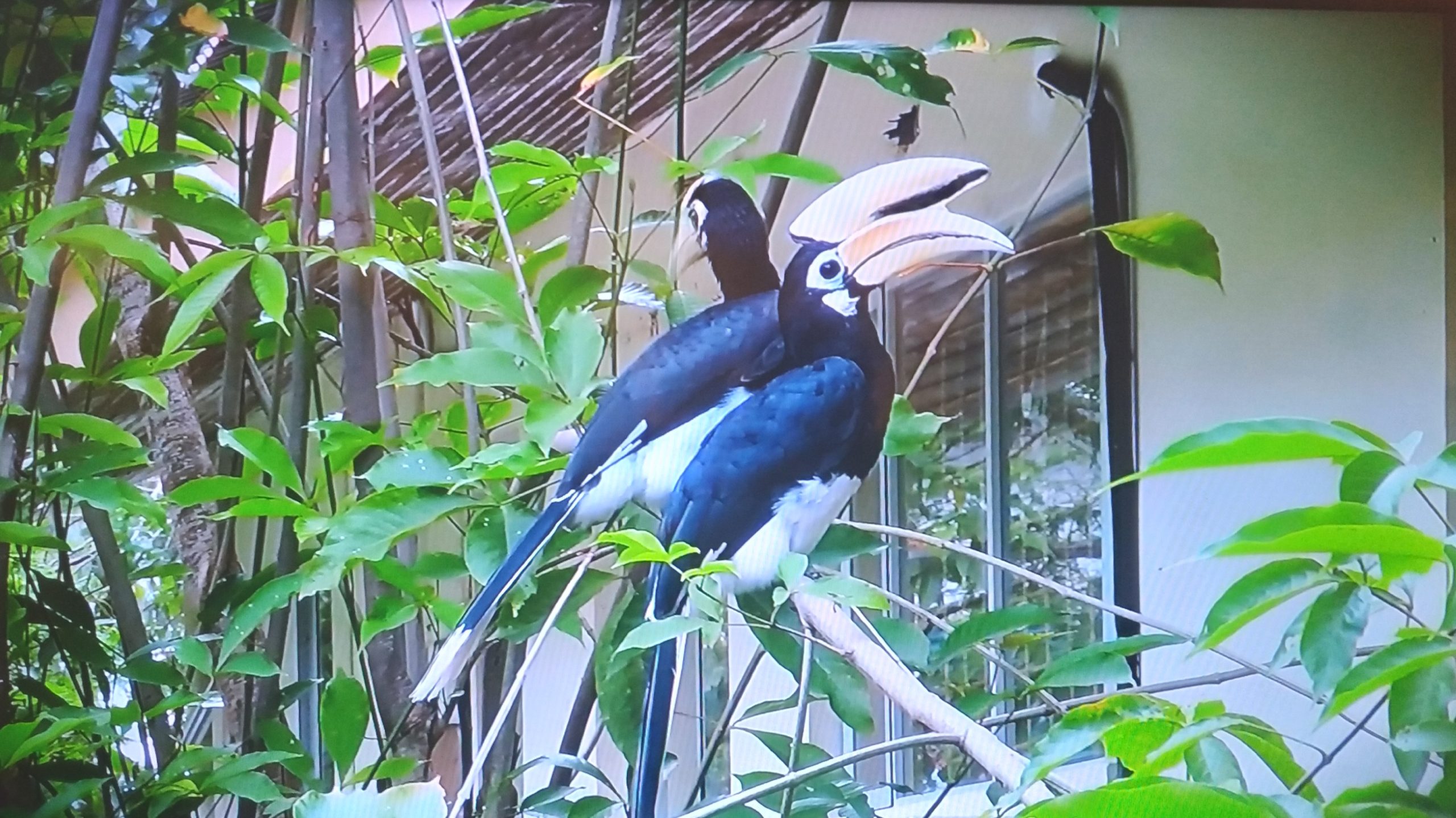
He waited where she once perched, scanning the sky that never brought her back.
IN the quiet, leafy expanse of Piasau Nature Reserve in Miri, a love story once unfolded high among the treetops, one that continues to stir hearts long after tragedy struck.
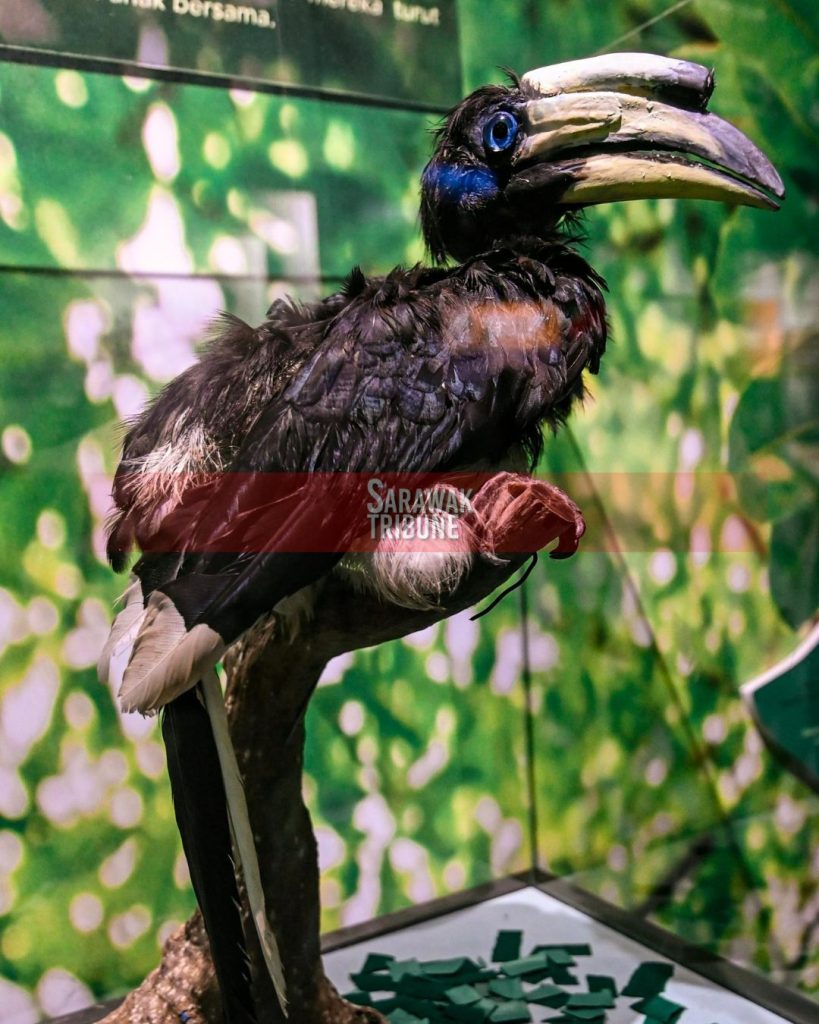
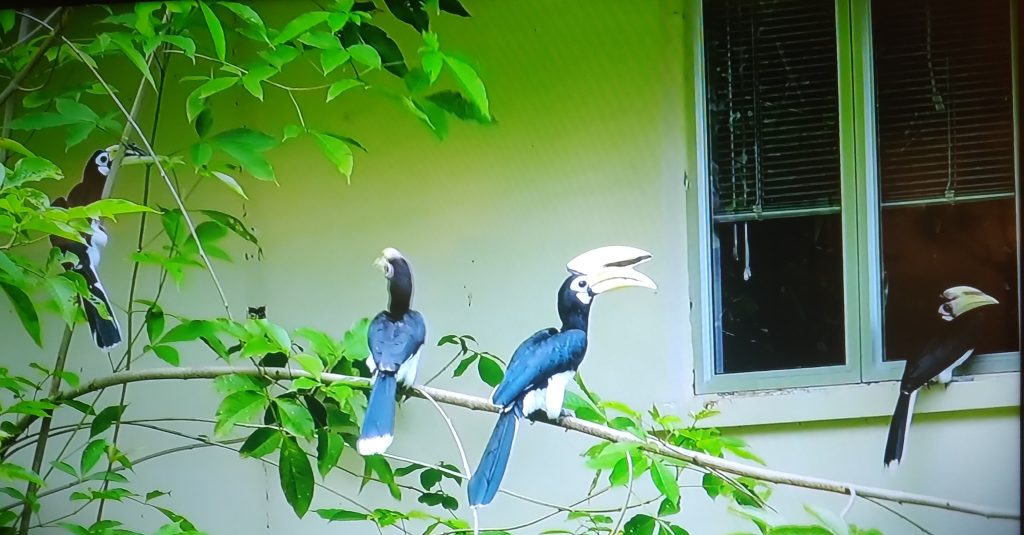
For years, a pair of Oriental Pied hornbill became an unlikely symbol of devotion, resilience and loss.
Fondly known as Jimmy and Faridah, the birds were more than just wildlife residents; they were cherished figures among the people of Miri.
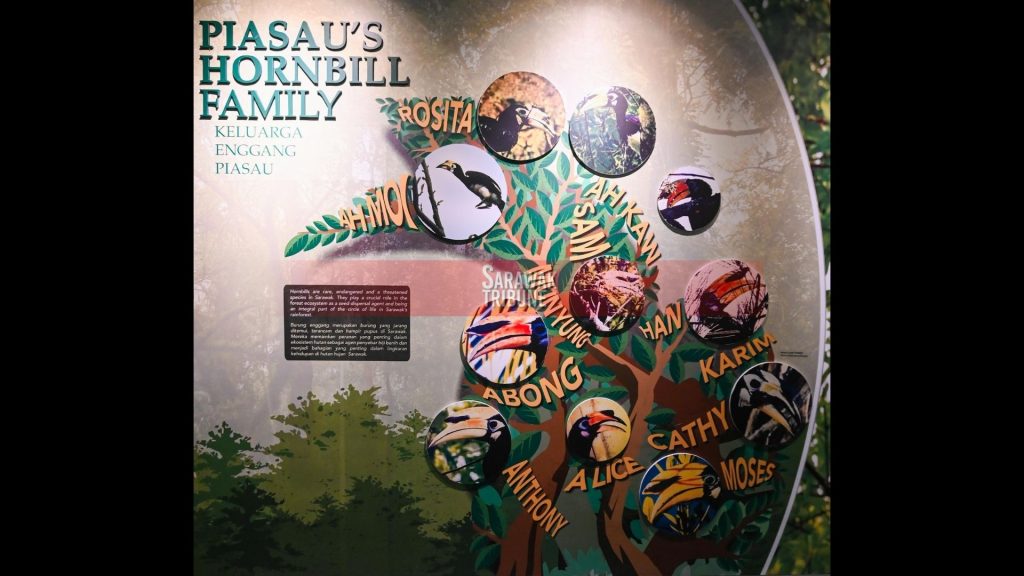
During my recent visit to the reserve’s information centre, I found myself unexpectedly moved by their story on the wall, a narrative that reads less like a wildlife account and more like a deeply human tale of love and grief.
Unbreakable bond
Jimmy and Faridah first captured public attention in 2005. Nesting within the urban forest of Piasau, the pair quickly became familiar to birdwatchers and residents alike.
Over the years, they built a legacy that few could rival, successfully producing 56 offspring, an extraordinary number that underscored both their compatibility and the suitability of their habitat.
Hornbills are known to mate for life, and the bond between Jimmy and Faridah appeared unbreakable.
Their partnership reflected the remarkable breeding behaviour of their species.
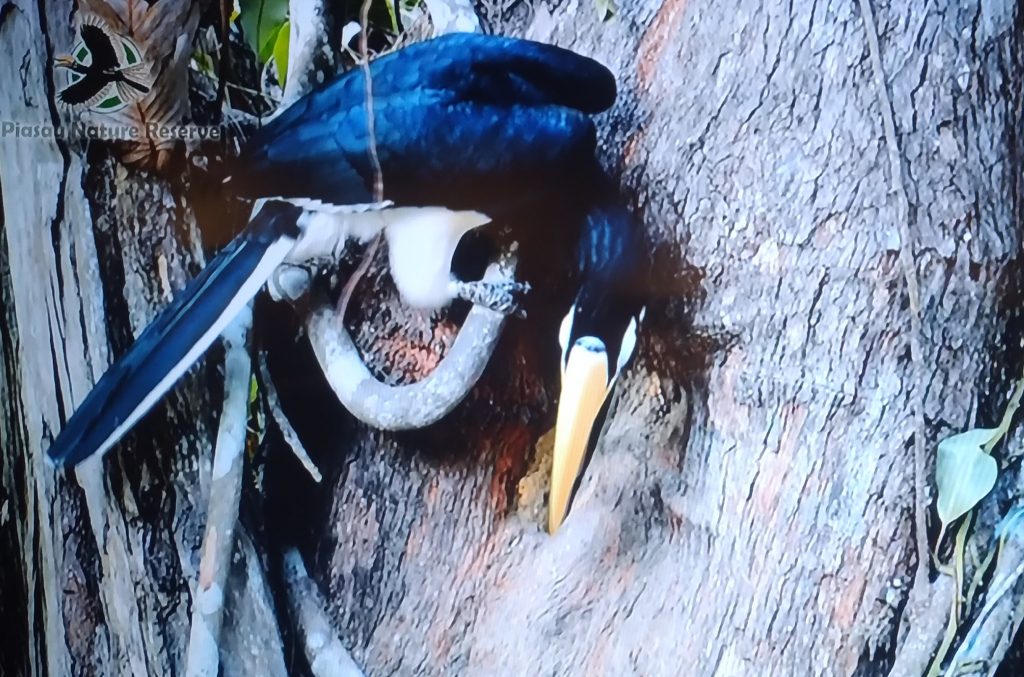
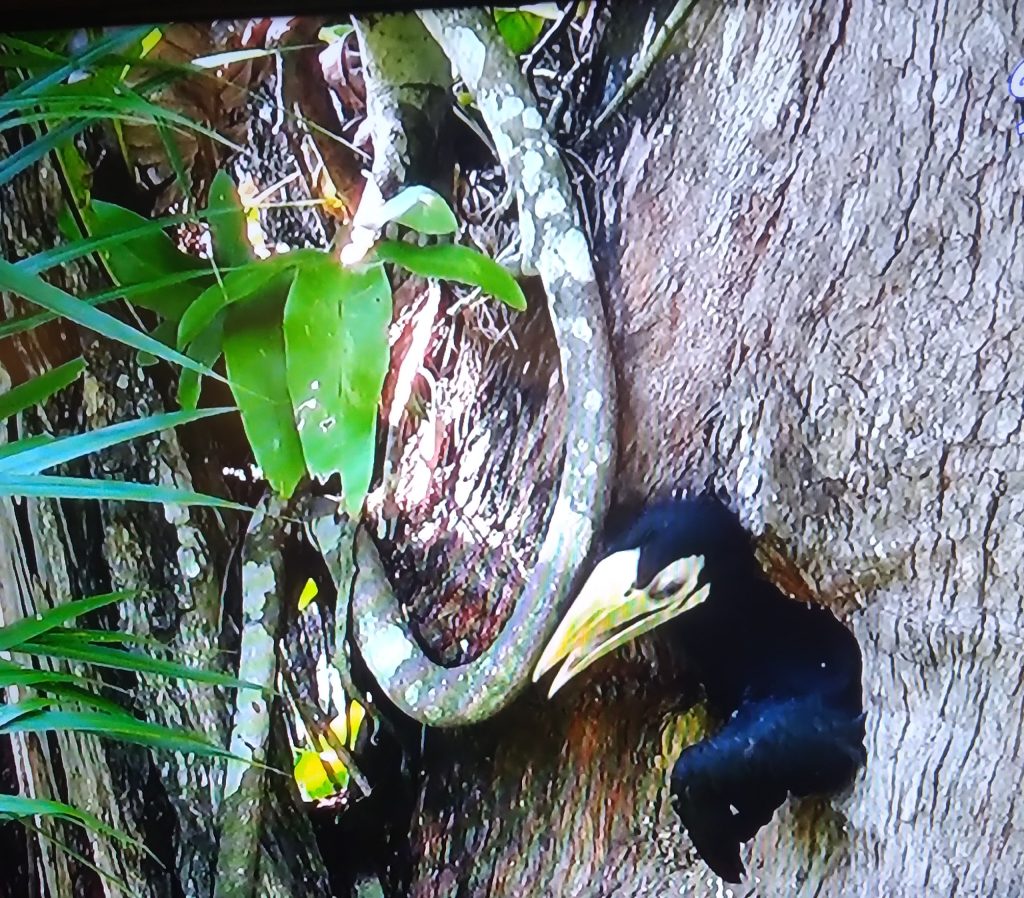
After courtship, Faridah would seal herself inside a tree cavity using a mixture of mud, food remains and her own droppings, leaving only a narrow slit.
Through this tiny opening, Jimmy would faithfully deliver food – day after day, week after week – sustaining both his mate and their chicks.
It is a fragile arrangement. Should anything happen to the male during this period, the consequences are often fatal for the female and her young.
Yet for years, Jimmy never faltered.
The day everything changed
That is why what happened on September 26, 2013, struck such a profound chord.
Faridah was found dead – killed by poachers.
Her carcass, heartbreakingly, was recovered from a rubbish bin. The discovery shocked not only conservationists but also the wider public.
Headlines across Sarawak carried the grim news, and outrage spread quickly.
Even before her body was found, something had felt wrong.
Observers was said to have noticed Jimmy behaving unusually. He appeared distracted, restless – flying back and forth as though searching.
Faridah, who was almost always by his side, had vanished. The absence was glaring.
Sensing that something was amiss, birdwatchers alerted the authorities.
The Sarawak Forestry Corporation (SFC) acted swiftly, launching an investigation that ultimately led to the arrest of the poacher.
Working alongside the police, they ensured the perpetrator was brought to justice and sentenced to imprisonment.
But justice, as many would agree, could not undo the loss.
A grief that resonated
What lingered most was the image of Jimmy – alone.
For a species that forms lifelong bonds, the disappearance of a mate is not easily replaced.
The earlier accounts of Jimmy searching the skies carried an almost unbearable poignancy. It is rare for wildlife stories to evoke such empathy, yet this one did.
As I stood reading about those moments at the information centre, I felt a quiet heaviness.
It is easy to think of conservation in abstract terms – numbers, policies, protected areas. But Jimmy and Faridah’s story gave it a face, a feeling, a heartbeat.
It reminded me that loss in the wild is not always silent.
A catalyst for change
Faridah’s death, however tragic, became a turning point.
Public anger transformed into action. Her story galvanised communities, conservationists and organisations into a united push to protect Piasau Camp.
Among those leading the effort were the Malaysian Nature Society (Miri Branch), headed by Musa Musbah and the Piasau Camp Miri Nature Park Society, headed by Datuk Sebastian Ting, who is now Deputy Minister for Tourism, Creative Industry and Performing Arts.
Their lobbying efforts were relentless. They called for the area to be gazetted as a Totally Protected Area, highlighting its importance not only as a hornbill habitat but also as a vital urban green space.
Faridah became the symbol of this movement; the icon of a cause that sought to ensure no such tragedy would happen again.
Eventually, those efforts bore fruit. Piasau was officially designated in 2013, as a nature reserve, securing a safer future for its wildlife inhabitants.
Jimmy’s new chapter
Life, as it often does, found a way forward.
After Faridah’s death, Jimmy eventually formed a new bond with another mate, Juliet.
Together, they continued the cycle of life, producing offspring of their own.
Following Juliet’s passing, Jimmy found yet another partner, Valentine, believed by some to possibly be one of his earlier offspring.
It is an unusual but not unheard-of occurrence in the animal world, where survival sometimes bends the rules of familiarity.
Today, at around 40 years old, Jimmy remains a remarkable figure – not just for his longevity, but for the generations he has helped bring into existence.
With Faridah, Juliet and Valentine, he is believed to have sired hundreds of offspring.
He is no longer alone in the skies over Piasau.
Visitors and locals now frequently spot multiple hornbill pairs, including another well-known duo, Jool and Ahboi.
A SFC staff, who requested anonymity, said the population has grown so noticeably that residents have even reported hornbills landing on parked cars; sometimes pecking at mirrors, mistaking their reflections for rivals.
It is a sign, perhaps, of a thriving ecosystem reclaiming its space.
Guardians of the forest
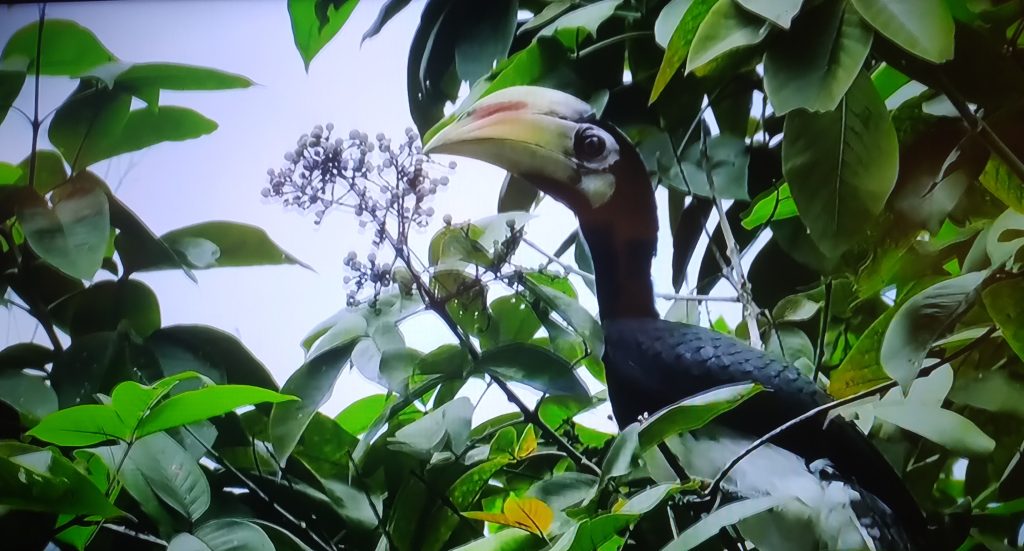
Hornbills are more than just charismatic birds. They are essential to the health of tropical forests.
Often referred to as “farmers of the forest,” these birds play a crucial role as seed dispersers.
Feeding on fruits such as figs and berries, they carry seeds across vast distances, enabling new trees to grow far from the parent plant. This process supports forest regeneration and biodiversity.
Their diet is diverse, also including insects, small reptiles and other prey, making them integral to the ecological balance.
Despite being among the more common hornbill species in Asia, the Oriental Pied hornbill remains threatened in many areas due to habitat loss and hunting. In Sarawak, they are considered rare and in need of protection.
Known locally among the Iban community as “Bruie,” these birds are deeply woven into the cultural and natural heritage of the region.
A story that stays with you
Imagine walking through Piasau Nature Reserve today, it is easy to be captivated by the sight of hornbills gliding between trees, their large bills and distinctive casques silhouetted against the sky.
But behind that beauty lies a story that refuses to fade.
Jimmy and Faridah’s journey is one of love, loss and legacy. It is a reminder of what is at stake when wildlife is left unprotected, and of what can be achieved when communities come together to defend it.
As a writer, I did not expect to be so deeply affected by the tale of two birds. Yet standing there, imagining Jimmy’s silent vigil and the life they once shared, I realised that some stories transcend species.
They speak to something universal.
And in the rustle of leaves and the distant call of hornbills over Piasau, their story still echoes, urging us to care, to protect, and to remember.