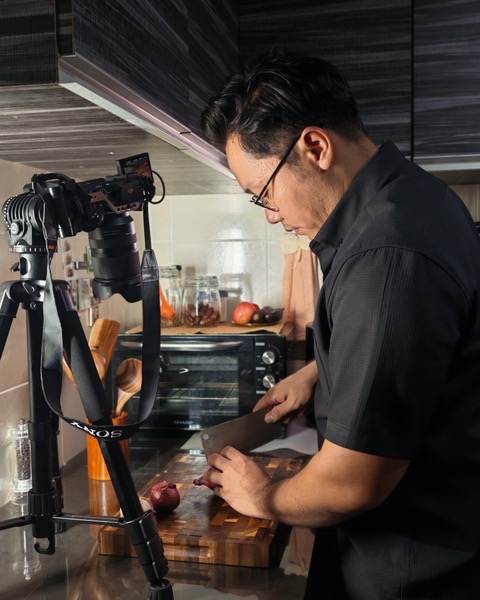
SOCIAL media has transformed the way people share their passions, with content creation becoming more than just a hobby for many.
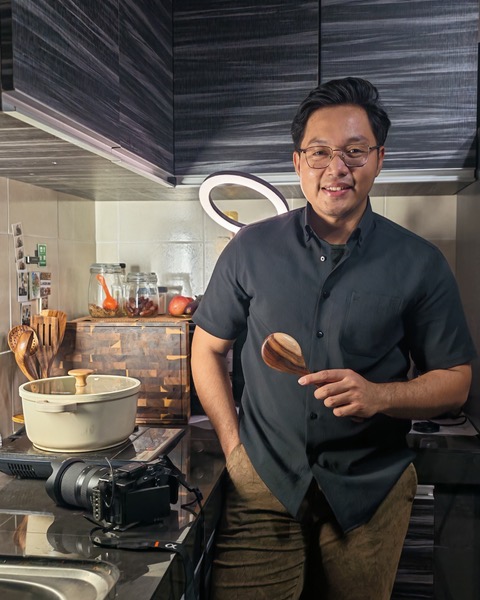
Cooking content remains among the most popular genres on social media, drawing audiences ranging from home cooks to food lovers.
While cooking content in Malay and English is common, videos narrated entirely in Bidayuh are far less seen on social media.
For Jackson Lajen, however, cooking is not just about preparing food. It is also a way to introduce audiences to the language and culture of the Bidayuh community.
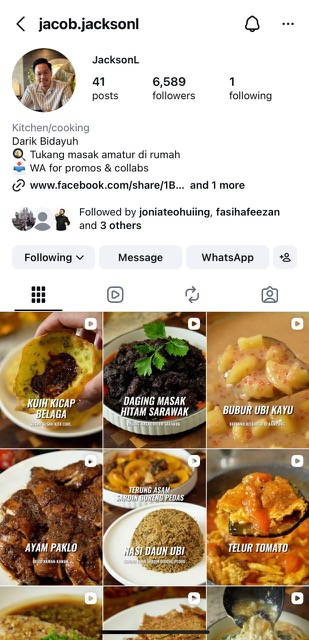
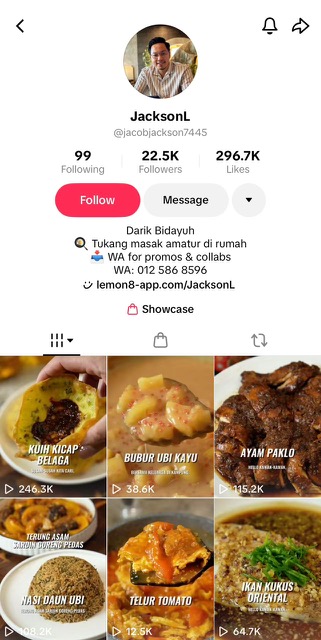
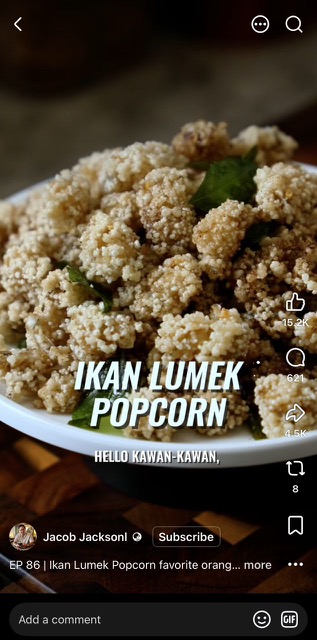
Through TikTok, Facebook and Instagram, he showcases traditional Bidayuh dishes and cooking styles while narrating his videos in Bidayuh Bukar-Sadong, commonly known as Bidayuh Serian.
Each video typically begins with his signature greeting, “Halo bala dingan”, which means “Hello friends” in Bidayuh and has become a phrase many of his followers have come to recognise
His unique approach has attracted thousands of followers who tune in for both the food and the language behind it.
How it started
The idea of creating cooking content came from his wife, with his first video uploaded in December 2024.
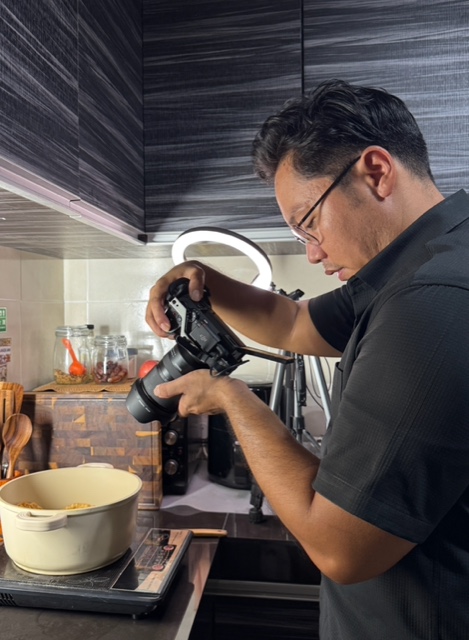
Jackson, who teaches at a secondary school in Mukah, said he had little knowledge of video production or editing when he first started.
Nevertheless, he decided to give it a try.
“My wife said since I love to cook at home, why not start making videos and post them on social media?
“So, I uploaded my first cooking video with almost zero editing skills,” he told Sarawak Tribune.
His early videos were narrated in Malay before he began experimenting with voiceovers in Bidayuh.
The response was encouraging.
Some viewers said they enjoyed learning unfamiliar Bidayuh words through his videos, while others encouraged him to continue promoting the language through food.
“Some non-Bidayuh viewers even said they enjoyed the videos while picking up one or two Bidayuh words.
“Bidayuh viewers especially wanted me to keep posting and promoting our dishes and language.
“Of course, like everywhere else, there are people who criticise. Some commented on my pronunciation, while others argued about ingredient names or whether a recipe was truly authentic,” he said.
Preserving culture through food
Interestingly, Jackson did not grow up as an avid cook.
He only started cooking regularly after graduating from university and entering the workforce.
Although he describes himself as largely self-taught, he acknowledged that his cooking style was heavily influenced by his mother.
His desire to preserve traditional recipes stems from a lack of representation of Bidayuh cuisine in mainstream media.
“Rarely do we see Bidayuh recipes or cooking styles being properly demonstrated on television or social media.
“So, I want to produce quality cooking videos that show the rest of the country that the Bidayuh people of Sarawak have unique and delicious food,” he said.
Growing up in a humble household also shaped his appreciation for traditional food.
He said his family was never particular about what was served on the table. Whatever was cooked became the meal everyone shared together.
“Be it daun ubi tumis (stir-fried tapioca leaves) or ikan sup terjun (simple fish soup), my whole family would sit together and enjoy the meal.
“Now that my siblings are married and have their own families, having dinner together is something I really look forward to, especially during Gawai,” he said.
Keeping the language alive
Jackson admits that producing content in a local language limits his potential audience, but he views the effort as a meaningful way to promote and preserve the Bidayuh language.
To make his content more accessible, he manually adds subtitles to every video so viewers from different backgrounds can follow along with the recipes.
Balancing content creation with his full-time teaching career is not without its challenges, with most filming taking place after work followed by editing sessions late into the night.
“Sometimes I burn the dish and have to start over. It is very tiring, but you reap what you sow.
“It is like killing two birds with one stone. I get to share recipes and promote the language at the same time.
“I know my potential audience is small, so I put in extra effort to include subtitles in every video,” he said.
Not all feedback has been positive, with some viewers suggesting that his content would reach a wider audience if it were presented in Malay or English.
However, Jackson treats such comments as an opportunity to improve.
“Some viewers told me that my content helped them learn the language.
“They said some of the words I use are rarely spoken nowadays, and hearing them again brought back memories.
“But there are also people who ask why I do not speak Malay or English because the audience would be bigger.
“I take note of every comment and criticism. If they are right, I will try to improve. Otherwise, I will keep going,” he said.
Distinctly Bidayuh
Apart from sharing recipes, Jackson also hopes to showcase what makes Bidayuh cuisine unique.
He said lemongrass is a staple ingredient in many Bidayuh dishes, while bamboo is commonly used in traditional cooking methods.
“Most Bidayuh dishes would include lemongrass. A dish without it just doesn’t taste as delicious.
“We also use bamboo a lot in dishes like pansuh and pangkang (Bidayuh lemang),” he explained.
Jackson noted that traditional dishes such as ayam pansuh, tempoyak and pekasam are becoming increasingly recognised, thanks in part to content creators who continue to showcase them online.
While that is encouraging, he believes more can be done to ensure traditional recipes and the Bidayuh language continue to be passed down to future generations.
“Living in a multi-racial country means there are so many different foods that we tend to forget our own traditional ones,” he said.
“Don’t get me wrong, being able to speak many languages is good. I myself teach English in school but hear this out.
“Many Bidayuh people are able to speak others’ languages fluently, meanwhile rarely do we find non-Bidayuh individuals speaking the Bidayuh language.
“What does that tell us?” he asked.
A digital legacy
To Jackson, social media has become an important platform for preserving minority languages and cultures.
He described it as a modern extension of oral tradition, allowing communities to document and share their heritage with a wider audience.
“Back then, grandparents only had oral tradition. Now, we have social media platforms.
“Hopefully, when young Bidayuh see creators like them online, they’ll be proud to speak the language, not shy,” he said.
While many may view him as a content creator, Jackson prefers to see himself as a home cook who uses food to tell stories about his community.
“Mostly a home cook. A cultural home cook, I would say.
“The cooking is my way of telling the story and promoting the language.
“If people remember one Bidayuh word after watching me, I’ve done my job,” he said.
Jackson finds it rewarding whenever viewers tell him they have tried a traditional Bidayuh dish after watching his videos.
“It means the world to me.
“At least I could provide some sort of value and skill to this one person even if he or she is the only one watching.
“I’ve been teaching in school for years, so why not teach them in Bidayuh,” he said.
Looking ahead, Jackson hopes his videos will continue to inspire future generations to embrace their identity and heritage.
“I hope they hear the language, taste the food and feel proud to be Bidayuh.
“We may be a minority but we are significant,” he said.