BAU: Few people today would guess that this quiet town once had its very own airstrip.
Hidden beneath overgrown vegetation through the passage of time, the old Bau airstrip remains one of the district’s least-known relics from the colonial era – a silent reminder of how far the town has come since the early days of Sarawak’s development.
Believed to have been constructed in the 1950s or early 1960s, the Bau airstrip served as a modest landing ground for light aircraft under the British administration.
The strip, said to be made of grass or compacted earth, was never a full-fledged airport but rather a small field used for short take-offs and landings.
It played an important role in connecting Bau to Kuching and other settlements before proper roads were built through the area.
At a time when travel by land was slow and difficult, the airstrip provided vital access for the then British Government officers, medical teams, and security personnel.
According to Jack Oduin, personal assistant to Deputy Minister of Transport and Tasik Biru assemblyman, Datuk Henry Harry Jinep, during the years of the Malayan Emergency and the Indonesian Confrontation, it is believed that the site was occasionally used by the Sarawak Rangers and British forces for logistic support and communication.
“British and Australians army helicopters were also said to be using the airstrip on a daily basis during the height of the confrontation between 1963 and 1965.
“In the old days, when there was an emergency or someone needed medical help, the plane would come in and land near the town.
“You see, it wasn’t a big airfield, but it was important for the people then,” he said while bringing me around the historic area that are going to be developed and preserved under the proposed Bau Tourism and Cultural Park development project.
The airstrip was located not far from Bau town, next to the Ghost Cave toward Jambusan.
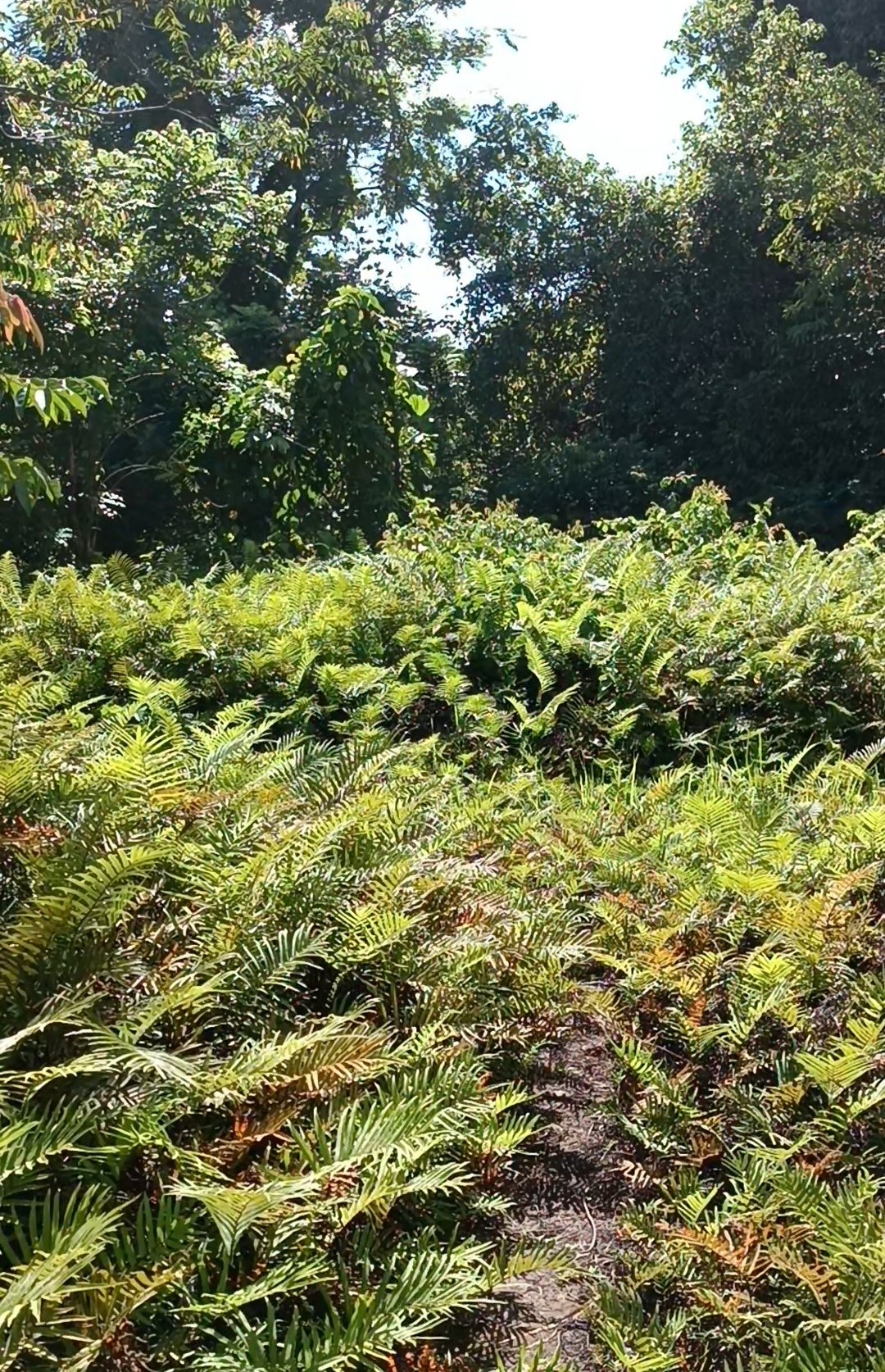
The area, as shown by Jack, reveals patches of unusually flat terrain, hinting at where the runway was.
Over the decades, however, the land has been reclaimed by vegetation, leaving little trace of its aviation past.
According to Jack, part of the air strips had been occupied by the Bukit Young Gold Mine to build their site office.
It is said the Bukit Young Gold pit then operated until September 1992.
Today, as Bau transforms itself into a tourism and heritage destination, local historians and community leaders are calling for the forgotten airstrip to be remembered as part of the district’s development story.
They believe that marking the site could add to Bau’s growing heritage circuit, which already includes Tasik Biru, Ghost Cave (Gua Hantu), the old gold mining facilities, colonial-era landmarks such as the District Officer’s bungalow, and the old water reservoir that is crucial for the supply of raw water to Bau folks then.
“The old Bau airstrip may not look like an airstrip now, but it tells an important story about how people and the government once connected with the outside world.
“It reminds us that Bau has always been part of Sarawak’s progress, even in the days when air travel was rare and roads were few,” Jack said.
Plans under the proposed Bau Tourism and Cultural Park initiative aim to preserve and promote local historical sites, including the old airstrip that have shaped the district’s identity.
Jack said the old airstrip, though forgotten by time, is among those that Henry hoped will one day be recognised and commemorated, not for what remains, but for what it once meant to the people of Bau.
He believed this can be achieved through the plan to develop the Bau Tourism and Cultural Park that was mooted by Henry himself.