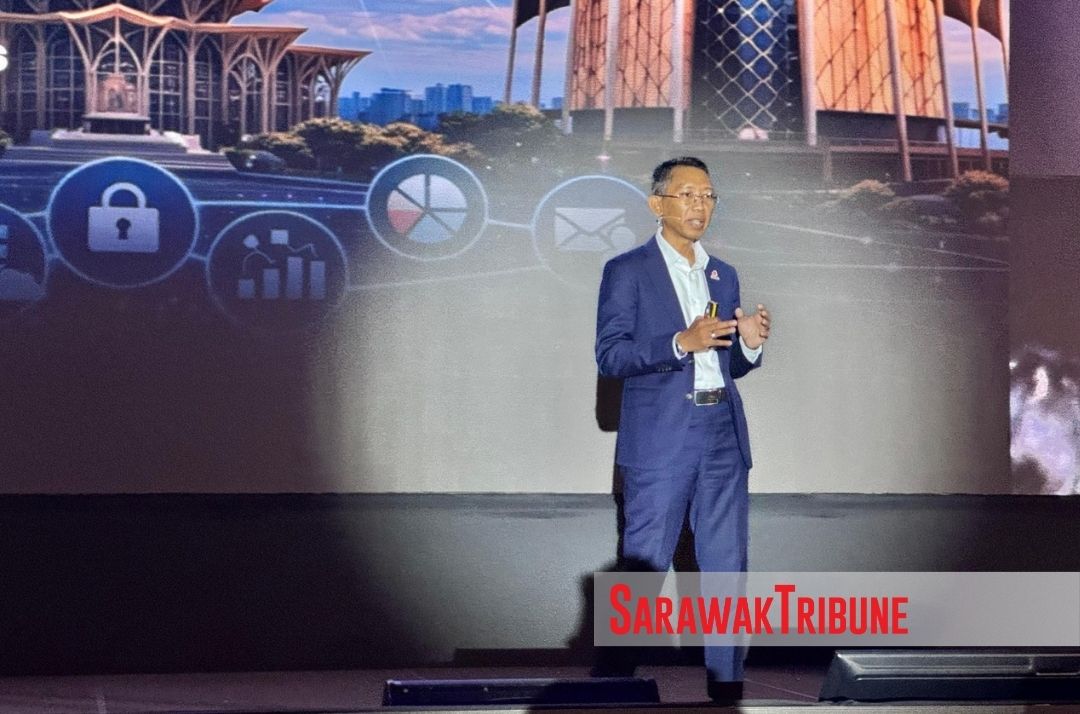
KUCHING: Malaysia can redefine the global Halal economy by leading a shift from legal compliance to Tayyib values rooted in ethics, purity and sustainability, said Citadel Tayyib 360 chief executive officer Adly Mohamed.
He said the next phase of Islamic trade and tourism will be shaped by integrating Halal certification with Tayyib principles that give depth and meaning to consumption.
“In the Qur’an, the phrase is halalan tayyiban, lawful and good. Halal ensures something is permissible, but Tayyib goes deeper. It is pure, ethical and beneficial,” he explained.
According to Adly, Malaysia is well placed to lead this transformation, having ranked first in the Global Islamic Economy Index for ten consecutive years and built one of the world’s most structured Halal ecosystems through JAKIM, the Halal Development Corporation and Halal industrial parks.
“In 2023, we exported nearly RM60 billion in Halal products. The question now is how to embed Tayyib principles so Malaysia leads not only in Halal certification but also in ethical adoption,” he said.
He noted that the Halal economy, worth over USD3 trillion, could expand to USD5 trillion by 2030 — yet only a fraction of global demand is being met due to fragmented standards, weak transparency and trust gaps.
“People today do not just ask if something is allowed. They ask if it is healthy, produced responsibly and fair to workers. That is the shift we need to embrace,” he said.
Adly described Halal as the “minimum requirement” and Tayyib as the “aspirational standard” that connects faith with ethical excellence. By embedding Tayyib values, he said, businesses can align operations with spiritual, social and environmental principles while building lasting trust with consumers.
He highlighted ASEAN’s potential, with 240 million Muslim consumers and a combined Halal economy valued at USD2 trillion.
“Tayyib can become the shared value system that harmonises differences across ASEAN. It is not just about trading goods; it is about trading values,” he said.
To make Tayyib practical, Adly outlined a four-step framework: conducting ethical audits, digitising traceability through blockchain and QR codes, embedding ethical practices across the supply chain, and communicating transparently with stakeholders.
He said this approach applies across sectors, from finance and fashion to tourism and cosmetics.
“Halal is the minimum requirement. Tayyib is the aspirational standard that builds trust,” he said.
Adly also noted that consumer behaviour is shifting toward verified ethical products.
“Fair Trade coffee earns a 20 per cent premium because it is ethically sourced. With Tayyib, we can unlock premiums of 15 to 30 per cent. Value is verified, not declared,” he said.
He emphasised that digital innovation is key to scaling Tayyib practices globally. Blockchain can ensure transparency across supply chains, artificial intelligence can monitor compliance in real time, and QR codes can let consumers trace a product’s ethical journey — features already developed by Citadel Tayyib 360 and Citadel Technologies for clients.
Adly said wider adoption of Tayyib principles can deliver long-term socio-economic gains through local empowerment, job creation, upskilling and environmental resilience. Ethical operations, he added, help build circular economies rooted in sustainability, welfare and dignity.
He urged policymakers and industry players to push for global recognition by aligning Tayyib with the United Nations Sustainable Development Goals and ESG frameworks, promoting mutual recognition across ASEAN, and introducing incentives or awards for Tayyib-certified operations.
“Malaysia, ASEAN and the broader Muslim world have a unique opportunity to lead the next phase of global ethical trade and tourism.
“Halal made us trustworthy. Tayyib makes us unforgettable.”