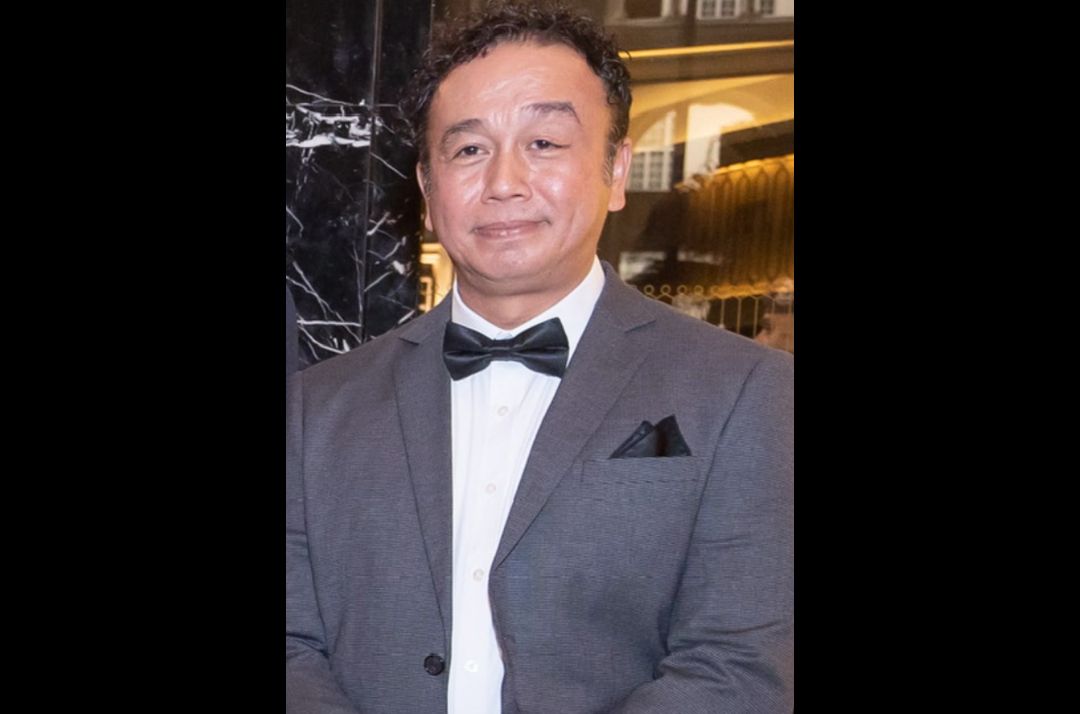
SIBU: Integrity must go beyond being an administrative principle and become a defining standard in how Sarawak manages its resources, exercises public authority and delivers development to its people.
The advice comes from Prof Datuk Paduka Seri Is Dr Tunza Mohd Riduan, panel adviser on political, economic and social affairs to the federal government.
In a statement today (Aug 16) in conjunction with recent Sarawak Integrity Day 2026, Tunza said integrity was closely linked to Sarawak’s economic growth, political stability and social harmony.
“Integrity is not merely an ethical principle. It is an economic asset, a governance instrument and a social foundation,” he said.
According to Tunza, Sarawak’s abundance of natural resources and growing opportunities in energy, agriculture, tourism, manufacturing and the digital economy could only be translated into lasting prosperity when accompanied by responsible governance.
“Natural resources alone cannot guarantee sustainable prosperity. What determines whether these resources create lasting value is how responsibly they are managed, how transparently decisions are made and whether public resources ultimately deliver meaningful benefits to the people,” he said.
He said strong integrity in public administration could reduce wastage, conflicts of interest and misuse of public funds while improving the efficiency of development projects and strengthening confidence among investors and businesses.
“Investors do not look only at resources and economic opportunities. They also look at institutions, regulatory certainty, transparency and the credibility of governance. A state that is trusted to manage its resources responsibly is a state that is better positioned to attract long-term investment,” he said.
Tunza said this was particularly important as Sarawak pursued the Post Covid-19 Development Strategy 2030 (PCDS 2030), alongside its ambitions in green energy, hydropower, green hydrogen, renewable energy and the digital economy.
“Large-scale transformation requires more than capital and infrastructure. It requires integrity at every stage — from planning and procurement to implementation, monitoring and evaluation,” he said.
He stressed that public investment must ultimately be measured not by the size of allocations alone, but by the value and impact delivered to the people.
“A road must connect communities. A bridge must improve mobility. Rural electrification must reach the households that need it. Digital infrastructure must create opportunities rather than deepen the divide. This is where integrity becomes tangible — when public expenditure produces the outcomes promised to the people,” he said.
On Sarawak’s financial and economic institutions, Tunza said the principle of intergenerational responsibility should remain central to the management of state resources.
“Revenue generated today should not be viewed simply as money available for today’s expenditure. It carries a responsibility to future generations. The question is not only how much we have, but how wisely we use what we have so that our children and grandchildren inherit a stronger Sarawak,” he said.
Turning to political stability, Tunza said integrity was equally important in sustaining public confidence in institutions.
“Political stability is not merely the absence of political conflict. Genuine stability is built on trust — trust that decisions are made fairly, that public officials are accountable and that citizens have legitimate avenues to raise concerns when something goes wrong,” he said.
He cited mechanisms such as the Ombudsman system and the Sarawak Integrity and Ombudsman Unit (UNIONS) as important components of a stronger governance framework.
“Integrity mechanisms should not exist merely to punish wrongdoing after it has happened. Their greater value is in identifying weaknesses early, preventing abuse and ensuring that institutions continuously improve the way they serve the public,” he said.
Tunza also stressed that transparency and accountability were particularly important in long-term development planning.
“Sarawak’s transformation cannot be built around short-term considerations. Development strategies such as PCDS 2030 and the state’s long-term green energy ambitions require continuity, consistency and disciplined implementation,” he said.
“Integrity helps keep development focused on the public interest, supported by evidence and measured against clear outcomes,” he added.
On Sarawak’s relationship with the federal government, particularly matters relating to the Malaysia Agreement 1963 (MA63), Tunza said integrity should remain the guiding principle in negotiations and the protection of constitutional and administrative rights.
“MA63-related matters require facts, documentation, legal understanding and responsible negotiation. Differences can be managed constructively when they are addressed through constitutional and legal processes. Integrity in this context strengthens rather than weakens Sarawak’s position because credibility is built through consistency, evidence and respect for established processes,” he said.
Tunza said integrity was equally important in preserving Sarawak’s social stability, particularly given its multicultural and multi-religious character.
“Sarawak’s greatest strength is not found only in its natural resources. It is also found in its people and in the ability of different communities to live together with mutual respect,” he said.
“For this social fabric to remain strong, people must believe that opportunities, public services and development resources are distributed fairly, without favouritism, discrimination or abuse of authority,” he added.
He said inclusive development must ensure that rural and interior communities were not left behind as Sarawak’s major urban centres continued to grow.
Tunza also highlighted the importance of transparent land administration in protecting legitimate Native Customary Rights (NCR) interests.
“Land is not merely an economic asset for many indigenous communities. It is connected to livelihood, identity and the future of their families. Proper surveys, clear documentation and transparent decisions are therefore essential in building confidence and reducing disputes,” he said.
He also pointed to education as a critical component in building a culture of integrity.
“Integrity cannot be created by regulations alone. It must be cultivated from an early age and reinforced throughout society. Schools, universities, families, community organisations, businesses and government institutions all have a role in teaching that honesty, fairness, responsibility and respect are not optional values,” he said.
Tunza said the launch of the PINTAR Module for public servants during Sarawak Integrity Day 2026 was therefore significant in strengthening an integrity-driven public service.
“A culture of integrity must begin within institutions, but it must ultimately be reflected in the experience of the people. Citizens should be able to see integrity in the way services are delivered, complaints are handled, decisions are explained and public funds are managed,” he said.
He said the true test of integrity was not how often it was discussed, but whether it influenced decisions and produced better outcomes.
“The real question is not whether we can speak about integrity. The real question is whether integrity guides us when decisions become difficult, when public resources are at stake and when competing interests come into play,” he said.
Tunza said Sarawak’s prosperity should therefore be judged not only by economic growth figures, infrastructure achievements or investment numbers, but also by the quality of governance behind them.
“Prosperity must have a moral and institutional foundation. Development without integrity can produce wastage, inequality and distrust. Development with integrity creates confidence, strengthens institutions and gives people a greater sense that progress belongs to them,” he said.
He said the theme “Integrity at the Core of Sarawak’s Prosperity” should consequently be regarded as a long-term commitment rather than merely a ceremonial slogan.
“If integrity is placed at the core of economic management, political governance and social development, Sarawak will be better positioned to convert its resources and opportunities into prosperity that is sustainable, inclusive and shared across generations,” he said.
“Ultimately, the success of Sarawak should not be measured only by how much we build or how fast we grow. It should also be measured by how responsibly we govern, how fairly we distribute opportunities and how confidently we can hand over the Sarawak we build today to the generation that comes after us,” he added.