
I CAN’T remember exactly when it was, but a while back I listened to a story on YouTube. It wasn’t one of those flashy videos but a properly narrated story – calm, measured, with the sort of voice that makes you feel as though someone has decided to tell you something important.
Somewhere in the middle of it, almost casually, the storyteller asked a question: “Am I brave?”
That caught me off guard. I clicked pause immediately, as though the man on the screen might otherwise continue without me and I’d miss something vital.
“Am I brave?” I repeated to myself.
It sounded simple enough. The sort of question you imagine has a neat answer, like something from a school exam. Yes or no. Tick the box. Move along.
But then I glanced at my wristwatch. Damn. Time to go to work.
By the time I started the car, adjusted the mirrors, and joined the traffic, the question had slipped quietly out of my mind – pushed aside by more urgent matters.
And that was that. Or so I thought.
It turned out that some questions are like mosquitoes. You swat them away once, and they return later, buzzing louder, and more irritating.
A few days later, I came across a story – one of those circulating articles that people share with solemn admiration – about a man who ran into a burning house to save a child.
“That’s very brave,” I thought.
It was the sort of bravery that fits neatly into our expectations: fire, danger, self-sacrifice, and a clear hero at the centre of it all.
Unfortunately – and quite needlessly – my mind followed up with another thought: Would I do that?
And just like that, the neatness evaporated.
Honestly, I wasn’t sure. I didn’t feel the surge of confidence one might hope for in such a moment. There was no inner voice declaring, “Of course you would, old chap!” Instead, there was hesitation. A rather awkward silence, really.
For the first time, I felt distinctly… unbrave.
Then, for reasons I still don’t fully understand, my mind wandered backwards – all the way to my childhood. Perhaps it was trying to gather evidence, like a barrister preparing a case. Or perhaps it was simply avoiding the uncomfortable present by rummaging through the past.
Whatever the reason, there I was. A small boy again.
Between the ages of seven and twelve, I had a particular obsession: climbing trees. Not the polite sort of climbing where one ascends a few feet, sits sensibly, and admires the view. No, ours was more ambitious.
There were a few of us – my two cousins and a rotating cast of other children who came and went as interest, courage, or parental tolerance allowed. But mostly, it was just the three of us.
One of our favourite activities was crossing from one tree to another using only the interlacing branches. No ropes, no safety nets, and certainly no adult supervision. We only had a series of leafy bridges swaying gently – or not so gently – beneath our feet.
We did this mostly during the annual fruit seasons, up in the communal orchards on the towering mountain overlooking our village. It was as though it were the most natural thing in the world.
Was I brave? Were we brave?
We were several feet above the ground, hopping from branch to branch like slightly overconfident monkeys. A fall could have meant injury – or worse. And yet, none of us thought about that. Not once.
Bravery, as a concept, didn’t exist in our minds. There was no weighing of risk, no calculation of odds. There was only the thrill, the laughter, and the occasional shouted insult when someone nearly lost their footing.
It was dangerous, yes. But more importantly, it was fun.
Then came the monsoon season.
The village itself sat safely on higher ground along the sloping foot of the mountain. But the rivers in the lowlands – more than ten miles away – were another matter entirely. They swelled, roared, and spilt over with alarming enthusiasm.
To responsible adults, this was a problem.
To us, it was an invitation.
Armed with whatever floated – empty tins, plastic jugs, bamboo poles – we would launch ourselves into the fast-moving waters and let the current carry us downstream. We ducked under low branches, swerved around bends, and occasionally collided with one another in a manner that would have horrified any observer with a sense of liability.
The water rushed past with alarming speed, our hearts pounded in our chests, and we laughed as though we had discovered the greatest amusement park in existence.
We even built makeshift rafts, because apparently, floating recklessly wasn’t quite enough.
Again, the question arises: Were we brave?
Once more, the answer feels unsatisfactory.
We weren’t brave. We were simply uninterested in being bored.
Life, as far as we were concerned, was not meant to be routine, predictable, or – heaven forbid – dull. Danger was not something to be feared; it was something to be flirted with, like a mischievous acquaintance one knew not to trust but couldn’t quite resist.
Between the ages of ten and twelve, I developed another habit – one that, in retrospect, seems slightly more deliberate.
During the annual fruit season, I would venture up the mountain at night, alone, to collect durians that had fallen after dusk. Durians have a peculiar tendency to drop more frequently at night, as though they prefer a bit of drama with their descent.
I tried to recruit friends to join me, but they all refused.
Ghosts, they said.
Demons.
Unseen creatures lurking in the darkness, waiting for an unsuspecting child to wander by.
Their imaginations were impressively vivid.
Mine, apparently, was not.
So off I went alone, armed with little more than stubbornness and a vague sense that the rewards – both culinary and financial – were worth the effort. I sold the durians to Chinese traders who visited the village during the season, and I did rather well for myself, thank you very much.
Was I brave walking up a mountain alone at night? Not really.
I knew that there were other men scattered across the mountain, also collecting durians. I wasn’t as alone as it might have seemed. The darkness was less threatening when you knew it was shared.
Which brings me to a curious realisation.
The physical triggers of fear – heights, water, darkness – were never truly insurmountable. They could be managed. With enough exposure, repetition, and a touch of stubbornness, they became almost ordinary.
Add a dash of “come what may”, and one could go quite far.
But there was something else.
Something that didn’t yield so easily.
My greatest fear, as a child, was not falling from a tree or being swept away by a river. It wasn’t ghosts, demons, or the imagined horrors of the night.
It was hurting my parents.
More specifically, my mother.
And my younger siblings.
The mere thought of my mother being harmed – by someone or something – was enough to cause a physical ache in my chest. It’s difficult to explain, but it felt as though the fear bypassed reason entirely and went straight to the heart.
Curiously, I didn’t worry as much about my father.
In my mind, he was indestructible. Or at the very least, capable of handling himself. He didn’t need my concern in the same way.
But my mother?
That was different.
Then there were school exams.
I studied hard. I did what was required. And yet, exams filled me with a peculiar dread. Not the dramatic, life-threatening sort, but a quieter, more persistent unease.
I hated them.
Absolutely hated them.
And yet, I passed them every time.
Which, if you think about it, is rather inconvenient. It’s difficult to justify hating something when it consistently proves you capable.
So, where does all this leave the question?
Am I brave? The honest answer is… it depends.
Real fear – the kind that grips you – seemed to reside elsewhere. Not in physical danger, but in emotional consequence. In the possibility of loss. In the quiet, uncomfortable spaces where there are no clear actions to take, no obvious branches to climb, no currents to ride.
Perhaps bravery is not what we think it is.
Perhaps it is not the absence of fear, nor the dramatic act of charging into flames – though those moments certainly count.
Perhaps it is something subtler.
Something quieter.
The willingness to face what truly unsettles us, even when there is no audience, no applause, and no guarantee of success.
As I sit here now, thinking back on that paused video and that inconvenient question, I realise something rather amusing.
I never did finish listening to that story. I don’t know if he declared himself brave or if he left the question hanging in the air.
Bravery is not a fixed trait, like height or eye colour. It’s not something you either have or don’t have. It shifts. It adapts. It appears in unexpected places and disappears when you think you need it most.
It might be in a burning building.
Or in a quiet decision.
Or in the simple act of continuing, despite uncertainty.
And perhaps the most honest answer to the question “Am I brave?” is not “yes” or “no”, but:
“Sometimes.”
And, if one is feeling particularly philosophical:
We are all brave in the moments that matter to us – and strangely hesitant in the moments that matter to others. Life, in its usual cheeky fashion, rarely aligns the two.
So, we carry on, doing what we can, fearing what we must, and occasionally surprising ourselves.
Which, when you think about it, is probably brave enough.
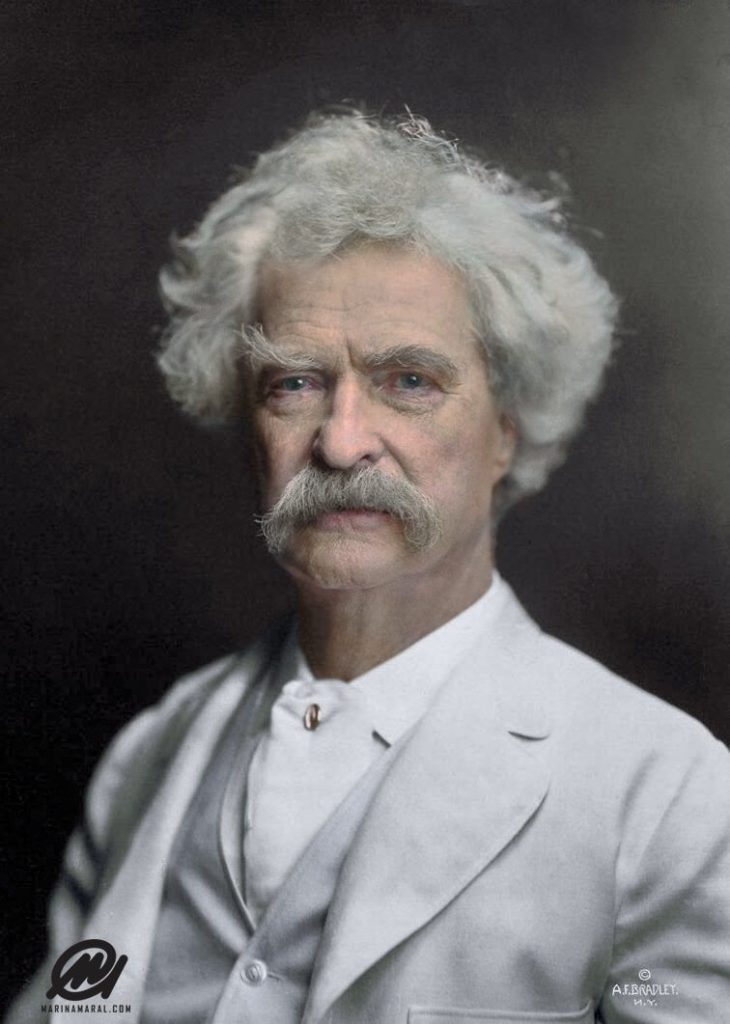
“Courage is resistance to fear, mastery of fear – not absence of fear.” – Mark Twain (1835-1910), an American writer, humorist, and lecturer widely regarded as one of the greatest authors in American literature.
The views expressed here are those of the writer and do not necessarily represent the views of the Sarawak Tribune. The writer can be reached at www.hayhenlin@gmail.com