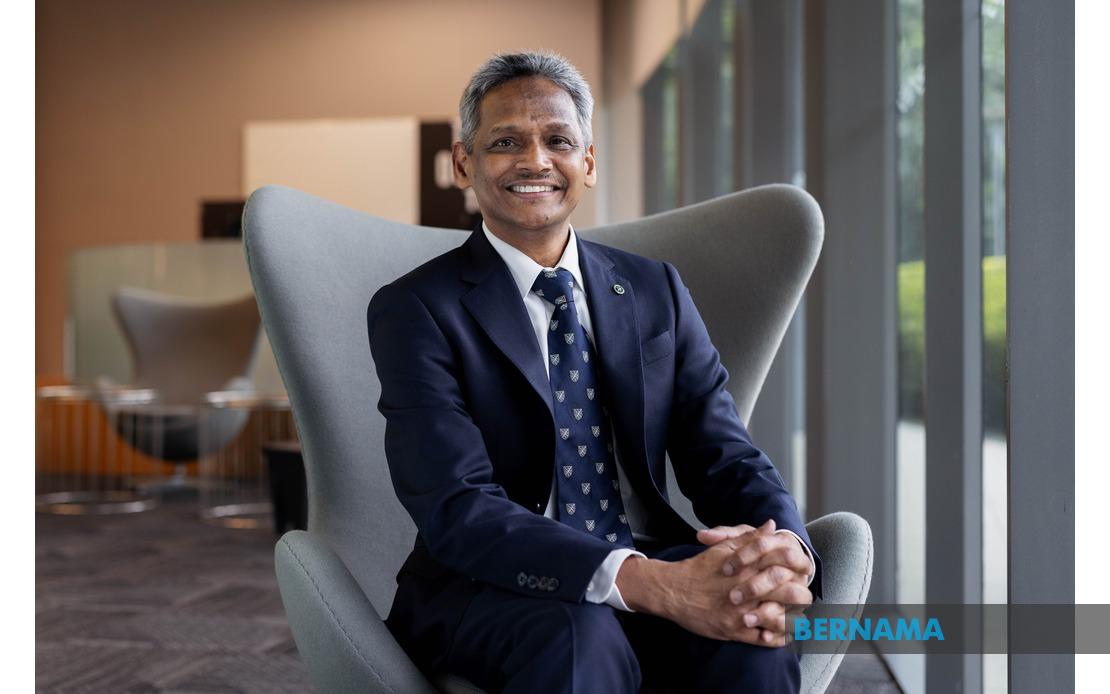
KUCHING: Architecture is not about flashy facades or a fixed style but about creating comfort, ensuring durability and shaping the experience of being in a space, says award-winning Sarawakian architect Wee Hii Min.
The MWA Architects director said one common misconception is that buildings must look ornate to be considered well-designed.
“Some clients feel that if it doesn’t look bright and shiny, then it isn’t design. But it’s not about what you see. It’s about what you feel and experience when you are in that space,” he said during ‘Talks on Architecture: More Than Aesthetics’ session organised by HSL at La Promenade Mall.
For him, ease of maintenance and sufficiency outweigh form.

“The form of the roof isn’t as important to me as whether it works for 25 years without trouble. Aesthetics will follow if it is done well.”
He spoke of thresholds, shade and permeability as principles that guide his practice.
Thresholds, whether a driveway, a courtyard or a tunnel, create anticipation and give people time to prepare before stepping inside.
“In many modern buildings, thresholds are reduced to the thickness of a single glass pane. We are interested in creating pauses and transitions that prepare you for the experience ahead.”
In the tropics, he added, protection is paramount.
“Shade is king,” he said, noting how roofs should stretch beyond walls to shelter spaces, improve ventilation and collect rainwater.
Permeability, too, has been a constant theme in his projects.
He pointed to porous brickwork, shaded corridors and naturally cooled mosque floors as simple solutions that create comfort.
“It is not rocket science. These are simple techniques, but we sometimes forget them in practice.”
Wee also champions reusing rather than tearing down.
“In several projects, we try to see whether we can salvage the structure, the framework, the skeleton. Not only do you save money, you also save part of the site’s personal history.”
He described sufficiency as spending where it matters most and ensuring each element serves more than one purpose.
A security grill that doubled as shelving and an executive lounge decorated with recycled stainless steel piping were among the examples he cited.
Beyond design, he said legacy and community remain his strongest motivation.
“I’m proud to be Sarawakian. It is important to be able to drive through town and say, we did that, we did this. Can you imagine an architect who cannot point to a single project? That would be a letdown.”
He also encouraged young Sarawak-born architects to eventually return and contribute to the state’s development.
“You can go far and learn many things, but ultimately at some point you should come back and help build the community that raised you.”
For those working abroad, he has helped establish the Borneo Architecture Journal as a platform to showcase projects by Sarawakians who cannot return physically but want their work recognised at home.