KUALA LUMPUR: The ASEAN Power Grid (APG) has moved from the planning stage towards implementation, with stronger political alignment and coherent policies needed to unlock private investment in the region’s cross-border energy infrastructure.
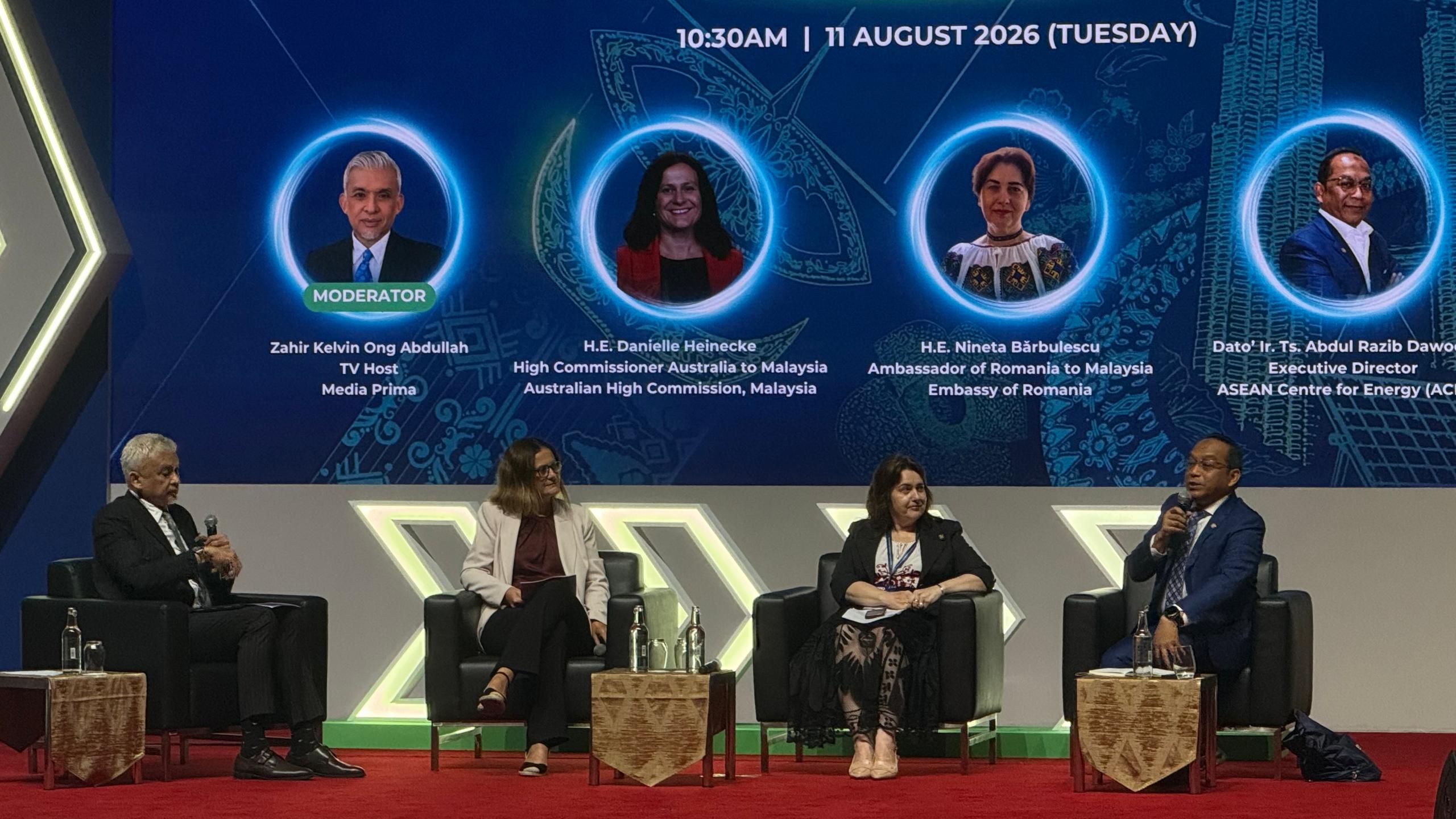
ASEAN Centre for Energy (ACE) Executive Director Datuk Abdul Razib Dawood said the region now had fresh momentum to turn the long-standing vision of an interconnected power grid into reality.
“We have shifted from planning to implementation on how to do it,” he said during the high-level dialogue session titled ‘Envisioning Sustainable Energy Beyond Borders’, held in conjunction with the 7th International Sustainable Energy Summit 2026 at the Kuala Lumpur Convention Centre on Tuesday.
Abdul Razib said ASEAN had identified 18 priority interconnection projects under the ASEAN Interconnection Master Plan Studies (AIMS), with further studies being planned to identify additional projects.
He said the region’s interconnected grid would involve links between Borneo and Peninsular Malaysia, Sumatra and the peninsula, Singapore and Batam, as well as connections across the Greater Mekong region.
Within Borneo, he said, existing and planned interconnections included those between West Kalimantan and Sarawak, Sarawak and Sabah, as well as a new initiative to connect Sarawak and Brunei.
“What we are pushing today is more multilateral,” he said, adding that ASEAN is working towards developing market mechanisms that would eventually allow electricity to be traded across borders beyond conventional long-term power purchase agreements.
He said a pilot project involving electricity transmission from Laos through Thailand and Malaysia to Singapore had already demonstrated that cross-border multilateral power trading could be achieved.
According to Abdul Razib, the scale of the ASEAN Power Grid required substantial investment, with the World Bank estimating that nearly US$800 billion would be needed to fully realise the regional interconnection by 2050, covering transmission networks, generation and renewable energy development.
He said ASEAN had the economic scale and complementary energy resources to support such integration, with the region’s 11 member states collectively representing about 700 million people and being on track to become the world’s fourth-largest economy by 2030.
Abdul Razib said the key challenge was no longer whether regional interconnection was beneficial, but how to make it bankable and implementable.
“We have the political capital now. Money is ready. There are bankers still in the room. They are ready to finance, but we have to address their pain point, their bankability,” he said.
He stressed that coherent policies and clear regulatory frameworks were essential to give investors confidence in committing long-term capital to cross-border energy projects.
He acknowledged that ASEAN’s 11 sovereign states had different electricity market structures, policies, reserve margins and power development plans, ranging from liberalised markets to vertically integrated systems.
However, he said these differences should not prevent regional integration, particularly amid growing concerns over energy security and geopolitical disruptions.
“This is not a showstopper,” he said, adding that the current energy crisis could provide greater impetus for ASEAN to diversify its energy sources and reduce external dependencies.
Abdul Razib also stressed that the energy transition should deliver economic and social benefits, including new employment opportunities in renewable energy, while ensuring energy security and affordability.
He said ASEAN already had a five-year action plan and a clear roadmap for regional energy cooperation, but the pace of implementation needed to be accelerated.
“We know what to do, the long list of what to do and how to do it. We benchmark European, Australian and other jurisdictions. We don’t have to reinvent the wheel. We can leapfrog,” he said.
He added that ACE is working on the necessary frameworks, rules, policy harmonisation and market mechanisms to support implementation, with the aim of providing clearer signals to investors and turning the ASEAN Power Grid into a viable regional mega-project.