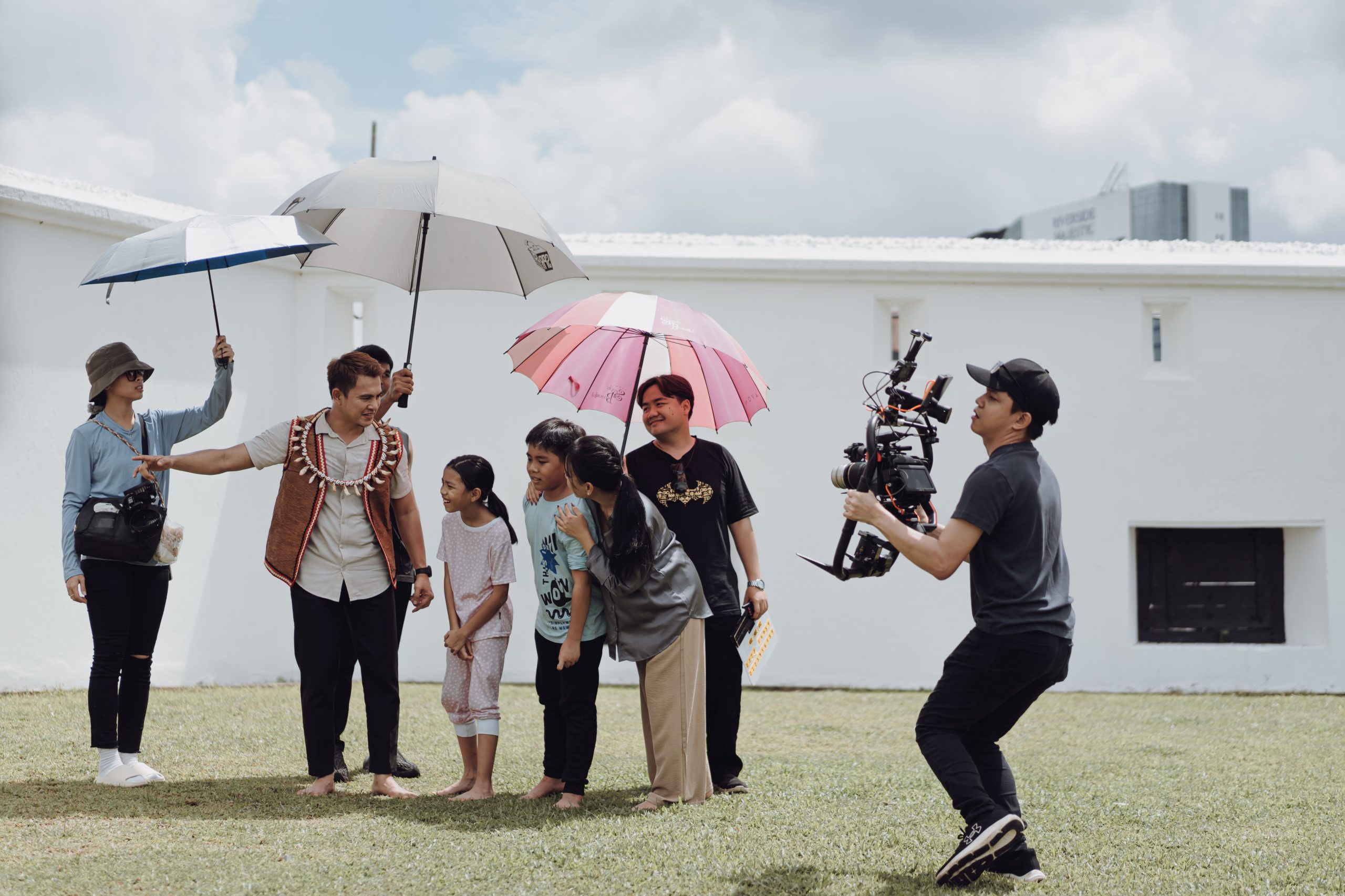
FOR Iain Raphael Bong, filmmaking was never a straight path. It was something he returned to after circling through different versions of what a “secure” life was supposed to look like.
Today, the Kuching-born filmmaker runs IainWithEyes Studios, a production company built around one guiding principle: stories should make people feel.
The name itself came from a late-night moment of spontaneity. His name, Iain, is spelled I-A-I-N, and he realised it visually resembled “two eyes.”
“I thought, why not Iain with Eyes, because I see the world through my eyes, and I capture how I see the world,” he said.
What began as a personal idea eventually grew into a brand identity and later, a production company.
But long before that, filmmaking first appeared in a quieter space.
A path redirected
Iain’s earliest exposure to visual storytelling came through church, where he was involved in a youth group and began working with media for the first time. It was there that he discovered a strong pull toward images, motion and storytelling.
At the time, however, creativity did not feel like a stable path. Like many young creatives, he was encouraged to pursue something more secure.
“I wanted to do something in art, but my parents encouraged something more secure,” he said.
That decision led him into hotel management, a field far removed from film. Even after completing his internship in Kuala Lumpur, the experience confirmed what he already suspected about himself.
It was not the life he wanted.
What followed was a gap year in a consulting agency, where he found himself caught between structure and creativity. Although assigned an executive role, he often drifted toward the creative side of the office, observing how ideas were shaped and produced.
That period became a turning point. It forced him to reflect on what he had always gravitated toward.
“I realised I was spending most of my time with the creatives,” he said.
Learning through the lens
At the time, Kuching’s creative industry offered limited entry points into filmmaking. Like many others, Iain began with what was available, taking on weddings and event videography.
For years, he worked across different shoots, including aerial and drone visuals. But something about it never fully aligned with what he was trying to do.
“Weddings and events is you chasing after moments. It’s just capturing, but I enjoy crafting and creating the visual of the story,” he said.
That distinction between capturing and creating became a defining shift in how he approached his work.
The COVID decision
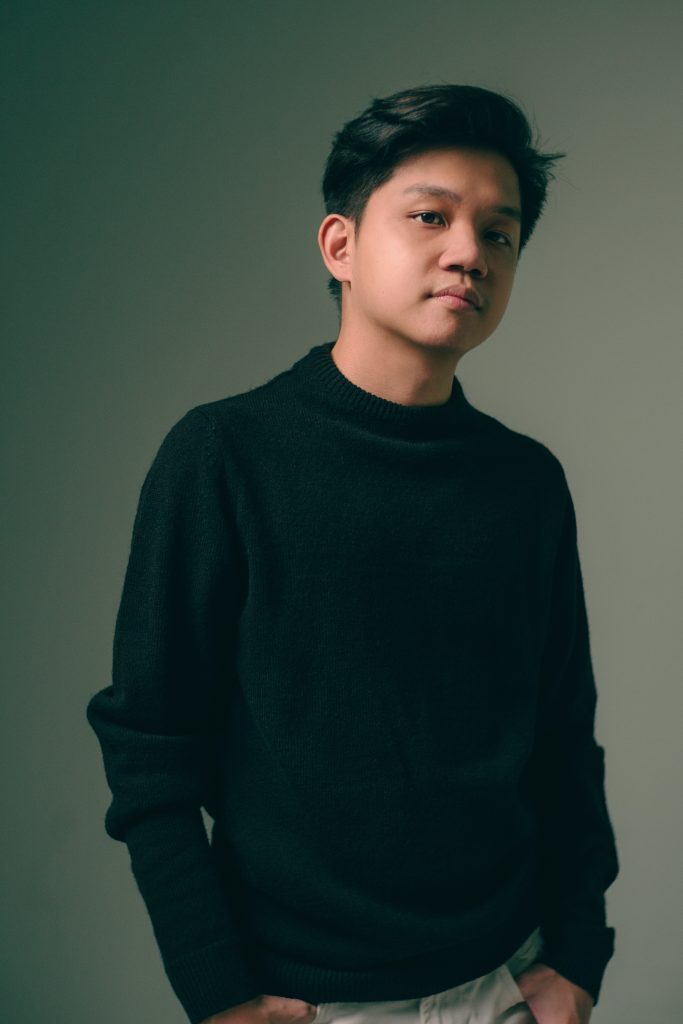
The turning point came during the uncertainty of the COVID-19 pandemic, when the industry slowed and the future felt increasingly uncertain.
With little left to lose, Iain made a decision that would ultimately reshape his career. Instead of waiting for opportunities, he chose to create his own.
“At that point, I made up my mind; that I want to give this a try. If I couldn’t, then at least I can say I tried. If it doesn’t go well, then at least I say I tried also,” he said.
In 2021, he officially established IainWithEyes Studios.
What began as a leap of faith gradually developed into a working production house, producing short films, commercials and collaborative projects with organisations including TVS, UNESCO and various corporate clients.
Looking back, he described that period as uncertain, but necessarily a moment where action mattered more than waiting.
Stories that make you feel
At the core of Ian’s work is a consistent creative philosophy: storytelling is rooted in emotion.
“To be human is to feel.”
That belief shapes everything from narrative films to commercial projects. Regardless of format, he looks for one essential quality in a story: a human centre.
In practice, this often means stripping ideas back to their emotional core before building them up visually. For Iain, scale, budget or genre comes second to whether a story can resonate on a personal level.
It is this grounding that allows his work to remain consistent, even as he moves between different types of projects.
He draws inspiration from filmmakers such as Christopher Nolan, Bong Joon-ho and Spike Jonze as influences, particularly for their ability to combine conceptual storytelling with emotional depth.
“I’m drawn to films that are not just visual, but have a strong human element,” he said.
This approach is reflected in his current documentary project, Almost Extinct, which follows individuals preserving fading crafts and traditions.
Unlike scripted work, the documentary requires a more observational and patient approach, where stories unfold naturally rather than being constructed.
This shift has challenged him to adapt, not just as a filmmaker, but as a storyteller learning to listen more than direct. The project, however, has also been emotionally demanding.
“You cannot dictate too much of how their story should be told. You have to care enough to see what is really happening,” he said.
The balancing act
Like many independent filmmakers, Ian navigates a constant tension between creative fulfilment and financial sustainability.
“The constant struggle is balancing between money and passion because projects that make a lot of money may not necessarily have human elements inside.
“It may not necessarily feed your soul. And sometimes, projects that feed your soul don’t pay as much, he said
Commercial work, he explained, often comes with layers of expectation, where brands dictate how stories should be told. While it provides financial stability, it can also limit creative control.
Over time, he has come to accept that this tension is not something to resolve, but something to manage. Each project becomes a negotiation between what sustains the business and what sustains the storyteller.
At the centre of that process is a principle he and his team consistently return to when evaluating ideas.
“We always ask, is there something human about it? Sometimes we do things for money, sometimes we do things for humans, for passion. But we always try to find a balance,” he said.
This balance also extends to maintaining a sense of authorship in his work. For Iain, creative identity is not something fixed, but something that can gradually erode if not protected.
“If you do too much of it, you lose your voice. You’re just creating for people,” he said.
For him, the challenge is not choosing between passion and practicality, but knowing when to prioritise one over the other and when to hold on to both.
Building something larger
While IainWithEyes Studios began with a focus on local storytelling, its direction has gradually expanded into broader Asian narratives.
Iain sees this evolution as a natural extension of where he comes from.
Growing up in Sarawak, he believes, offers a perspective that is often underrepresented in mainstream storytelling.
“We have a unique perspective growing up here. That is something worth sharing,” he said.
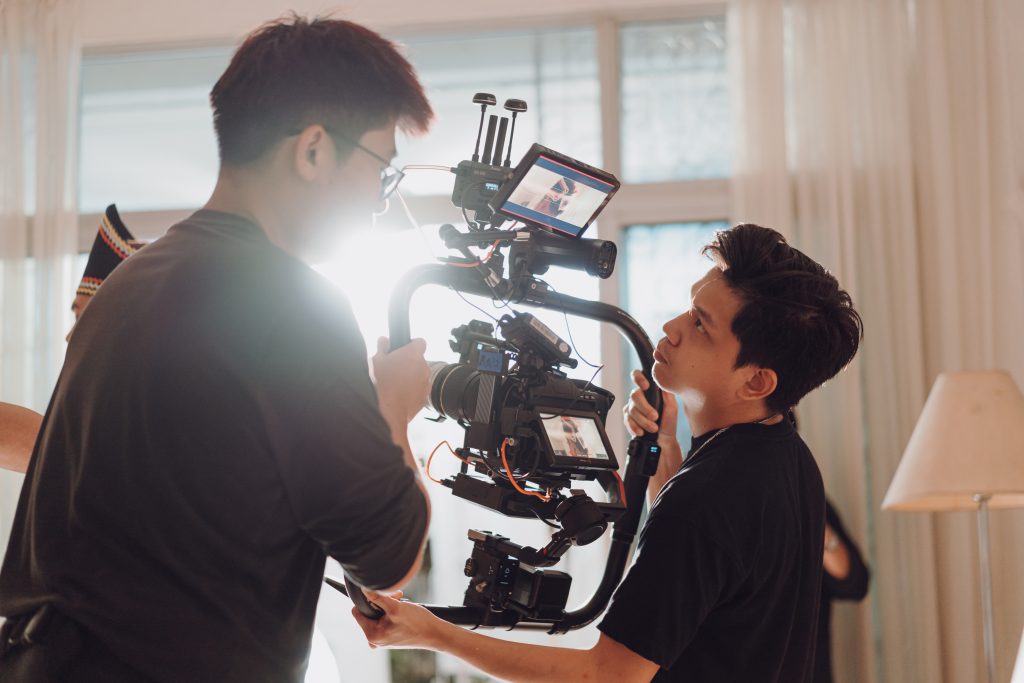
The company operates with a small core team supported by a wider network of freelance professionals across sound, lighting, camera, editing and production.
He describes the structure as intentionally lean, allowing flexibility while still maintaining creative control.
“It is a people business. You cannot do everything yourself,” he said.
Looking ahead
Iain remains optimistic about the direction of filmmaking, particularly the increasing accessibility of tools and technology.
He views the democratisation of filmmaking as one of the most important shifts in the industry, allowing more people to tell stories regardless of budget or background.
He also continues to experiment with new formats, including virtual production and emerging camera technologies.
More recently, he has shown interest in smartphone filmmaking, seeing it as part of a broader shift in how stories are created and consumed.
“You can make films with your phone now. It is about how you use it,” he said.
Looking back, he believes one of the most important lessons he has learned is that filmmaking cannot be fully understood from behind a screen.
“There is more than meets the eye. Not everything can be learned online,” he said.
For Iain, the work is still evolving. But the foundation remains the same: stories built around people, emotion and the simple act of feeling something real.