BINTULU: The opening of the Batang Kemena Bridge marks a new chapter in Sebauh’s development, paving the way for better connectivity, economic opportunities and the transformation of the once small riverside bazaar into a growing township.

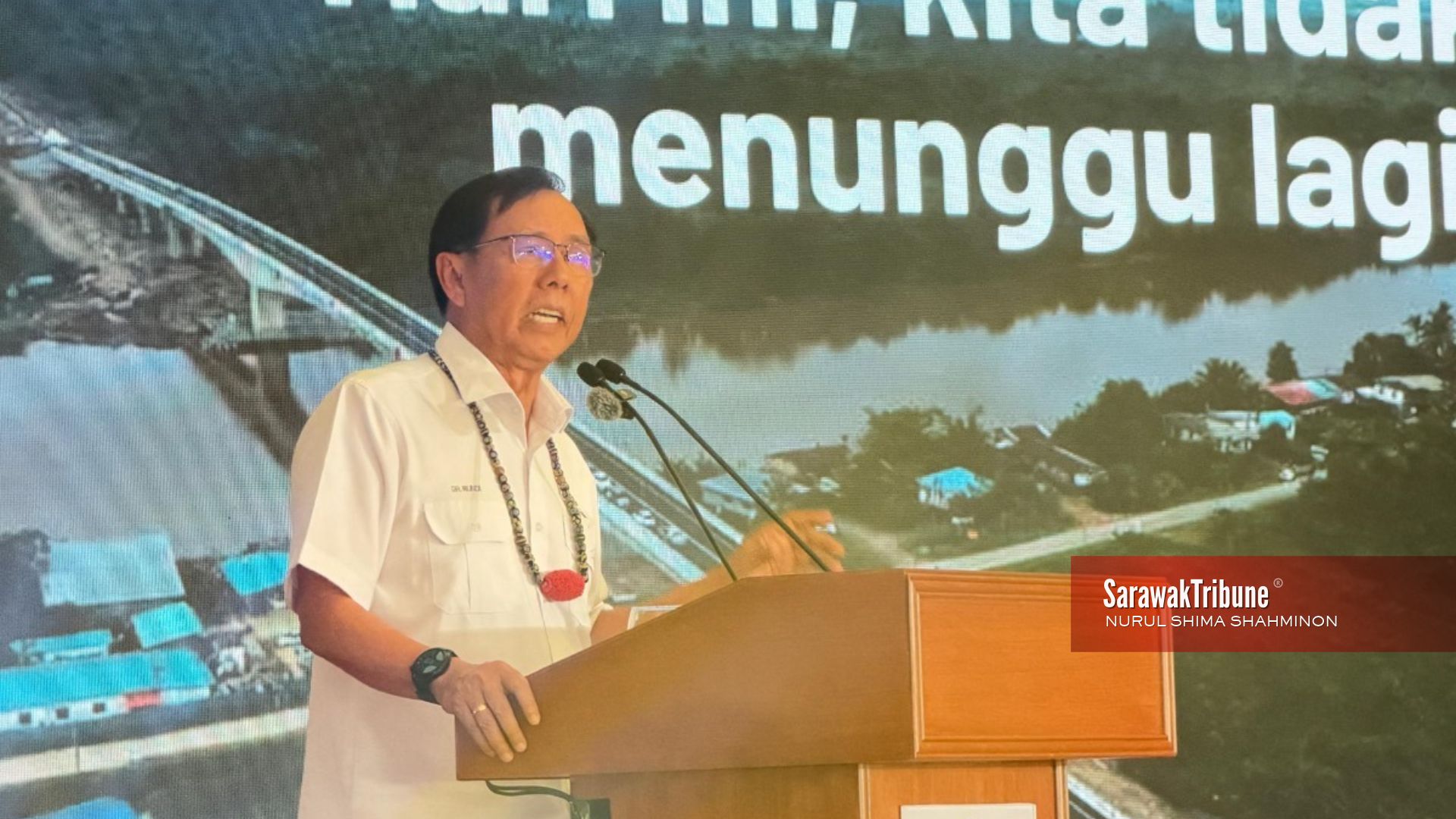
Minister of Food Industry, Commodity and Regional Development Datuk Seri Dr Stephen Rundi Utom said the bridge represented a significant milestone for residents who had endured years of dependence on river crossings and limited ferry services.
Recalling the challenges faced by the community, he said residents initially relied on boats before ferry services were introduced in 2016, but the limited capacity often resulted in long queues and waiting times of between 30 minutes and an hour.
The ferry service also operated only until 10pm, forcing residents travelling after that to take a much longer route from Bintulu to reach Sebauh.
“Today, we can finally see this important change after years of waiting. I thank the people of Sebauh for their patience and the Premier for his concern in bringing development to this area,” he said at the opening ceremony of the Batang Kemena Bridge, officiated by Premier Datuk Patinggi Tan Sri Abang Johari Tun Openg here today (Nov 9).
Dr Rundi said the focus must now extend to improving connectivity in surrounding rural areas, particularly Ulu Binyok, Ulu Pandan, Jelalong and Tubau, as well as parts of Tatau.
He said the establishment of the Bintulu Rural Development Committee (BIRDCOM), following discussions with the Premier, would help coordinate development efforts and address infrastructure needs beyond Bintulu’s urban centre.
“We want to expand and maximise the road network so that more people can enjoy better connectivity, which will in turn accelerate their socioeconomic development,” he said.
He stressed that proper road access is also essential to bringing agricultural development to rural communities, as farmers needed supporting infrastructure to transport their produce, adopt modern technologies and reach wider markets.
“As the Minister of Food Industry, I can only bring agricultural projects to the people if basic facilities such as roads are available. We also need the Internet of Things (IoT), agricultural modernisation and other supporting facilities,” he said.
Dr Rundi said agriculture should be treated as a business and a source of income rather than merely a means of subsistence, with greater emphasis on commercial production, collective farming and downstream processing to create higher-value products.
He said a modern agricultural centre near Taman Sebiew, expected to be completed next year, would incorporate IoT technology, modern farming systems and an agro-park concept to encourage greater participation among younger generations.
The project, involving government expenditure of tens of millions of ringgit, is aimed at creating more opportunities for rural communities to participate in modern agriculture and improve their household incomes.
He said these efforts are aligned with the Post COVID-19 Development Strategy 2030 (PCDS 2030), which targets an increase in household income to at least RM50,000.
Dr Rundi also urged local communities to manage and protect their customary land through proper planning and cooperation with the government to ensure they continued to benefit from development and the economic opportunities brought by improved connectivity.