A visit to KEN Museum in Kuala Lumpur offers a fascinating introduction to centuries of Chinese civilisation, revealing a rich cultural heritage that extends far beyond familiar festive traditions.
Discovering Chinese Heritage at KEN Museum
Red, firecrackers, ang pows, lion dances and tea.
These were the familiar symbols I associated with being Chinese. Yet, they represented only the surface of a much deeper cultural heritage.
Raised in a Western-influenced environment, I had little interest in Chinese history and culture. I could name several European historical figures, but when it came to Chinese personalities, Confucius was perhaps the only one who came to mind.
It was only when I started a family that I developed a growing curiosity about my Oriental roots. Perhaps it was an instinctive desire to understand my heritage and have something meaningful to pass on to the next generation.
While travelling abroad offers opportunities to explore Chinese history, local exhibitions and galleries dedicated to the subject are relatively limited. Fortunately, a visit to KEN Museum, a private museum located within Menara KEN in TTDI, Kuala Lumpur, proved to be an eye-opening experience.
Barely a year old, the museum houses more than 500 antique and archaeological pieces from the personal collection of Datuk Kenny Tan, founder of property development group KEN Holdings Berhad.
Spread across five rooms, the collection features sculptures, furniture, artefacts, ceramics, paintings and other objects representing different periods of Chinese civilisation, including the Han, Tang, Song and Qing dynasties.
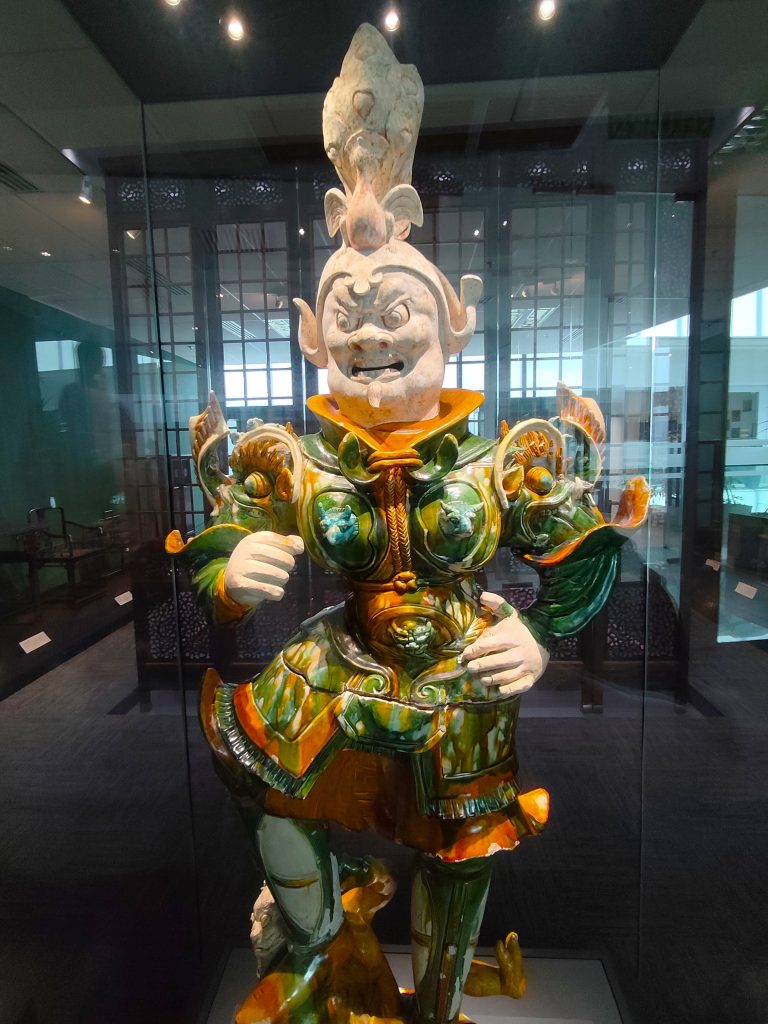
Greeting me at the entrance was a sancai-glazed figure of Lokapala, a guardian deity in Buddhist tradition. Dating from the Tang Dynasty (618–906 AD), the imposing figure is dressed in armour, complete with dragon-shaped epaulettes and a breastplate in shades of amber, green and cream.
With one hand resting on its hip and the other raised, it appears poised to strike at any moment. Its stern gaze seems almost capable of penetrating one’s thoughts. The guide accompanying me mentioned that this was among the most popular pieces with visitors, and I could understand why.
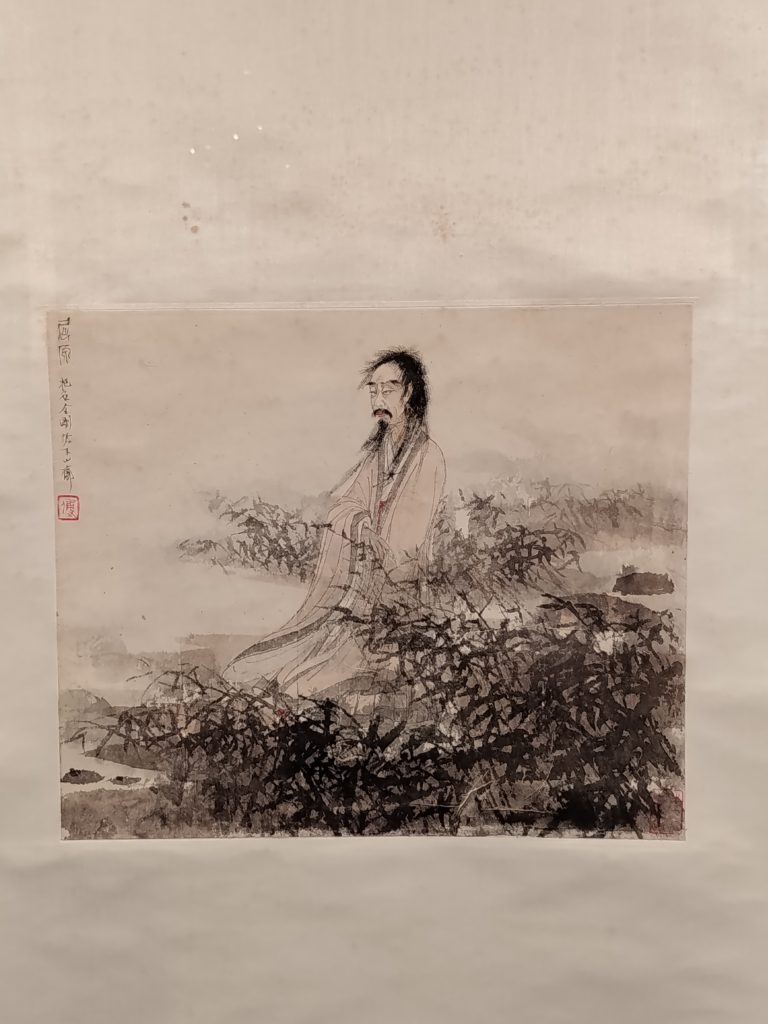
In another corner, a painting on a scroll depicts a solemn-faced man in robes. It portrays Qu Yuan, the poet and statesman who drowned himself in 278 BC, an event commemorated through the annual Dragon Boat Festival. In Malaysia, the occasion is also associated with the making and eating of bak chang, or rice dumplings. According to legend, the dumplings were thrown into the river to prevent fish from consuming his body.
Red seals on the painting identify its creator as Fu Baoshi, regarded as one of the most influential Chinese ink painters of the 20th century. The work had previously been held in European collections for half a century before eventually making its way to Malaysia.
Dragons are deeply woven into Chinese culture, and the museum has plenty of examples featuring this legendary creature.
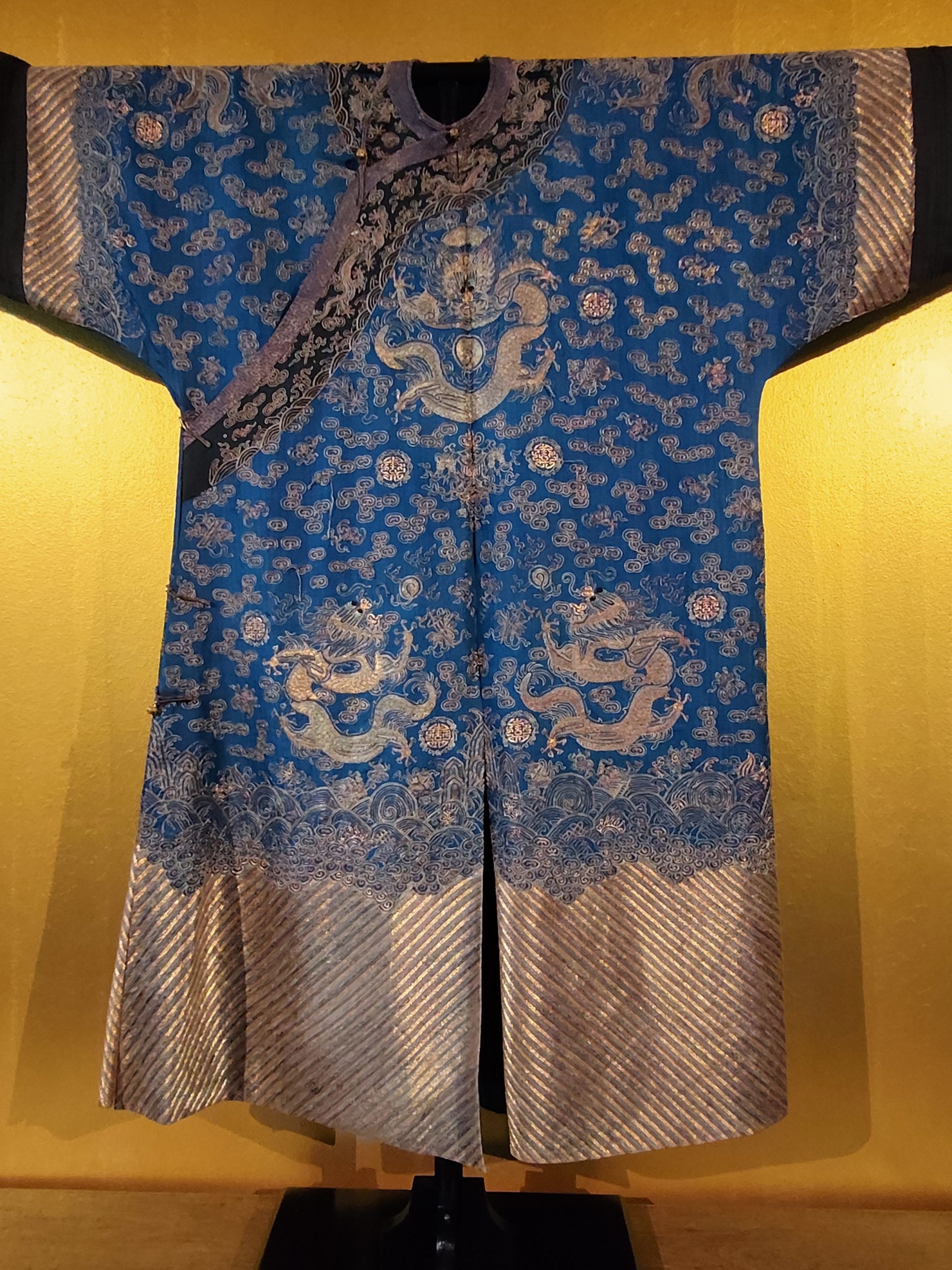
Two Qing imperial robes caught my attention, their golden dragons seemingly drifting across a blue silk sky, surrounded by golden clouds. Intricate embroidery creates mountain-like landscapes beneath them. The five claws on each dragon’s feet indicate that these garments were associated with imperial rank and authority.
Nearby stand grand cabinets lacquered in black, maroon and gold. Symmetrical pairs of dragons wind across their doors, their mouths open and claws reaching towards flaming pearls positioned near the handles. These are exquisite examples of traditional furniture craftsmanship, leaving one wondering what precious possessions they might once have housed.
Among the many ceramics on display, two pieces particularly caught my eye.
The first was a rare pierced famille-verte censer and cover from the Kangxi period (1662–1722) of the Qing Dynasty. Small legs bearing the faces of taotie, mythical creatures in Chinese mythology, support an elaborate structure of trelliswork framed by delicate floral motifs. A golden lion crowning the cover adds a further touch of refinement to this remarkable piece.
The second was a Blanc de Chine covered jar dating from the 19th to 20th centuries, distinguished by its smooth white surface and understated floral decoration. At first glance, I might have mistaken it for a Western decorative piece had it not been for the Chinese lion motif. Also known as a general’s jar, its distinctive lid resembles an ancient military helmet, while its broad silhouette gives it a commanding presence.
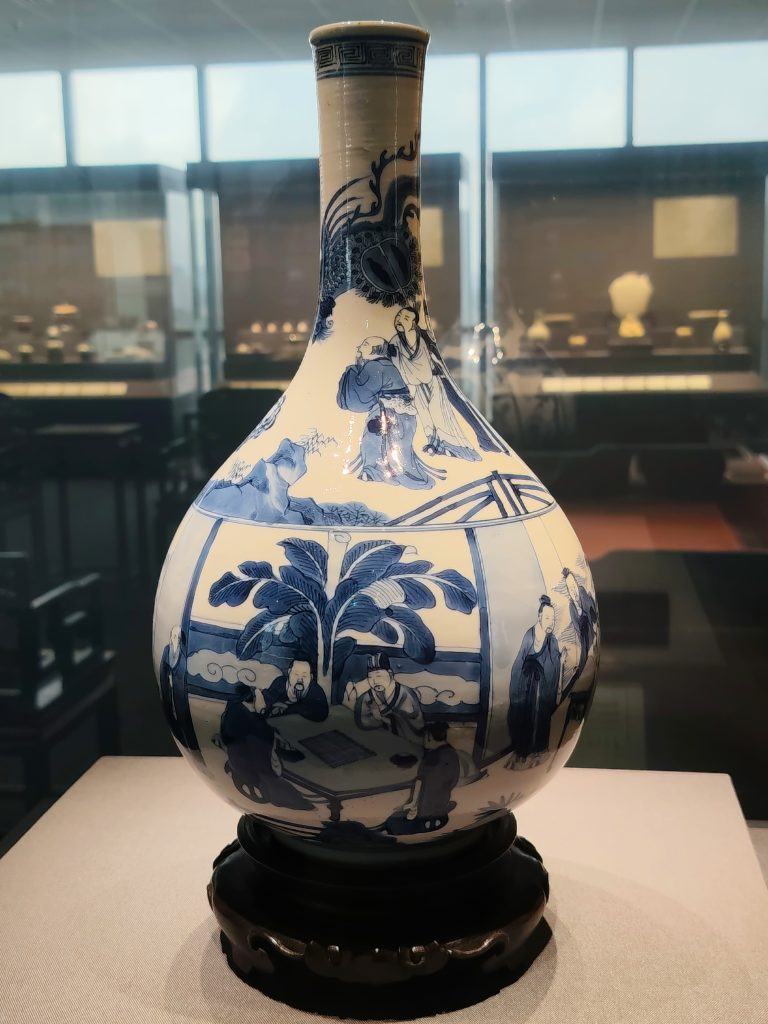
The importance of education has long been embedded in Chinese culture. This is reflected in objects such as the blue-and-white Eighteen Scholars bottle vase.
Its decoration depicts scholars engaged in playing the guqin, a seven-stringed Chinese zither, enjoying weiqi, a strategic board game, practising calligraphy and creating artwork. These activities represent the Four Arts traditionally associated with the cultivated scholar-gentleman in ancient China.
The museum also displays scholars’ implements, including brushes, ink pads and inkstones from the Qing Dynasty (1644–1911), offering another glimpse into the intellectual pursuits of earlier generations.
Other pieces that piqued my interest included lifelike Dawu clay sculptures from Chaozhou, Guangdong province; a beautifully carved and gilded wooden archer from the Qianlong period (1735–1796) of the Qing Dynasty; and charming miniature animals from the Song Dynasty (960–1279).
However, it was the archaeological artefacts that truly captured my imagination.
Grids of ceramic shards and fragments embedded in the floor immediately brought to mind an archaeological excavation site. Nearby, an ancient book or manuscript, together with an ink pad dating from the 8th to 9th centuries and salvaged from the seabed off the Vietnamese coast, invited closer inspection.
Behind glass were painted sculptures of ducks, geese and other birds from the tomb complex of Emperor Jingdi, the sixth ruler of the Han Dynasty (reigned 157–141 BC). Remarkably preserved, these figures are around 2,000 years old, yet their details and finish remain astonishingly intact.
My favourite, however, was a terracotta male figure firmly astride a magnificent horse. Although its arms are missing, the figure retains a commanding presence. Created during the Han Dynasty, it was placed in a tomb to accompany and serve the deceased in the afterlife. Today, it serves a different purpose, fascinating visitors fortunate enough to encounter it.
A visit to KEN Museum is ultimately a journey through centuries of Chinese civilisation. I left with a renewed sense of awe and appreciation for a heritage I had previously known so little about.
Had such a place existed when I was younger, perhaps I would have been inspired to explore my ethnic history much earlier. More importantly, it offers an accessible place to bring the family and explain that Chinese heritage extends far beyond festive celebrations, familiar traditions and food.
Visitors are invited to make a contribution to the KEN Foundation, which provides financial assistance to Malaysians pursuing further studies. The museum is currently open on weekdays, with walk-in visitors welcome.