KUCHING: Malaysia is ramping up efforts to strengthen its pepper industry as a high-value agri-commodity, with a focus on boosting productivity, accelerating technology adoption and expanding its global market reach.
According to Plantation and Commodities Minister Datuk Seri Dr Noraini Ahmad, the approach is key to ensuring the industry remains competitive and resilient amid evolving global challenges.
She said this during a working visit to the Malaysian Pepper Board (MPB) on Monday (May 4), which included a corporate briefing by the board’s top management on the industry’s current performance, development initiatives and strategic direction.
Noraini noted that the pepper industry contributed approximately RM2.27 billion to the national gross domestic product (GDP) in 2025, compared to RM2.24 billion in 2024.
“As of end-2025, pepper cultivation covered an estimated 8,200 hectares nationwide, with the bulk of production concentrated in Sarawak.
“The sector supports around 39,000 smallholders, highlighting its importance in driving rural economic development.”
Additionally, she said that in terms of exports, Malaysia recorded 4,344 metric tonnes of pepper exports valued at about RM179.78 million in 2025, reflecting sustained global demand for high-quality Malaysian pepper.
“Industry players must continue to strengthen the value chain, including developing downstream products and adopting more strategic branding, to enhance resilience and global competitiveness.”
Noraini stressed that technology adoption is critical in addressing challenges such as climate change, price volatility and increasingly stringent quality requirements.
“Technology is no longer optional but a necessity if we want to ensure the sustainability and competitiveness of the pepper industry.”
She said the government remains committed to developing the sector as a high-value agri-commodity through increased productivity, technological empowerment and stronger access to international markets.
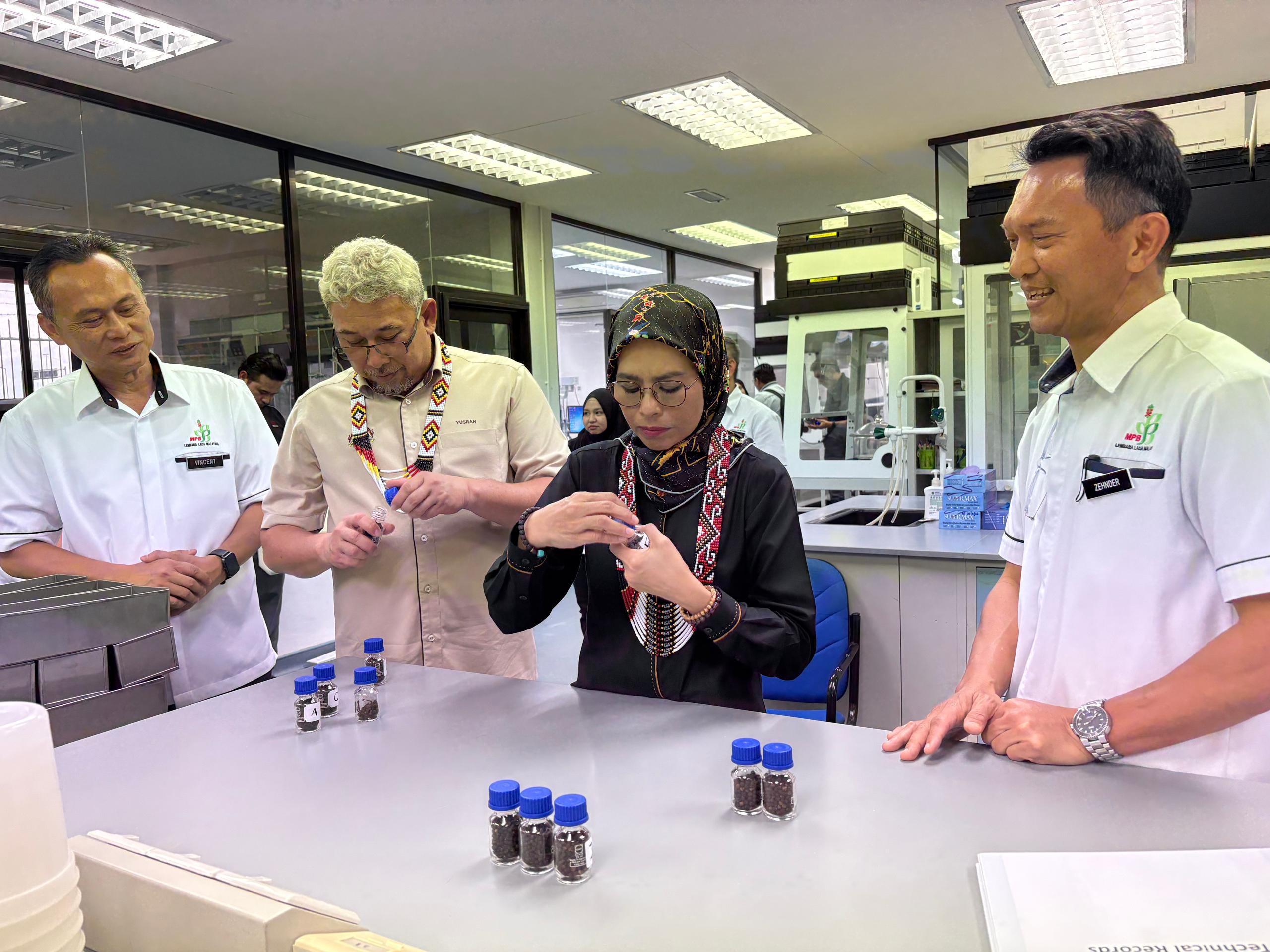
During the visit, Noraini also toured MPB’s processing facilities and laboratories, which play a key role in processing, quality control and research to ensure compliance with global food safety standards.
She further visited two newly established plants, the Physical Processing Plant (dry and wet processes) and a Colour Sorting Plant, aiming to enhance efficiency across the pepper processing chain, including cleaning, grading and processing in line with export specifications.