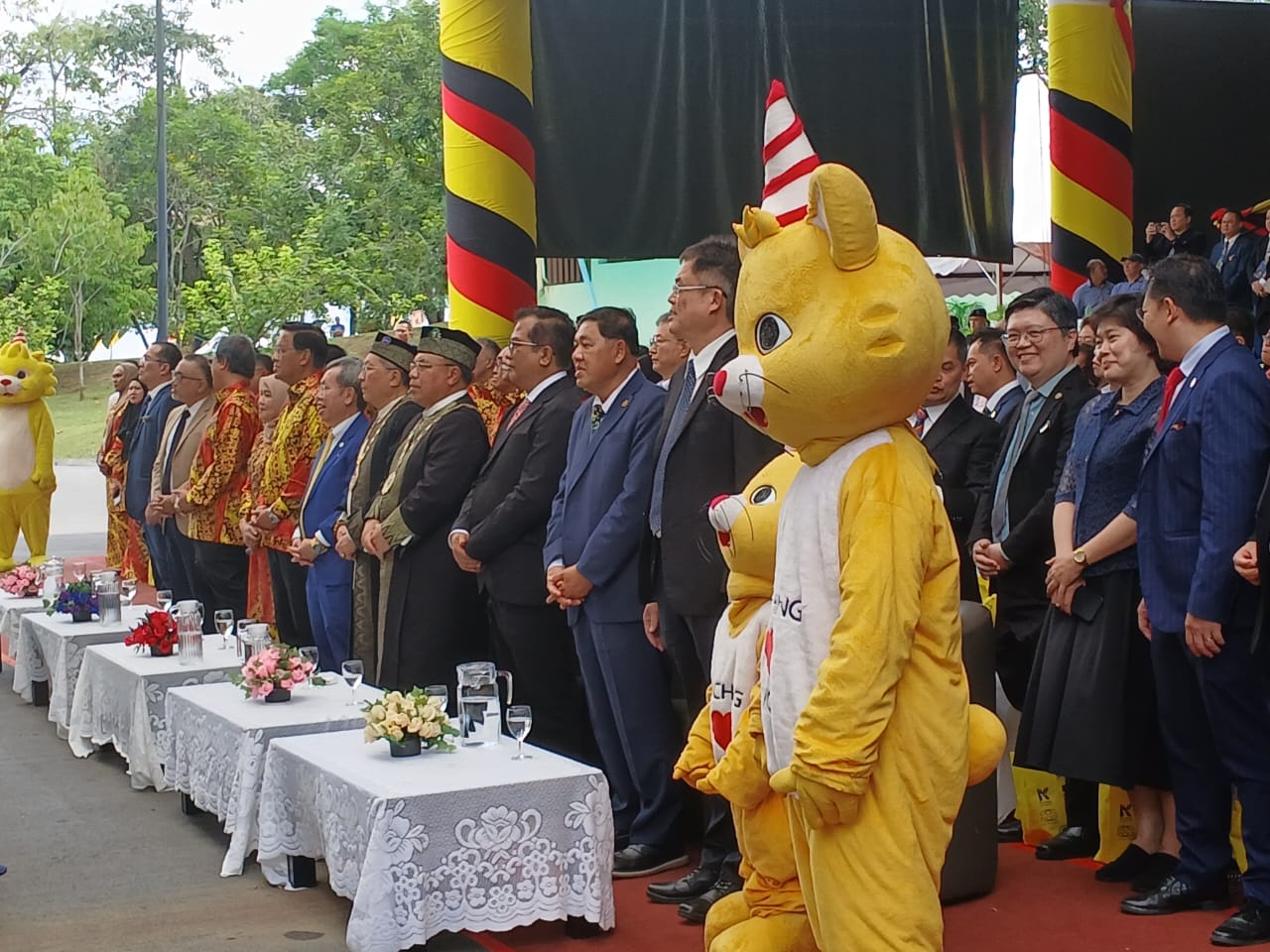
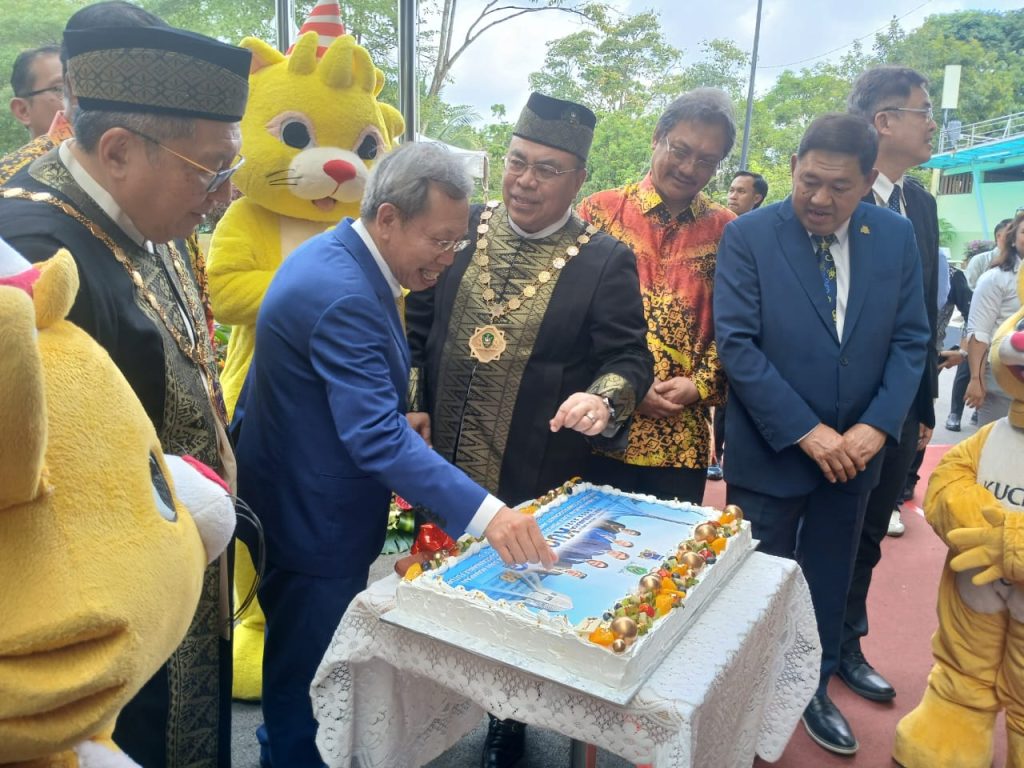
KUCHING: As Kuching celebrates its 38th City Day, the city’s commitment to becoming a more child-friendly, age-friendly, smart and sustainable urban centre has emerged as a key focus for its future development.
Deputy Premier Datuk Amar Dr Sim Kui Hian said modern local authorities must evolve beyond their traditional municipal responsibilities to become planners, innovators and community builders that directly improve people’s quality of life.
He said cities today are expected to create economic opportunities, embrace digital innovation, strengthen environmental sustainability and foster greater social inclusion in line with Sarawak’s Post COVID-19 Development Strategy 2030 (PCDS 2030).
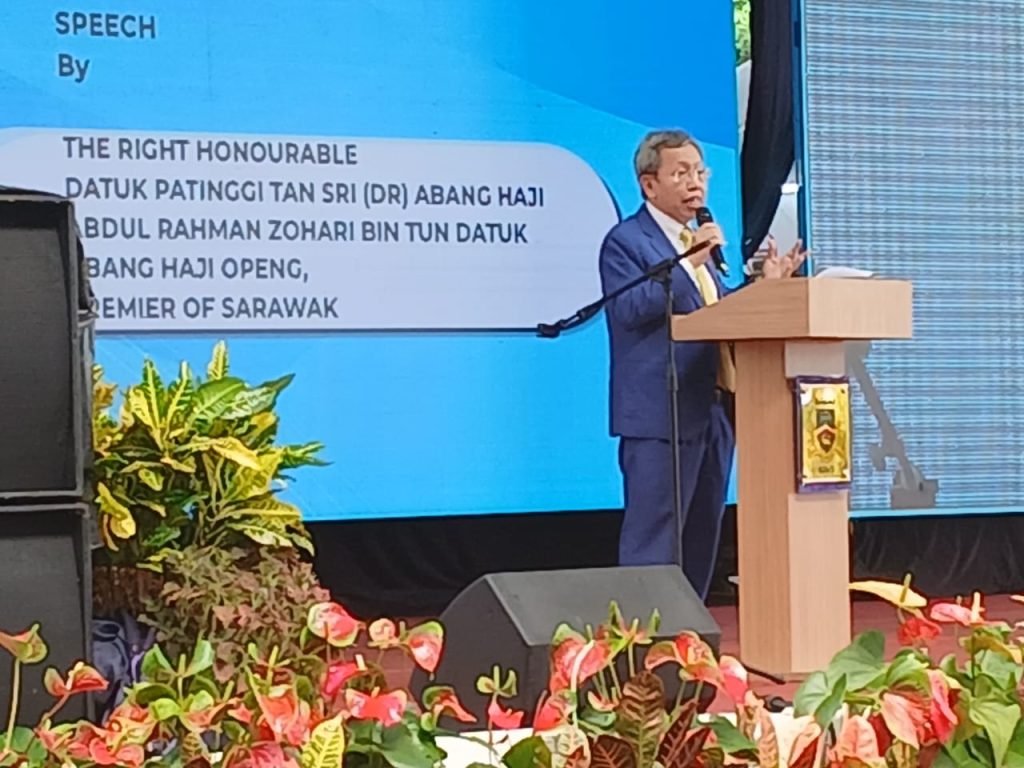
“Kuching’s future development is closely aligned with PCDS 2030, which is not only about economic growth but also about creating opportunities for everyone, improving quality of life, embracing innovation and ensuring development benefits every Sarawakian,” he said when speaking at the 38th Anniversary of Kuching City Day, at the Kuching South City Council (MBKS) Theatre here, today. Dr Sim was representing Sarawak Premier, Datuk Patinggi Tan Sri Abang Johari Tun Openg.
Among the initiatives highlighted was the Child Friendly Cities Initiative (CFCI), where both MBKS and Kuching North City Commission (DBKU) have established Child Councils to give young people a platform to voice their opinions and contribute ideas towards shaping their communities.
Dr Sim said children should not merely be regarded as future leaders, but also as important stakeholders whose perspectives help build safer, healthier and more inclusive cities.
He also noted that Sarawak is expected to become an ageing society by 2028, making age-friendly urban planning equally important.
“Both councils have begun introducing initiatives such as barrier-free public facilities, accessible parks, active ageing programmes and community engagement activities to support senior citizens,” he said.
On sustainability, Dr Sim commended both councils for supporting Sarawak’s low-carbon agenda through tree-planting campaigns, recycling programmes, renewable energy adoption, environmental education and sustainable urban planning.
He added that the Smart City agenda continues to transform municipal services through digital innovations, including online licensing, digital payment systems, smart traffic management, public feedback platforms and environmental monitoring systems, making government services more efficient, transparent and accessible.
“Beyond governance, local authorities also play an increasingly important role in stimulating economic growth,” he said.
Using the annual Kuching Festival Fair as an example, he said the event has evolved into one of Malaysia’s largest city festivals, creating business opportunities for food vendors, entrepreneurs and small businesses while providing young entrepreneurs with a platform to showcase their products.
He also pointed to Kuching’s recognition as a UNESCO Creative Cities Network Creative City of Gastronomy, saying the accolade continues to create new opportunities for local food entrepreneurs, chefs, farmers and tourism operators while preserving the city’s rich culinary heritage.
Reflecting on the city’s journey over the past 38 years, Dr Sim said Kuching has grown from a modest riverside town into one of Malaysia’s most liveable cities, recognised internationally for its cleanliness, greenery, cultural diversity, vibrant tourism industry and strong community spirit.
He attributed the city’s achievements to decades of visionary leadership and the dedication of former mayors, councillors, city secretaries, officers and staff from both MBKS and DBKU, whose collective efforts laid the foundation for the city’s continued growth.
“As we celebrate this milestone, building a great city remains a shared responsibility. Government agencies, businesses, community organisations and residents all have a role to play in ensuring Kuching continues to flourish as a smart, sustainable, inclusive and prosperous city,” he said.
In the same event, DBKU Mayor Datuk Hilmy Othman announced that the council will develop a 25-acre Bamboo Gallery and Park in conjunction with the 38th Kuching City Day celebration, transforming an area spanning Jalan Crookshank, Bampfylde Road, Jalan Roadway and Jalan Taman Budaya into a new urban attraction.
He said, developed in collaboration with the Sarawak Timber Industry Development Corporation (STIDC), the project will showcase local and international bamboo species and is envisioned to become both an iconic landmark and Malaysia’s reference centre for bamboo.
The council is also proposing the Kuching City Park Connector, an integrated green network linking parks and tourism attractions through safe and accessible public spaces.
Hilmy also highlighted DBKU’s growing international recognition for inclusive urban development, noting that the council has been selected as one of five pilot cities worldwide for the Healthy Cities and Positive Ageing City 2025-2027 initiative, representing Malaysia alongside cities from Georgia, Poland, China and Brazil.
“Our aspiration is clear. We want to build a greener and lower-carbon city, expand digital services, ensure every segment of society, from children and youth to senior citizens and persons with disabilities, can enjoy urban facilities equitably, while creating more quality public spaces and strengthening a caring community,” he said.
Meanwhile, MBKS Mayor Datuk Wee Hong Seng said Kuching’s progress over the past 38 years is reflected not only in its physical development and international recognition, but also in the quality of life enjoyed by its people.
He said a successful city should be measured by how well it cares for its elderly, children, persons with disabilities and small businesses, rather than the size of its infrastructure alone.
“A city is not defined only by the height of its buildings, the width of its roads or the value of its properties. It is defined by whether its elderly can move around safely, whether children have clean parks in which to play, whether persons with disabilities are included, whether small traders can earn an honest living, and whether government listens and responds when the people need help,” he said.
He said the theme, ‘Building a Compassionate and Resilient City for a Sustainable Future’, reflects MBKS’ commitment to ensuring development remains people-centred and sustainable.
Looking ahead, Wee said the council will continue supporting PCDS 2030 by strengthening digital services, promoting greener urban development and creating a more inclusive city through child-friendly, age-friendly and disability-friendly initiatives.
“Compassion reminds us whom development is for, resilience determines whether progress can endure, and sustainability ensures that today’s prosperity is not achieved at the expense of future generations,” he added.
The celebration was also attended by Deputy Minister of Energy and Environmental Sustainability Datuk Dr Hazland Abang Hipni, Deputy Minister in the Sarawak Premier’s Department (Project Coordinator for Regional Development Agencies, DBKU and Islamic Affairs) Datuk Dr Abdul Rahman Junaidi, official delegations from Guro in the Republic of Korea; Zhenjiang, Quanzhou and Zhengzhou in China; and Asuke, Toyota City in Japan, reflecting Kuching’s longstanding international friendships and cultural partnerships, councillors from both councils, and other distinguished guests.