MIRI: What lives in the air, water and vegetation around us? Curtin University Malaysia is using environmental DNA (eDNA) science to find out.
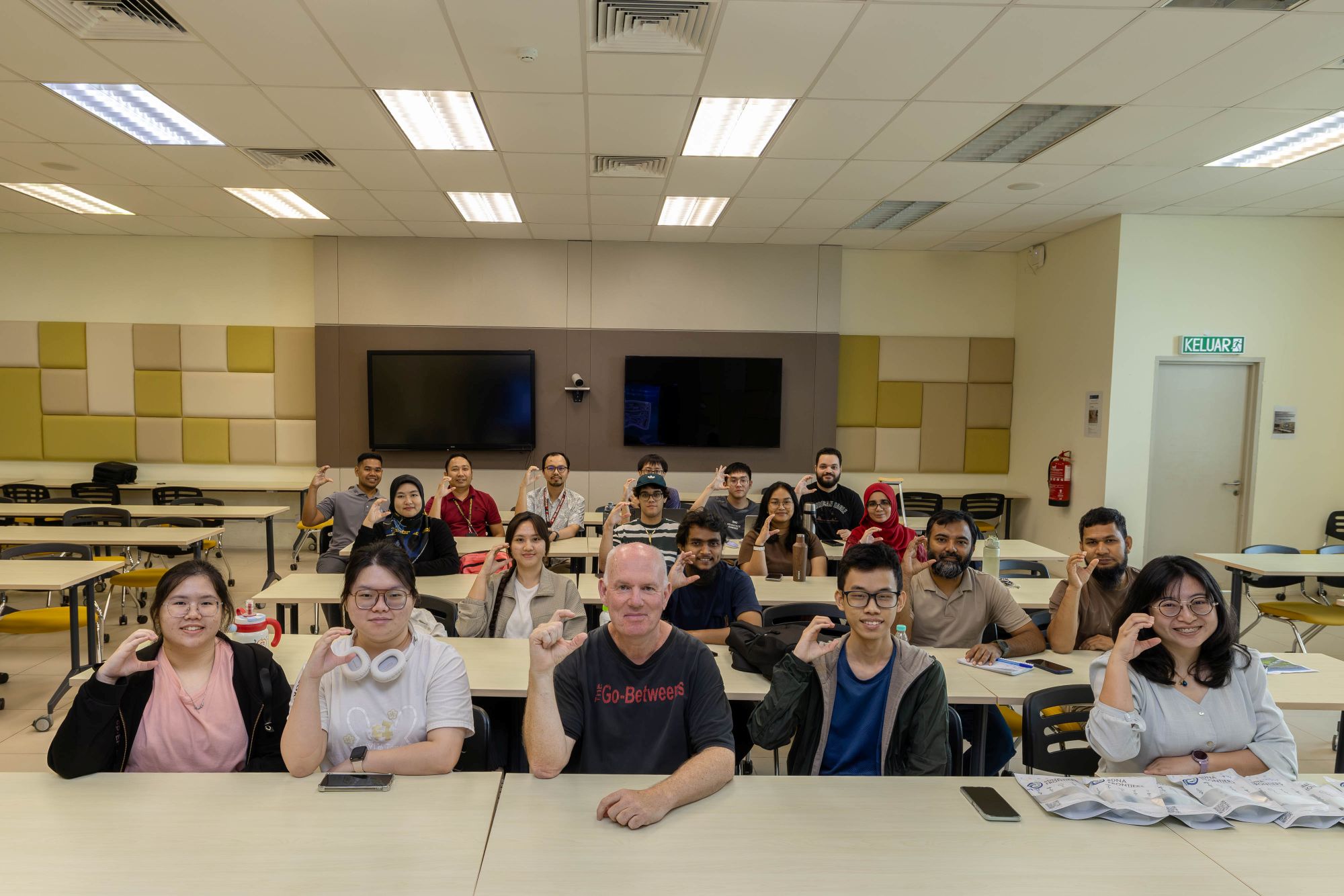
The university recently hosted its inaugural BioBlitz, bringing together 20 academics and postgraduate students for a two day, hands on exploration of advanced biodiversity monitoring techniques.
Held from Aug 10 to 11, the initiative introduced participants to non-invasive eDNA sampling, enabling them to collect biological traces from campus air and water sources to identify native animal, plant and insect species.
Unlike conventional biodiversity surveys that rely on direct observation or capturing organisms, eDNA techniques can detect species from tiny traces of genetic material left behind in their environment.
The approach can provide high precision species identification while establishing valuable baseline ecological data for monitoring how ecosystems respond to human activity and climate change.
Professor Paul Nevill, director of Global Initiatives at Curtin University’s School of Molecular and Life Sciences in Perth, led the BioBlitz, with support from Professor Raymond Chiong, dean of Curtin Malaysia’s Faculty of Engineering and Science, and Dr Lee Yih Nin, assistant director of the Curtin Aquaculture Research Lab (CARL) at Curtin Malaysia.
Nevill opened the programme with an introduction to the fundamentals of eDNA before leading participants into their first field collection activities.
He highlighted the significance of conducting the initiative in Borneo, one of the world’s most biodiverse regions, stressing that establishing continuous biodiversity baselines is increasingly important in understanding and protecting species and ecosystems under threat.
“Borneo is an incredibly important place to undertake this kind of work because of its extraordinary biodiversity. The more we understand what is here and how it changes over time, the better equipped we are to protect it,” he added.
He noted that similar BioBlitz events conducted at Curtin’s Perth and Singapore campuses in 2025 successfully detected more than 3,000 unique species, demonstrating the potential of eDNA based biomonitoring to uncover biodiversity that may otherwise go unnoticed.
The second day focused on practical sampling, introductory eDNA data analysis and short presentations, allowing participants to connect the scientific techniques they had learned with real world applications in environmental monitoring and conservation.
For participants, the experience offered a refreshing departure from conventional classroom learning.
Environmental Engineering PhD candidate Audrey Primus said the hands on water sampling gave her a new perspective on the biodiversity existing within the campus environment.
“This is a great experience to learn more about environmental DNA and what surrounds us. It really helps students and staff understand the living organisms present in our air, water, ground and vegetation. Walking around and doing hands on field activity is much more engaging than sitting in a lecture room,” she said.
Aquaculture PhD candidate Md Siddikur Rahman Sujon highlighted the potential of eDNA for aquatic research and water resource management.
“Coming from a fisheries and aquaculture background, environmental DNA assessment is a very new and interesting area for me. eDNA also allows us to accurately assess the biological life present within the aquatic environment,” he said.
The inaugural BioBlitz represents another step in Curtin Malaysia’s efforts to connect research, education and environmental stewardship, while giving students and academics opportunities to apply emerging scientific technologies to real world ecological challenges.
By beginning to establish a biodiversity baseline for its own campus, Curtin Malaysia is not only learning more about the ecosystems around it but also exploring how advanced biomonitoring can contribute to the wider understanding and conservation of Borneo’s natural heritage.
For more information on Curtin Malaysia, visit curtin.edu.my or follow Curtin Malaysia on Facebook, X (Twitter), Instagram, YouTube, LinkedIn or TikTok.