Part 1 of a three-part series
SARAWAK experienced war during the Japanese Occupation from 1942 to 1945, one of the darkest and most destructive periods in its history for the people. When the Japanese finally surrendered, they left behind a trail of painful and distressing recollections.
Although time has passed and memories have faded, for many who remember those days, the stories still need to be told.
During the war, the only form of escape for local people living in towns from the atrocities of those traumatic times was to flee to the jungle and live with the natives. They had little food. Rice was often taken by the Japanese, but tapioca (ubi kayu/cassava) became the critical survival food. It was more available when rice was scarce for most people during the war.
There was resistance from the people of Sarawak, particularly among the Chinese who hated the Japanese and the Kempetai, the most feared military police force responsible for atrocities during the war in China. Wealthy Chinese businessmen donated money to support the war effort in China.
Those captured for spying or clandestine activities were summarily interrogated, tortured, and executed.
The natives fought the Japanese using shotguns and blowpipes. They were mostly Ibans and Orang Ulus who were recruited by British forces. The famous British anthropologist and later curator of the Sarawak Museum, Tom Harrison, who had been recruited by the British, led a group of native fighters to assist in fighting the Japanese in the interior.
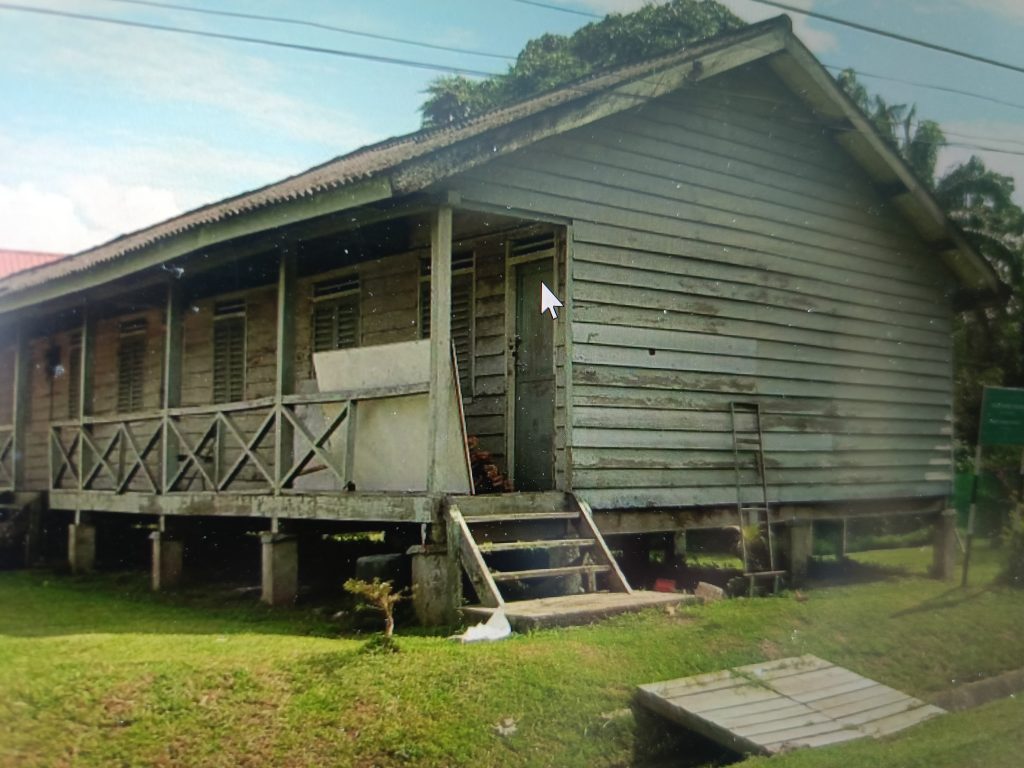
The Batu Lintang Prisoners of War (POW) camp stood out as a haunting evidence of the war years. Many Allied soldiers and civilians, including a priest, were interned at Batu Lintang. Some died of starvation and disease at the camp. It became a place marked by disease, starvation, forced labour, and brutal punishment.
Many interesting narratives emerged from the camp despite its dire conditions.
During a lecture to university students, Edward Mansell, a lecturer and former tourist guide, guided us through these events.
Mansell has an added personal connection to the narrative, as his father was killed by the Japanese. He has many connections to the war, as several of his close relatives and acquaintances were survivors or related to survivors.
In his lecture, he wove through the historical subject with its numerous plots and subplots leading to the main storyline.
Among his favourite topics is undoubtedly the Batu Lintang camp – a five-acre compound surrounded by two miles of barbed wire and holding about 2,000 internees.
Now a teachers’ college established in 1960, the camp has evolved into a place of learning. Like a phoenix rising from the ashes, the Batu Lintang internment camp is now a symbol of hope as a teachers’ college.
He said that teachers also learnt to plant vegetables in the college compound, a useful skill when they were posted to rural areas without easy access to markets.
By a quirk of history, the Batu Lintang camp has the distinction of being the first university in Malaysia.
Among the three Southeast Asian POW camps during the war, the Batu Lintang camp was the most successful, with fewer casualties than the other two POW camps in Thailand–Burma and Ranau in Sabah.
In the first part of a three-part series, Mansell traced the coming of war and the arrival of the Imperial Japanese forces, who first landed in Miri.
He narrated that the Rajah had already known that war would probably come to Sarawak a few months before the attack on Pearl Harbor in 1941. The British, with a contingent of 140,000 troops, made a major blunder. They failed to defend against a Japanese force of only 30,000 soldiers because they believed the Japanese would come by sea.
The Japanese troops took just six weeks to reach Singapore as they advanced through Malaya on bicycles. The British army also retreated too quickly.
The Japanese army under General Yamashita, nicknamed “The Tiger of Malaya”, took a gamble and surprised the British by invading from the north. The British expected them to come by sea. The Japanese forced the surrender of the British by threatening to poison the MacRitchie Reservoir.
In Singapore, the Japanese used captured Punjabi soldiers for bayonet practice, and the Chinese suffered brutalities, with babies reportedly killed by samurai swords.
It was estimated that between 70,000 and 80,000 people died at the hands of the Japanese in Singapore. The British surrendered at Bukit Timah, which may be difficult to locate on the map today as Singapore has changed greatly.
According to Mansell, before the war in Sarawak, there were spies disguised as entertainers from Japan. They worked as prostitutes in the red-light district at Kai Joo Lane.
These women, pretending to be entertainers, served officers wine and made them drunk (“mabok”), enabling them to extract information. They eventually compiled a complete list of top officers in Sarawak and sent it to Tokyo before escaping back to Japan.
At that time, Sarawak had no army or defence force. Fortunately, it had a treaty with Britain under which the British government provided defence.
A battalion of Punjabi soldiers based in Singapore was sent to Sarawak. Their mission was mainly to destroy important installations such as oil fields if necessary.
The Sarawak lecturer, who could qualify as a historian, said the Japanese came to Sarawak primarily for oil, and Miri had high-quality diesel oil for their aircraft and army.
The Japanese were bogged down in the war in southern China and needed resources such as rubber and oil to keep their war machine running. That was why they came to Southeast Asia, including Sarawak.
Sarawak’s only defence was the Punjabi soldiers, who could hardly match the well-trained Imperial Japanese soldiers who had greater numbers and better weapons. In many battles they simply retreated.
The Punjabi soldiers originally came from a province in India and consisted of Hindus, Muslims, and Buddhists, not necessarily the turban-wearing Sikhs commonly associated with the word “Punjabi”.
The Punjabi soldiers first arrived in Sarawak with only a few hundred men on December 2, 1940 and stayed at the Batu Lintang camp, which had been built by the Rajah.
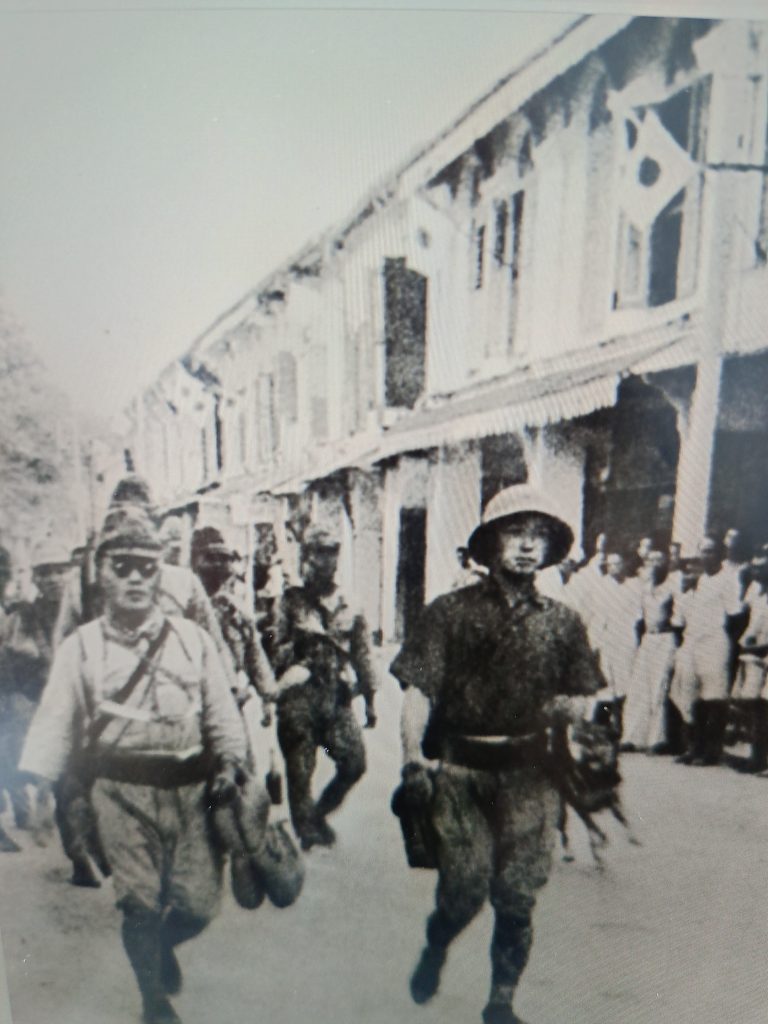
The Japanese invaded Sarawak by sea from the north and landed in Miri on December 24, 1941 — Christmas Eve.
The sea was rough when they landed because it was the monsoon season (“landas”) and many soldiers drowned. The landing area was Brighton Beach, where Tanjong Lobang College is now located.
When the Japanese discovered that the oil wells in Miri had been destroyed, they vented their anger on oil workers and local people, torturing and killing many civilians. A war memorial now stands there.
From Miri, they sailed to Kuching in three ships — a destroyer and two escorts — and one was torpedoed by a Dutch submarine.
After three days, Mansell said, the drowned Japanese soldiers’ bodies floated to the surface. Japanese officers then forced local Malays to bury the decomposing bodies.
Today, many people go fishing at the site of the wreckage because there are plenty of fish there.
These Japanese officers had previously visited Sarawak, pretending to be ordinary visitors while conducting clandestine work. They often went fishing in the Damai area, measuring sea depths and collecting data for the invasion.
The Japanese entered Kuching by a back route near the Salak area rather than via the Sarawak River because they knew the Punjabi soldiers were waiting to ambush them there.
Before the war began, Japanese residents in Sarawak were interned at a rest house. Women and children were housed at St Mary’s School.
There was some fighting in Satok when the Japanese landed in Kuching. Some Japanese troops went to the Post Office building, which served as the administrative centre for Kuching, while others went to Fort Margherita.
At the Post Office building, they captured British and Chinese officers. No shots were fired but the arrested officers were forced to sit in the middle of the road to be publicly humiliated and to demonstrate who was now in control.
At 6 pm, the Chinese officers were released, but the British officers were taken to the Astana where they were confined in a poorly ventilated room for 48 hours.
It was one of the first signs of cruelty shown by the Japanese during their occupation of Sarawak.