GEORGE TOWN: The Ministry of Rural and Regional Development (KKDW) will restructure the Desa Lestari Programme to enhance its effectiveness in boosting rural livelihoods, targeting a monthly household income of RM2,300 for participants.
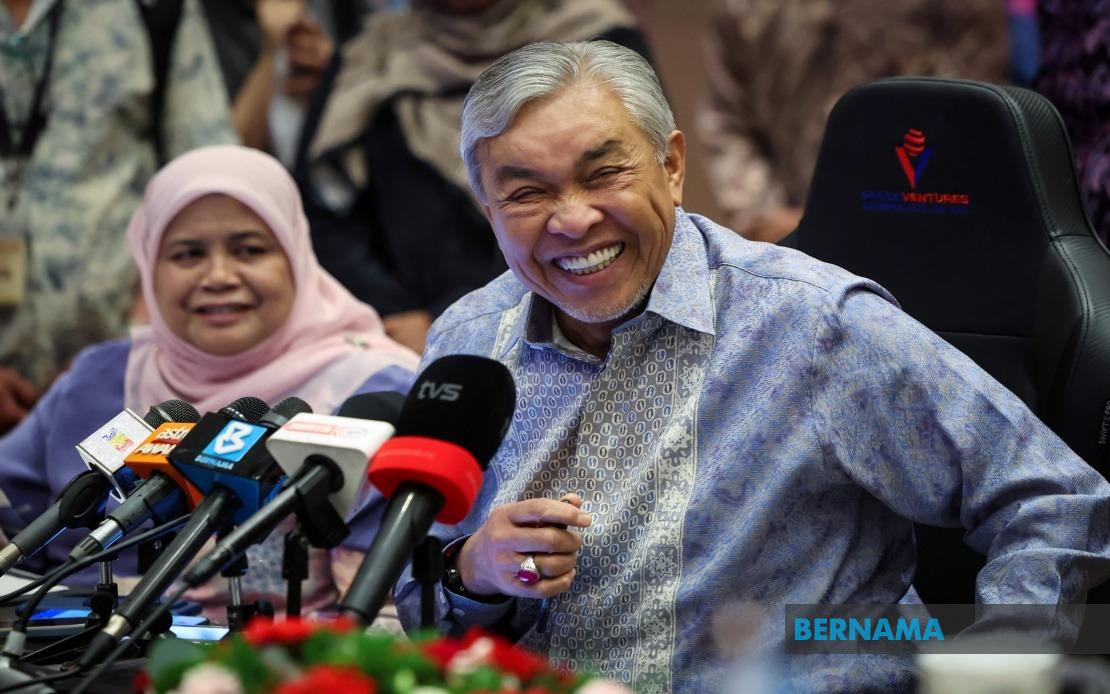
Deputy Prime Minister Datuk Seri Dr Ahmad Zahid Hamidi said the programme, introduced a decade ago, would be restructured beyond a mere rebranding, with its content and delivery model redesigned to maximise its impact on rural communities.
He said the reforms would include appointing qualified professionals from rural communities to manage the programme for local cooperatives and residents.
“Our aim is for professionals who come from these villages and have the necessary qualifications to manage the Desa Lestari Programme on behalf of cooperatives and residents, enabling the initiative to achieve better results, particularly in increasing household incomes.
“We are targeting a monthly household income of RM2,300 for households participating in the Desa Lestari Programme,” he said at a press conference after chairing the 61st coordination meeting between the Minister of Rural and Regional Development and the state executive councillors for rural development (MEXCLUB) here today.
Also present were Perlis Menteri Besar Abu Bakar Hamzah, Penang Rural Development, Agrotechnology and Food Security Committee chairman Datuk Rashidi Zinol, and Barisan Nasional Youth chief Datuk Dr Muhamad Akmal Saleh.
Ahmad Zahid, who is also Rural and Regional Development Minister, said the income growth target was intended not only to reduce poverty levels but also to help eliminate hardcore poverty.
He said the rural poverty rate had improved from 12 per cent to 9.9 per cent, with migration trends indicating that movement between rural areas stood at 7.6 per cent, urban-to-rural migration at 7.2 per cent, while rural-to-urban migration had narrowed to just 0.6 per cent.
He urged state governments, via MEXCLUB, to accelerate the approval process, land coordination, infrastructure upgrades and participation of relevant agencies so that strategic rural assets could be developed and put to productive use for greater economic returns.
He said KKDW sought to transform rural communities through enhanced infrastructure, technology and economic opportunities, while maintaining their cultural identity and close social ties.
He said the push would be reinforced through the creation of more business and employment opportunities in rural areas, including efforts to draw domestic direct investment and foreign direct investment in partnership with the Ministry of Investment, Trade and Industry.
Ahmad Zahid said the government would also strengthen telecommunications coverage in rural areas that still have limited internet access, despite the wider rollout of 5G networks.
He said the ministry also welcomed the proposal to broaden the community paramedic programme in rural areas, based on the positive outcomes of a pilot project implemented in Melaka.
He said the initiative would help residents receive early treatment, especially in areas with limited access to prompt ambulance services, before being rolled out to other states through MEXCLUB.
The Desa Lestari Programme, launched in 2013 as part of the Government Transformation Programme (GTP 2.0), is one of KKDW’s key initiatives aimed at revitalising rural areas and raising the quality of life of local communities.
— BERNAMA