KUCHING: As the Mid-Autumn Festival lights up homes with lanterns and laughter, families and general consumers are reminded to keep their mooncake consumption in check without losing the joy of the celebration.
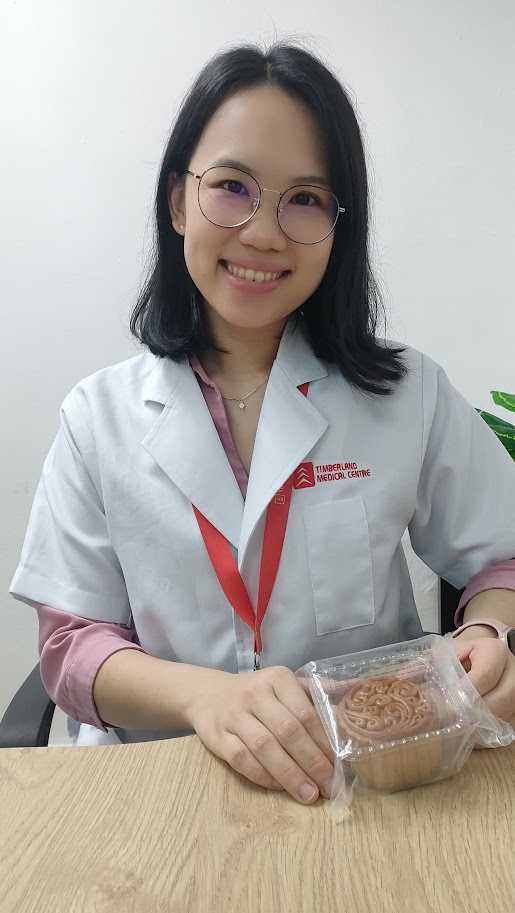
In an interview with Sarawak Tribune on mooncake consumption, dietitian Hui Ying Law explained that a single traditional mooncake can contain up to 600 calories and 40 grammes of sugar, which is equivalent to about four tablespoons of sugar.

“They are very high in calories and sugar. It is important to give advice on portions. Around one to one and a quarter portions a day is something most people can tolerate,” she said.
Mooncakes, she added, often shared during family reunions, may look harmless in their petite, ornate form but their impact on blood sugar can be immediate.
“When we eat too many mooncakes at once, our sugar levels will increase very quickly. Because they do not have much fibre or protein, the sugar spikes and then drops rapidly. This can make us feel tired, crave more food, and become hungry again soon after,” she said.
For children and adults alike, she emphasised that portion control remains key, citing the World Health Organisation’s recommendation that added sugar should not exceed 10 per cent of daily calorie intake.
“For someone consuming 2,000 calories a day, that means no more than 200 calories, roughly three teaspoons of sugar from added sugars,” Hui explained.
Hui noted that sharing mooncakes in slices, a common practice during family gatherings, is actually a healthy strategy.
“Instead of eating the whole mooncake alone, sharing helps to control portions. Mooncake is a tradition. If you don’t eat mooncake during the festival, it’s not the same. It’s a time for families to come together, enjoy their culture and still take care of their health,” she added.
With a growing variety of flavours available from traditional lotus paste with salted egg yolk to snow skin and jelly types, Hui advised consumers to read labels carefully.
“The first thing is to look at the ingredients’ list and nutrition facts, not just the price or expiry date. Some lighter versions, like jelly mooncakes with fruit and less condensed ingredients, can be a better choice,” she said.
For people with diabetes, high cholesterol or hypertension, Hui stressed that they should check if sugar is listed as the first ingredient, which indicates high sugar content and importantly, monitor total carbohydrate levels.
“Even if it says ‘less sugar’ or ‘no added sugar’, the carbohydrate content can still be high. Sometimes the sugar is hidden in the filling,” she added.
She also cautioned against assuming that “sugar-free” or “vegetarian” automatically means healthier.
“Sugar-free mooncakes use sweeteners, which may not raise blood sugar like regular sugar, but portion control still matters,” she said.
While mooncakes are enjoyed only once a year, Hui encourages families to treat themselves mindfully.
“It’s part of our tradition. Enjoy small portions and savour them slowly,” she said.
As for balancing out the extra calories, she advised adopting a positive relationship with exercise, rather than using it as punishment after overindulgence.
“Exercise should be part of a healthy lifestyle, not a punishment for eating, and if someone has sugar issues, they can reduce their carbohydrate intake on the same day,” she explained.
Hui stated that pairing mooncakes with unsweetened drinks such as green tea or Chinese tea is also recommended, instead of soft drinks that add even more sugar to the mix.
She also suggested buying only what is needed to avoid unnecessary overeating.
“Sometimes when we see many choices, we end up buying too much, and eating too much,” she stated.
As families across Sarawak gather to celebrate the Mid-Autumn Festival, Hui’s message is clear: enjoy mooncakes as part of the festivities, but do so with awareness and moderation.
“Read the labels, share with loved ones, choose healthier options, and most importantly, enjoy the celebration,” she said.