KUCHING: Sarawak’s ongoing structural transformation and efforts to reclaim greater autonomy require stable and continuous leadership rather than rigid term limits.
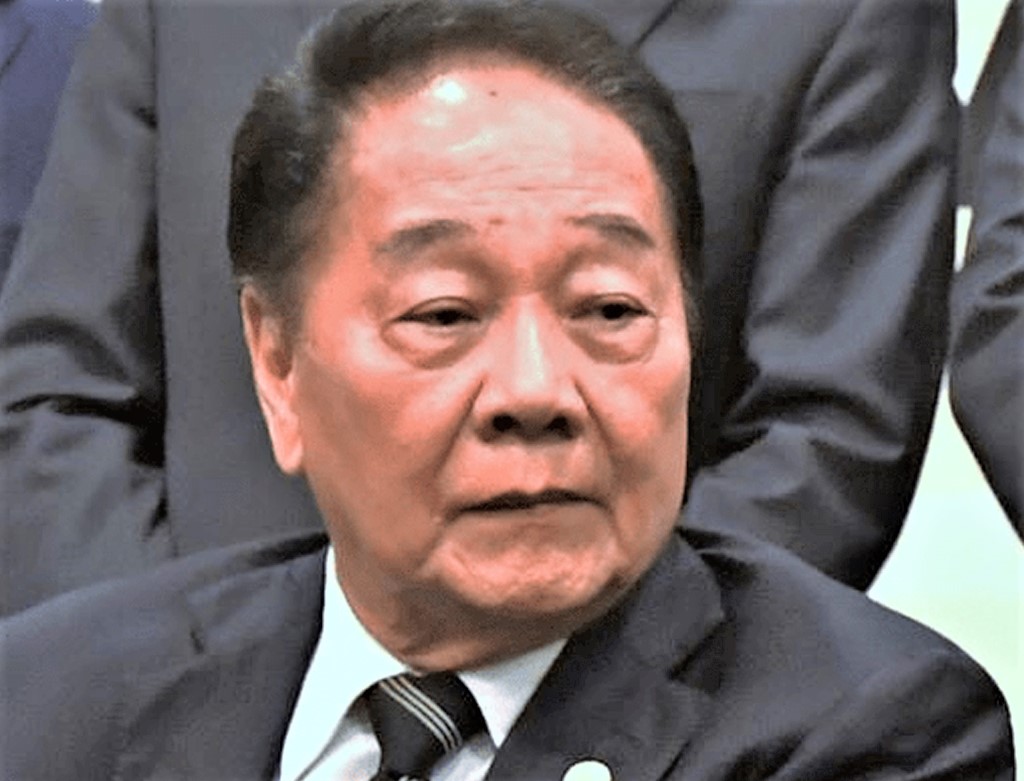
Bawang Assan state assemblyman and Progressive Democratic Party (PDP) Senior Vice-President, Datuk Seri Wong Soon Koh, said imposing a fixed term limit on the Sarawak Premier at this juncture could undermine long-term reforms and weaken the state’s strategic position, particularly as Sarawak navigates complex constitutional, economic and governance transitions.
He acknowledged that term limits are often viewed as a measure of democratic maturity, as they can prevent the concentration of power, encourage leadership renewal and protect institutions from over-reliance on individuals.
However, he stressed that governance should not be treated as a “one-size-fits-all” exercise.
“In normal circumstances, term limits serve an important purpose. But exceptional historical moments require exceptional judgment,” he said.
Wong argued that Sarawak is currently undergoing a profound structural transformation, making the application of a rigid term limit neither practical nor justifiable at this point.
He said under Premier Datuk Patinggi Tan Sri Abang Johari Tun Openg’s leadership, Sarawak is pursuing long-term reforms aimed at reclaiming its constitutional rights under the Malaysia Agreement 1963 (MA63), securing greater fiscal autonomy and repositioning the state as a developed, high-income economy.
“These are not short-term policy initiatives that can be completed within a single electoral cycle. Such reforms involve complex negotiations, institutional rebuilding and strategic investments that required continuity, deep institutional memory and sustained political authority,” he said.
Wong pointed out that Abang Johari did not inherit a stable and complete governance system but had to rebuild Sarawak’s economic and administrative architecture almost from the ground up.
He cited the establishment of new state-owned energy entities, development of the hydrogen economy, expansion of renewable energy, digital governance reforms and major infrastructure projects as interconnected elements of a long-range strategy.
“Fragmenting leadership at this stage would risk policy discontinuity, diluted accountability and loss of strategic coherence,” he said, stressing that leadership continuity in this context was a necessity rather than a matter of personal privilege.
Wong also noted that the Premier had personally led critical negotiations with the federal government on Sarawak’s rights, revenues and jurisdiction, describing these discussions as deeply rooted in historical, legal and political complexities.
“Trust, credibility and negotiating capital – painstakingly built over years – are central assets that reside with the officeholder. Imposing an arbitrary term limit would undermine Sarawak’s bargaining position at a crucial juncture in its constitutional journey,” he said.
Wong said Abang Johari’s governance style had focused on consensus-building, institutional strengthening and long-term planning rather than personal aggrandisement.
“His emphasis on professional agencies, statutory bodies and strategic roadmaps reflects a leader focused on building institutional legacy, not entrenching personal power,” he said.
Drawing from development history, Wong said continuity of visionary leadership had often been decisive during periods of economic take-off and structural transformation.
“Sarawak today is at a comparable inflection point. To impose a term limit without regard to this reality would be to privilege form over substance,” he said.
Wong said the issue was not whether term limits were important in principle, but whether they were appropriate at this specific stage of Sarawak’s development.
“Given the scale of transformation underway, the unfinished institutional reforms and the unique role played by the Premier, a fixed term limit is neither necessary nor beneficial at this time,” he said, adding that allowing continuity was consistent with responsible and pragmatic governance.