ROLLING FORWARD —
A Special Sports Series | PART ONE
HE was 14, skating for love, with no plan beyond the next trick. Thirty years later, he just left a room in Paris with the people who run global urban sport. This is the story of Nik – and the movement he is building in the middle of Borneo that the world is beginning to notice.
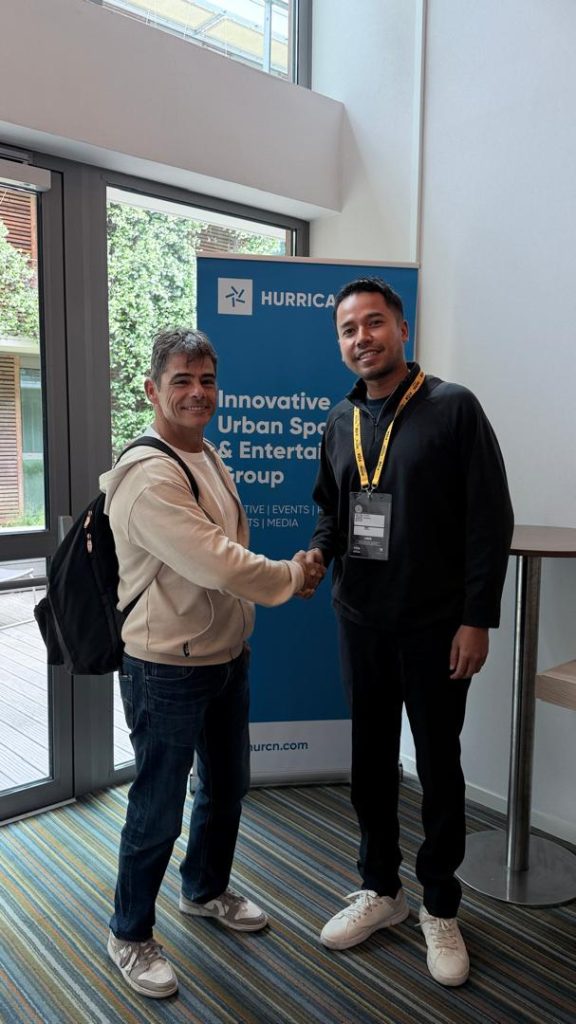
Canroll – Malaysia’s most ambitious answer to the X Games, built from scratch in Kuching by a man who once competed in one – has just held its second edition. Its founder returned this week from Paris, where he sat with X Games leaders and festival directors as a peer, not a guest. The distance between those two facts is the story of a generation.
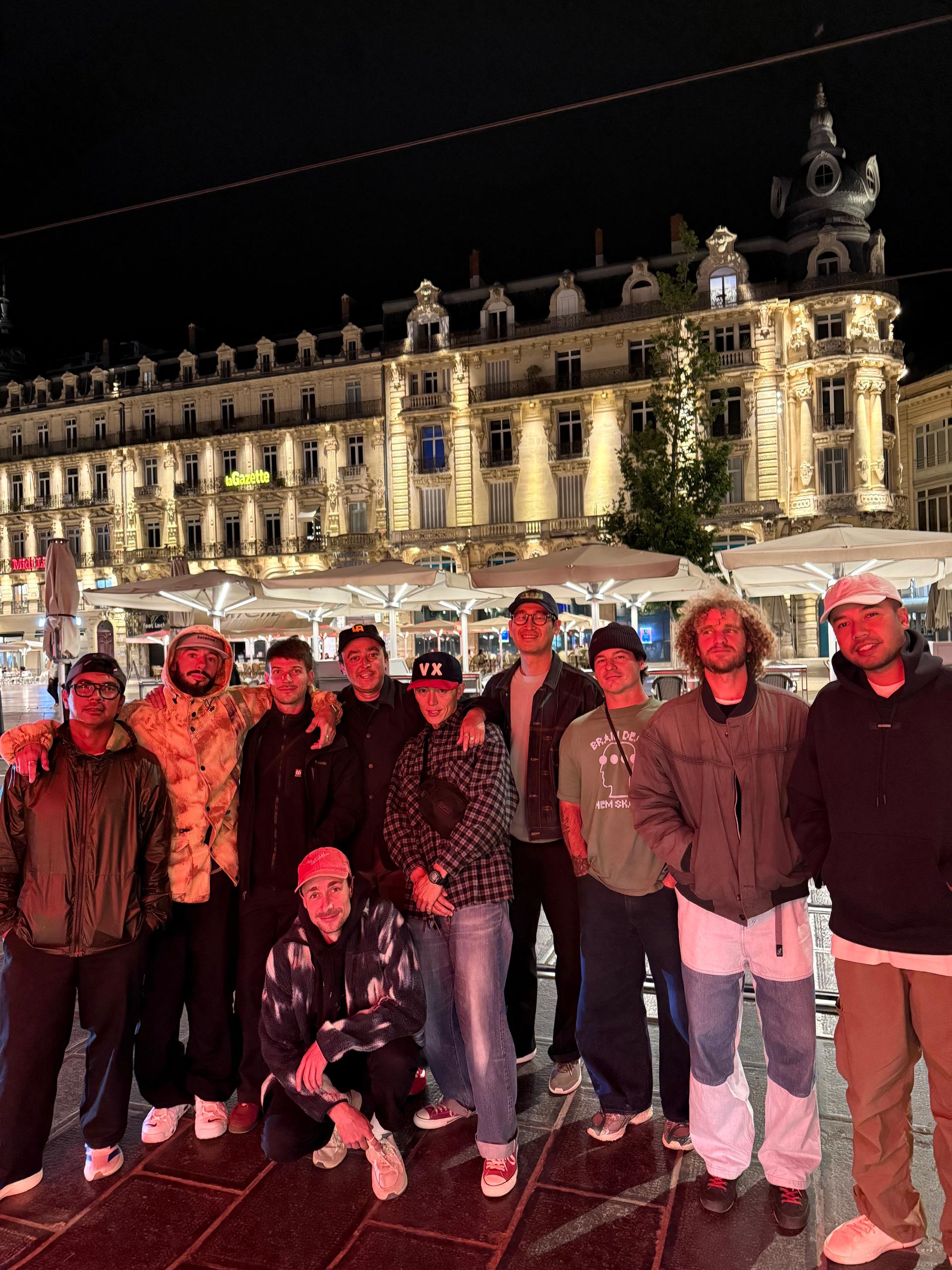
Somewhere in Paris this past week, a man from Kuching sat across the table from the architects of the global urban sports movement – X Games veterans, festival directors, advocates who have spent decades building the infrastructure of the world he grew up watching from the outside.
He was there as a peer.
It is worth pausing on that sentence. Because the distance between where Nik started and where he stood in that room is not merely biographical. It is a measure of something larger – of what is possible when a person refuses, at every turn, to be told what his world is worth.
“It was always just loving what you do”
When Nik first strapped on inline skates at fourteen, he was one of a small cluster of Malaysian kids chasing a culture that most of their country either ignored or misread as trouble. This was the early 2000s – the era of the X Games, when action sport was at a global peak, when Malaysia briefly had a minister of sport aggressive enough to push it, and when competitions were happening almost weekly enough that athletes could, improbably, make a living.
“Malaysia was very ready,” Nik recalled, days after Canroll 2 wrapped in Kuching. “The demand for action sport back then – in 2002, 2003 – was real. People were actually surviving off it. It was a cool thing.”
He was one of the youngest in the circuit. Two Malaysians stood out as the persistent ones – Nik, and a fellow skater named Edler. They kept showing up, kept representing, kept competing when others drifted away.
“I was 100 per cent focused on being the best,” he said. “It wasn’t really trying to see what’s upcoming. It was always just loving what you do.”
But love does not pay rent. There was a financial reality check – his words – that forced him off the circuit and back into the working world. He balanced employment and skating for years. The competitions thinned out. The minister changed. The scene, without government momentum, quietly contracted.
What did not contract was the vision growing inside his head.
The thought he carried for years
Ask Nik when he decided to build Canroll and he will give you an answer that sounds like a riddle.
“It’s years of thinking inside your head,” he said. “Not trying to make it happen – but visualising it. You have to visualise it to make your team believe in that dream. For people to work to build a product they don’t even see yet – that’s not easy.”
This is the part of the Canroll story that rarely gets told. It was not a business decision. It was a slow accumulation – of friendships across the extreme sports ecosystem, of observations at every event he attended, of a deepening understanding of what was missing from Malaysia’s relationship with urban sport and what it would take to fill that gap.
“I always saw myself thinking – there’s more to this than just skating,” he said. “Once skating was done in my life, I went to business. But my circle has always been in the ecosystem of extreme sport. Skateboarders, motocross people, BMX. We mingle, we network, we party together. One thing leads to another.”
He paused.
“I worked hard – very hard. Had some capital. Had a great team. And built what I had envisioned.”
What Canroll actually is
Canroll is Malaysia’s answer to the X Games – built from scratch, in Borneo, by a man who once competed in one.
That single sentence contains the whole story. But it does not contain the full picture.
Because Canroll is not simply a sports festival. It is an engineering of culture. A deliberate, years-in-the-making attempt to build an ecosystem around disciplines that once had to fight for the right to exist – skateboarding, BMX, inline skating, flatland – and to expand that ecosystem outward into basketball, pickleball, jet ski flyboard, live music, and entrepreneurship.
Its second edition, held in Kuching earlier this year, drew athletes from ten countries. Three government ministers attended. The city’s mayor was present. A crowd of roughly 20,000 moved through it across its duration. And a formal partnership with Urban World Series – the Barcelona-based sanctioning body that governs urban sport across Europe – was publicly confirmed, the first of its kind between Malaysia and Spain in this discipline.
None of this happened by accident. All of it was willed into existence by a man who, when asked how it felt to stand in the middle of it, gave an answer that surprised everyone who heard it.
“I don’t get a vibe of excitement,” he said, almost matter-of-factly. “I just feel like it’s a stepping stone. That thing happens, athletes come – I’m happy. But I’m already looking at what’s next.”
The cold message that changed everything
The Barcelona partnership – the linchpin of Canroll’s international credibility – began with an Instagram direct message.
Before Canroll 2 was even confirmed, Nik found Victor, the founder of Urban World Series, and messaged him cold. They went back and forth. Canroll 1 happened, UWS observed. Then came the invitation.
“They invited me to Barcelona in September,” Nik said. “I went. Five days. Victor showed me around, showed me how they operate, gave me the whole concept. And I came back already thinking about what this year’s Canroll would become.”
What it became was a pivot – from action sport festival to urban sports platform – deliberately modelled on what Nik had absorbed in Europe, but rooted entirely in Kuching. The Barcelona city government subsequently issued a formal endorsement describing the Malaysia-Spain collaboration as a significant engagement in international urban sport.
There was, at the time of that commitment, no confirmed funding from any government source.
“I had no confirmation of financial aid – basically this whole time,” Nik said. He committed anyway. “I believe in this product so much that I know it’s going to go somewhere.”
He pauses on that moment now not with relief, but with a kind of quiet satisfaction – the satisfaction of a man who bet on himself and wants you to understand exactly what was at stake when he did.
The thirteen-year shadow
There is a festival in Europe that has been running for thirteen years, doing something close to what Canroll is attempting. Established, funded, recognised – it is, in urban sports terms, what Canroll wants to be when it grows up.
Nik is two years old. He knows this.
“I’m trying to catch up,” he said. “I want to achieve in four years what they have done in thirteen. I’m chasing them.”
Four years. Not eventually. Not one day. Four years – and the man saying it just came back from Paris with fresh intelligence on exactly how to close that gap.
In rooms full of people who have been doing this for decades, Nik was not the youngest voice or the smallest story. He was the person who had built something real, in a city most of his international counterparts had never visited, and shown up with proof.
He came back with plans.
What this story means
This is not a story about a festival.
It is a story about what happens when someone from the margins – a kid from Sarawak, from the edge of the country, from a discipline once dismissed as loitering with expensive equipment – refuses to accept that the edge is where he belongs.
It is a story about what Sarawak is capable of producing, not in spite of its distance from Kuala Lumpur, but because of it. Because distance forces self-reliance. Because being overlooked forces creativity. Because when no one hands you the infrastructure, you weld it yourself.
“I can go broke,” Nik said quietly, near the end of our conversation, “and I still love it.”
That is the only kind of founder who builds something that lasts.
When asked if there was anything he had always wanted to say publicly but never found the right space for, he thought for a moment.
Then: “You’ll see what’s coming. Stay with this movement.”
We will. We are.
Canroll is not a festival. It is an answer to a question Malaysia has been asking for twenty years – about youth, identity, urban culture, and what happens to a generation of young Sarawakians when someone finally builds them a stage.
The story behind the vision, the ministers, the Barcelona gamble, and a plan for disability sport that nobody has reported. Until now.