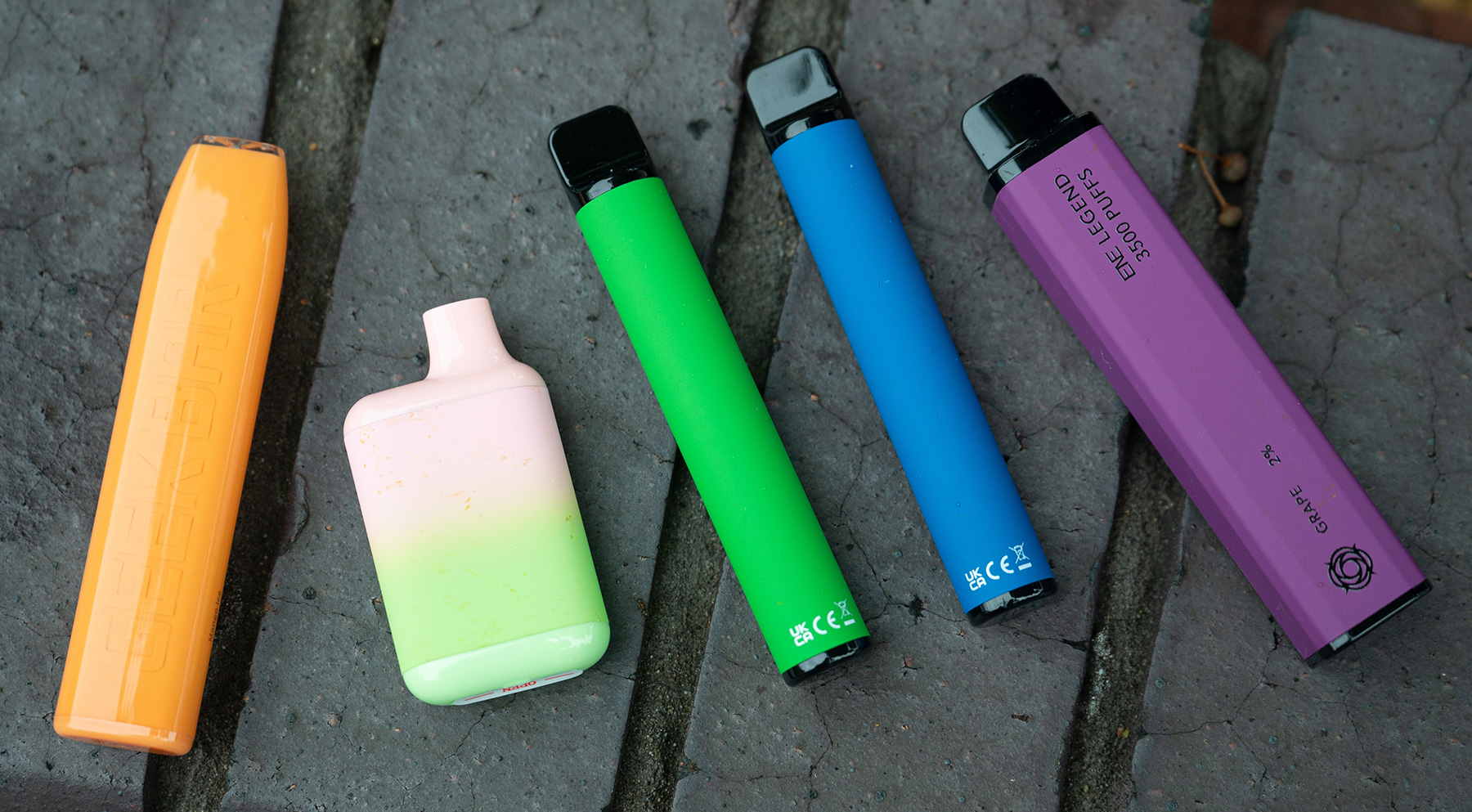
Once seen as a safer alternative to cigarettes, vaping is now raising growing concerns among educators and health experts as more young people, especially schoolchildren, become hooked on nicotine through flavoured devices marketed as trendy and harmless. Experts warn that behind the sweet-smelling vapour lies a growing risk of addiction and long-term health consequences among Sarawak’s youth.
The dangerous appeal of vaping
JUST over a decade ago, cigarettes were the norm among secondary school students, though not many were regular tobacco smokers due to the smell and taste. According to a report published in the National Library of Medicine (NLM) in 2011, the prevalence of smoking among secondary school students in Sarawak stood at 32.8 per cent based on a survey involving 399 students. Of this figure, most (67.2 per cent) were experimental smokers, while the majority (67.9 per cent) did not smoke daily.
Today, however, vape shops display shelves lined with various vape liquid flavours alongside colourful vape devices. These products have introduced a new generation of smokers – one that does it quietly, accompanied only by a faint fragrant smell. A quick puff from these electronic devices leaves barely any trace on the user.

Based on the 2022 National Health and Morbidity Survey (NHMS), the prevalence of vape use among adolescents aged 13 to 17 in Sarawak stood at 20.3 per cent, representing an estimated 39,608 individuals. The figure is alarming considering the risks associated with vaping, which are often overlooked.
Sharing from his own experience, The Learning Curve co-founder and educator, Kenneth Chai, revealed that the youngest person he has encountered vaping was just 11 years old. As a STEM educator, he has visited schools across Sarawak, both urban and rural, and has witnessed numerous cases.
“What’s alarming is how organised it has become. I’ve seen students paying agents within their own school up to RM20 a week from their pocket money and collecting refills weekly like a subscription service. At that age, I don’t think they fully understand what nicotine does to a developing brain. They just see it as something cool that older kids or adults do,” he said.
From bubblegum-flavoured vape liquids to cotton candy varieties, brightly coloured packaging and sweet flavours are clearly designed to attract children. Chai believes the entire ecosystem is engineered to make vaping feel like a trendy lifestyle accessory rather than a drug delivery device or an alternative to smoking cessation.
“And the worst part is, what students are buying from agents in school is not even the regulated stuff from 7-Eleven or licensed vape shops. Nobody knows whether these refills are adulterated with cheaper, dangerous ingredients, and the kids have no idea – nor do they really care – what they are inhaling.”
Chai stressed that this concern goes beyond mere paranoia. Just last month, Malaysian police seized vape cartridges laced with furanyl fentanyl, a fentanyl derivative estimated to be 50 to 100 times more potent than morphine.
During his classes, he said he can now easily identify students who are addicted, constantly reaching for their pockets or bags every few minutes.
“They can’t focus, and they’re mentally somewhere else. That’s not freedom; that’s a chemical leash. To me, nothing that gets you hooked within weeks is harmless,” he added.
This is particularly worrying because beyond the puff of vapour, it is the child’s developing brain, lungs and even wallet that bear the cost of what may appear to be harmless fun.
“I usually ask my students: if I had a substance that I don’t fully understand, one that may shorten your life and damage your organs, and I wanted you to consume it every day, every hour, should I be paying you, or should you be paying me?”
Long-term damage
Warning of a repeat of the early history of cigarette smoking, lung specialist Dr Tie Siew Teck said in a recent interview at Timberland Medical Centre recently, society may be entering a new era of nicotine addiction through electronic cigarettes.
In the early to mid-20th century, smoking was widely accepted, heavily advertised and even promoted by healthcare professionals. However, a major turning point came in 1964 when the US Surgeon General conclusively reported that cigarette smoking causes lung cancer and other serious health problems.
Dr Tie said vaping evokes a worrying resemblance to those earlier decades, when the long-term health consequences were not yet fully understood.
“This raises concern that vaping may follow a similar trajectory to cigarette smoking, where widespread use occurs long before the full medical consequences are clearly recognised,” he said.
With vape liquids constantly evolving, he warned that there are virtually unlimited compounds that can be added, creating endless possibilities for potential harm to the lungs and body.

What may seem like harmless chemical exposure could eventually transform into dangerous substances when heated and inhaled. These tiny particles can enter the bloodstream and affect the entire body – not just the lungs – including the cardiovascular, neurological, immune, haematological and psychological systems.
“Vaping may lead to structural and inflammatory changes in airway and lung cells. It can disrupt the mucus layer and impair cilia function. This may result in mucus accumulation and cellular changes in tissues exposed to vape aerosol.”
Dr Tie added that he has personally treated patients suffering from vaping-related lung injuries who required ICU admission and mechanical ventilation for several weeks.
According to the US Centers for Disease Control and Prevention (CDC), nicotine exposure poses a unique risk to adolescents because their brains are still developing.
“Teenagers are particularly vulnerable because nicotine affects the developing brain. It can impair attention, impulse control and mood regulation, while also altering the brain’s reward system, making addiction more likely. Flavoured vape products may further encourage early nicotine dependence,” Dr Tie explained.
Vaping also exposes innocent family members, including children, to secondhand aerosol at home. Dr Tie stressed that vape emissions contain far more than just water vapour.
“Nicotine and other irritant chemicals are also released into the air,” he said, adding that young children are particularly vulnerable because their lungs are still developing and exposure may cause structural changes within the organs.
With World No Tobacco Day being observed today, both Chai and Dr Tie said one of the biggest misconceptions about vaping is the belief that it is significantly safer than smoking tobacco.
Claims such as “it’s just flavouring” or “nicotine-free means safe” can be dangerously misleading.
“The biggest one for me is ‘it’s just water vapour’. It’s not. It’s an aerosol containing nicotine, heavy metals from the heating coil and flavouring chemicals that were never tested for long-term inhalation. And for the underground refills circulating in schools, you are not even getting regulated products – you are inhaling whatever someone mixed in a factory in China,” Chai warned.
Dr Tie added that while vaping may reduce harm for adult smokers trying to quit cigarettes, it is entirely different for nicotine-naive adolescents.
“For them, it is not harm-reduction – it is harm introduction,” he said.
As World No Tobacco Day serves as a reminder of the decades-long battle against smoking, experts warn against repeating history with a new generation becoming addicted to nicotine through sleek devices and sweet flavours.
The vapour may disappear within seconds, but the consequences for health, addiction and lifelong habits could linger for years to come.