KUCHING: Rural and remote communities must not be left behind as infrastructure development moves towards intelligent, resilient and low-carbon cities.
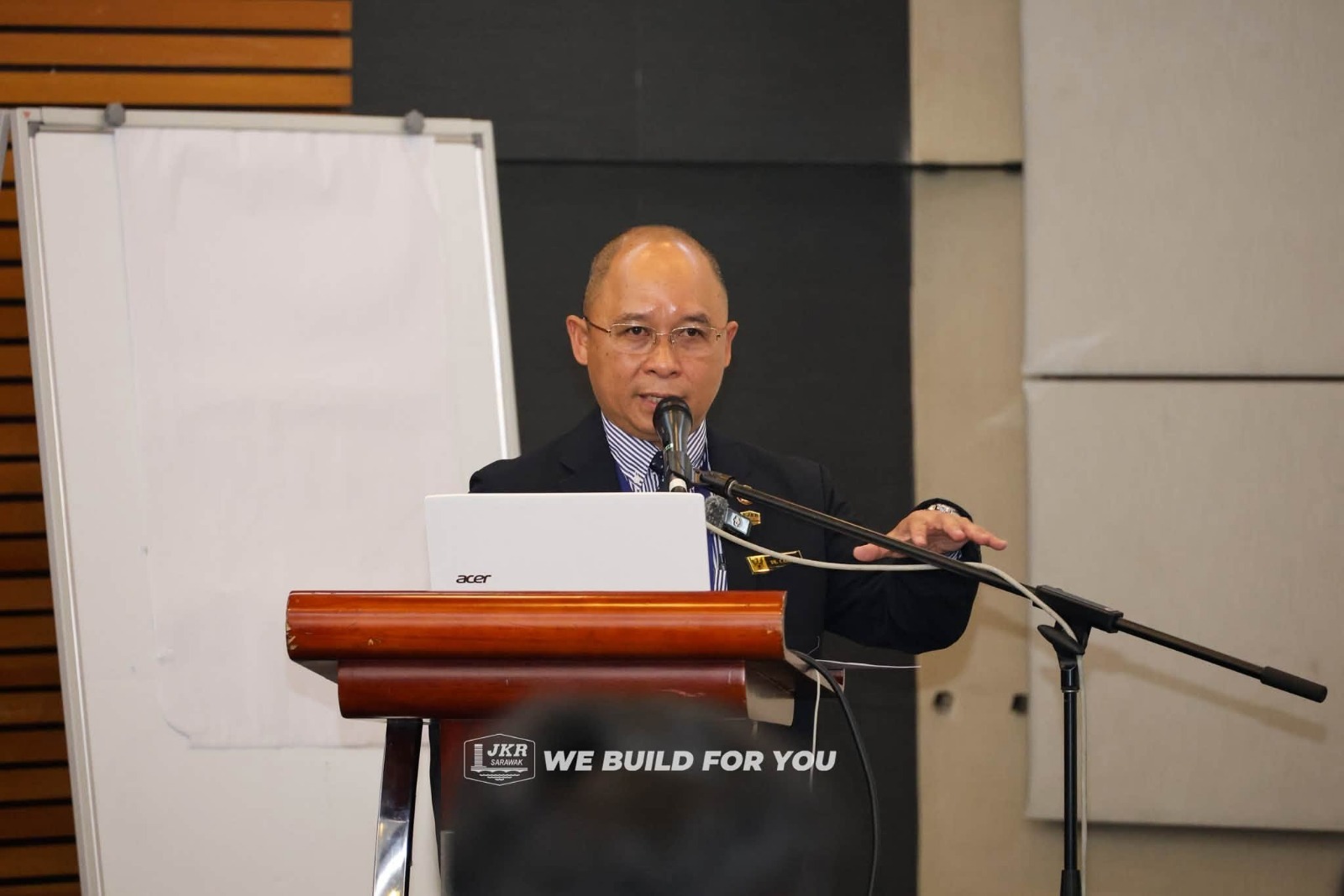
Sarawak Public Works Department (PWD) Director, Datuk Dr Cassidy Morris, said the future-city agenda must extend beyond urban centres to improve access and opportunities for all communities.
He said future cities required connected, inclusive, intelligent, resilient and sustainable infrastructure to address climate change, urbanisation, digital disruption and inequality.
According to a statement from the department, he said this during his keynote address at the Borneo Convention Centre Kuching today.
His address, entitled ‘From Rural Connectivity and Mega Bridges to Intelligent, Resilient and Low-Carbon Infrastructure’, was delivered during the Federation of Engineering Institutions of Asia and the Pacific (FEIAP) 34th General Assembly and 8th Convention 2026.
Guided by the principle of ‘No Community Left Behind’, Cassidy said connectivity went beyond physical access to expand opportunities and improve quality of life.
Among the approaches he outlined were the Rural Bridge Transformation Programme and the adaptation and reuse of suitable logging-road corridors.
He also discussed feeder roads linking settlements to schools, clinics, markets and the wider state road network, alongside cold in-situ recycling and alternative road technologies.
On sustainability, Cassidy said environmental, social and governance (ESG) considerations should be incorporated into infrastructure development from the outset.
“Sustainability becomes real when it changes specifications, procurement, construction and asset decisions,” he said.
Environmental priorities included reducing carbon emissions, adopting circular materials, protecting biodiversity, and strengthening climate adaptation.
The social dimension focused on access, safety, inclusion and community outcomes, while governance required transparency, accountability, digital traceability and value.
Cassidy said the engineering profession must translate its technical capabilities into tangible benefits for the public.
He stressed that technology alone could not deliver future infrastructure without people, purpose, collaboration and the courage to embrace change.