How many colouring books have you seen that teach a child our own trees? Not oak, not maple — terap, engkabang, tapang. Sit with that. If the honest answer is “none, or almost none,” a Sarawakian child can colour a fairy-tale forest from somewhere else long before anyone hands them the truth of the one in their own backyard.
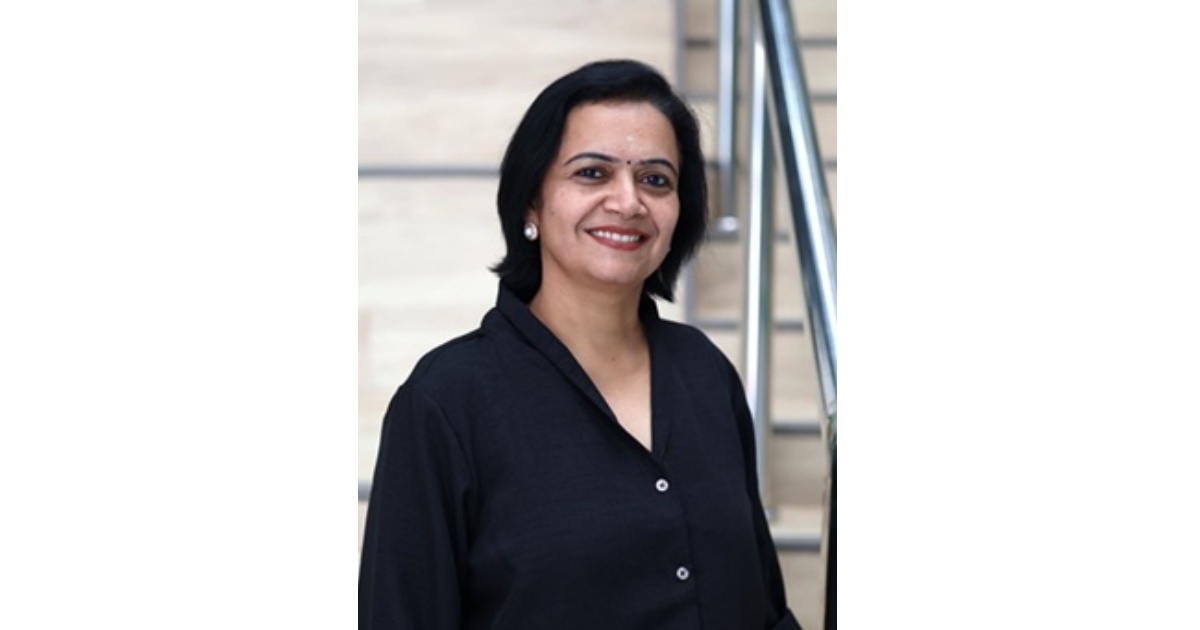
Z orders an affogato — espresso poured over gelato, the classy order — and talks about tree bark the way most people talk about their children. Fifteen minutes in, she is still explaining her job title: biosphere conservation, forest sustainability engineering, longer than most people’s actual job descriptions. I laugh. I used to carry a version of that mouthful myself. Different uniform, same terrain.
Back in 2010 I sat in a corporate affairs chair doing conservation’s other job — the one nobody photographs. Co-authoring a coffee-table book on orangutans. Redesigning eco-tourism packages nobody in headquarters had walked through. I lasted a few years. Long enough to learn one thing the hard way: passion and peers are not the same currency. Most people just want their own station, undisturbed. Play it safe. Go home.
That is the quiet tragedy under Z’s melting gelato, and mine, years apart. Even the brightest light dims if you are the only one carrying it.
The trackers who out-scienced the science
I wrote once, in a column called We Were Never Left Behind, about two Iban trackers who quietly dismantled a century of European forest taxonomy — not with instruments, but by “reading” the biosphere the way their grandparents had, correctly separating two distinct species of terap tree that outside science had spent generations conflating. Nobody handed them a light. They already had it. The problem was never capability. It was that nobody built a system to receive what they knew.
“Knowledge is a lost property of the mukmin,” Z tells me — a saying that has travelled through Islamic tradition for centuries. “Whoever finds it…” She doesn’t finish it. She doesn’t need to. The trackers found it. So did she. The real question is who else already has, and never got asked.
Z’s project, ten years in the making, is trying to build that asking mechanism. She calls it Gogadong — go green, localised through gadong, Sarawak’s own word for cassava, humble and everywhere. In her own words: “Go gadong is a call for action for stewardship, to nurture nature, especially for Sarawakians. We are nature.” Not a slogan. A statement of fact she wants people to stop forgetting.
The mechanism is simpler than the mission sounds. Gogadong takes the satellite data, the technical language of sustainability, the stuff that dies quietly in a PDF nobody outside the field opens — and funnels it through contemporary art. Music. Design. Craft. The apparatus a child already trusts, instead of the apparatus a bureaucrat trusts.
The glue: rattan and a fireproof fruit
Here is where the two polars — real creative art and real conservation data — fuse, and it is smaller than you’d expect. Rattan was never a school subject, yet one length of it carries science, economy, heritage, community, and craft — a curriculum disguised as a plant. Run it through Gogadong’s apparatus and a child learns to weave a house frame from it, or reimagines it through design into something the market hasn’t invented yet.
Or take the pineapple: its skin is naturally flame-resistant, near torch-proof, a fact that belongs in a science classroom and lives nowhere. Turn that into a song or a mural and “sustainable living” stops being a slogan and becomes instinct. That is the whole Gogadong bet: not that the data is wrong, but that data alone was never going to reach a nine-year-old.
From an ice-cream idea to something bigger
It is not a small ambition, and Z knows it. Playing For Change did not start as a movement — it started as one man, Mark Johnson, hearing a busker named Roger Ridley sing “Stand By Me” in Santa Monica in 2005, and asking why a voice like that was singing for spare change. Still in the dark? Here’s the link – playingforchange.com. Take a peak.
Back to ambition … For Playing For Change, it was the answer that became the method: record one song with dozens of unconnected street musicians worldwide, stitch their takes into one track. What began as a handful of these “Songs Around the World” grew into a foundation that has since built real music schools across a dozen countries. The creative campaign built the institution it was pointing at.
I asked Z what she wants Gogadong to become. She gave me a list, not a mission statement: “Community connects community. A local platform for any Gogadong activities. Awareness. Knowledge and technology transfer.” And then, almost as an afterthought that turned out to be the point: “Knowledge as a seed.”
That is Playing For Change’s architecture, arrived at independently, over melting gelato, by someone who has probably never used the phrase. A single creative thread, strong enough to carry a hundred scattered local voices until they sound like one movement instead of a hundred NGO reports nobody finishes reading. A seed doesn’t announce itself as an initiative. It just eventually becomes a tree nobody remembers planting.
That reach is not really an education idea, or an arts idea. It is a values column wearing both uniforms — the same trick I once pulled in a different chair, back in 2010.
Sit in a PIBG meeting and you will see the raw material everywhere: parents hoping the system ahead of their children will be better than the one behind them. My colleague Rajah wrote it plainly in his own column — teach values, not hatred, in school. The line stays with me because it names the actual shortage. Sarawak does not lack intelligence. It lacks a mechanism for carrying intelligence together, so no single teacher, tracker, or ten-year passion project has to hold the whole light alone.
Hablum minal-alam
Ask Z what she wants to change, underneath all of it, and she talks about a relationship, not a policy. Hablum Minallah, Hablum Minannas — our relationship with God, with each other — is old ground in Islamic thought. Z adds a third leg rarely said out loud: Hablum minal-alam. Our relationship with nature. Hubungan antara manusia dan alam.
Stewardship isn’t an environmental position in her telling. It’s a relationship we’ve been quietly excusing ourselves from, the way a distant relative gets fewer calls each year until the silence becomes the relationship. One conservation engineer with a decade of unpaid conviction cannot repair that alone. A system that receives her, multiplies her, and hands the next Z a lighter load — that is the only Gogadong that survives past year eleven.
Back at the ice-cream parlour, Z has stopped explaining her job title. She is sketching the rattan idea on a napkin, unprompted, before I have finished saying it back to her. That is the whole argument, right there, in ballpoint on tissue paper — two people who once carried the same kind of light separately, now sketching where it might finally be shared.
This Week’s Practice
Find one piece of local knowledge you were taught to file away as “not examinable” — a fruit, a tree, a craft. This week, hand it to someone in a form that will actually be received. Not the PDF. The napkin. Raw and true- a gogadong spark?