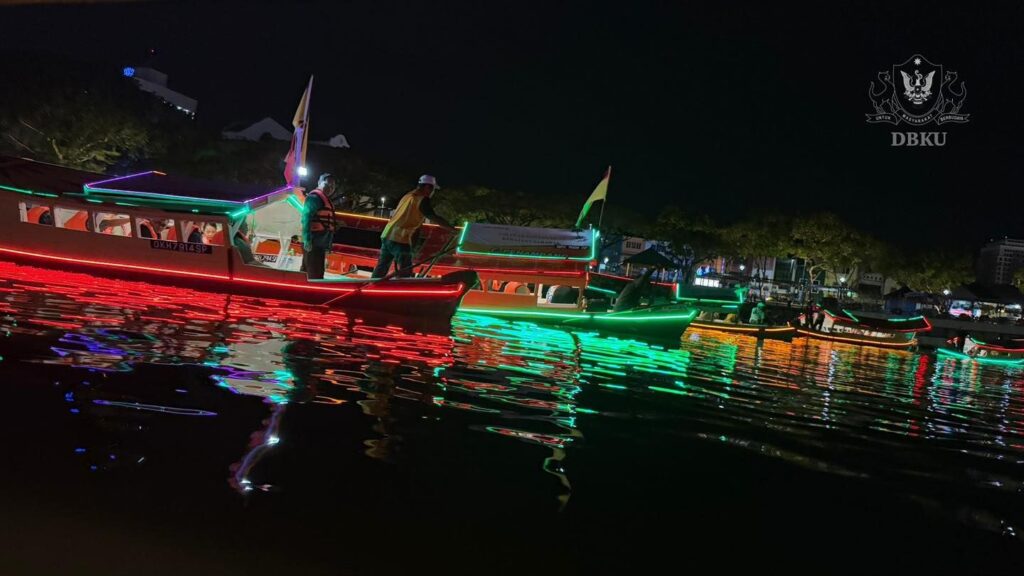
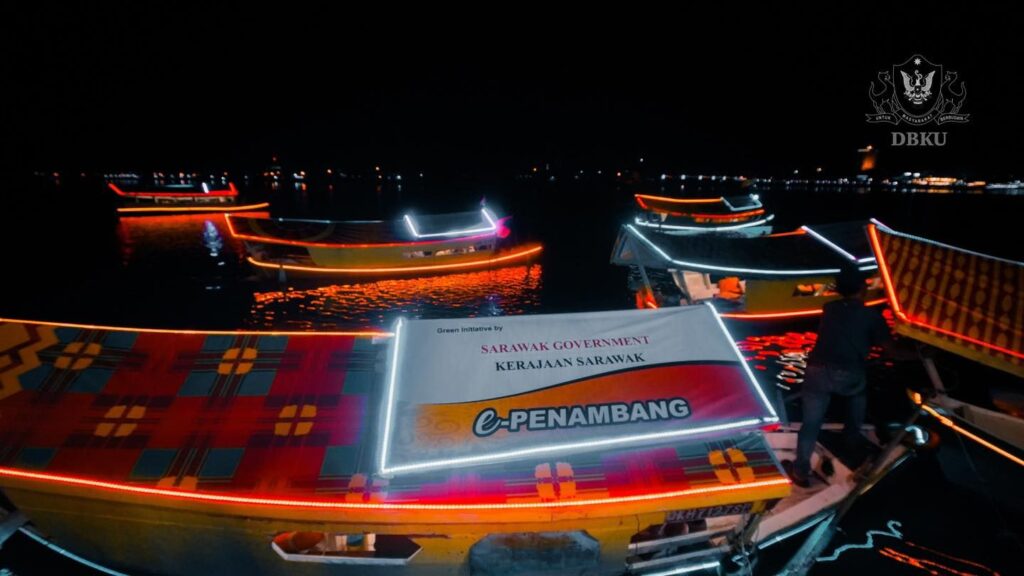
KUCHING: The city’s iconic ‘perahu tambang’ (river taxis) on the Sarawak River are now sailing into a new era of sustainable transport, now transformed into safer, more efficient and low-carbon boats while retaining their timeless heritage design.
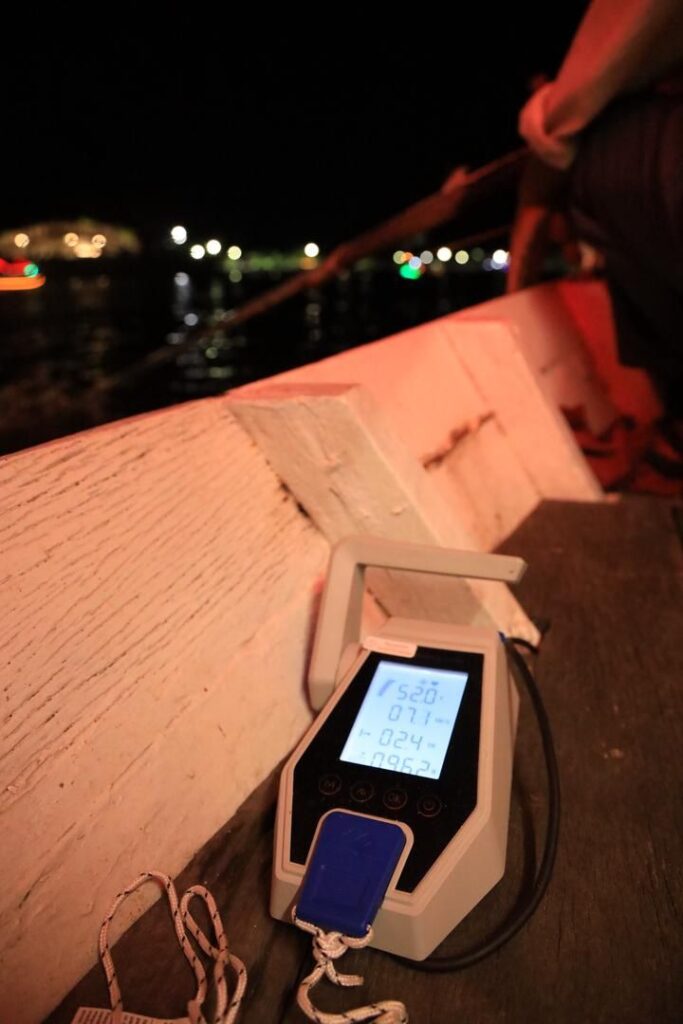
Under the E-Penambang Project, a pilot initiative between Kuching North City Commission (DBKU) and Sarawak Energy Berhad (SEB), nine existing boats have been successfully retrofitted with a 3kW electric propulsion system powered by a 3kWh lithium battery, enabling silent operation, zero carbon emissions and lower operating costs — cutting expenses by more than 80 per cent compared to petrol engines.
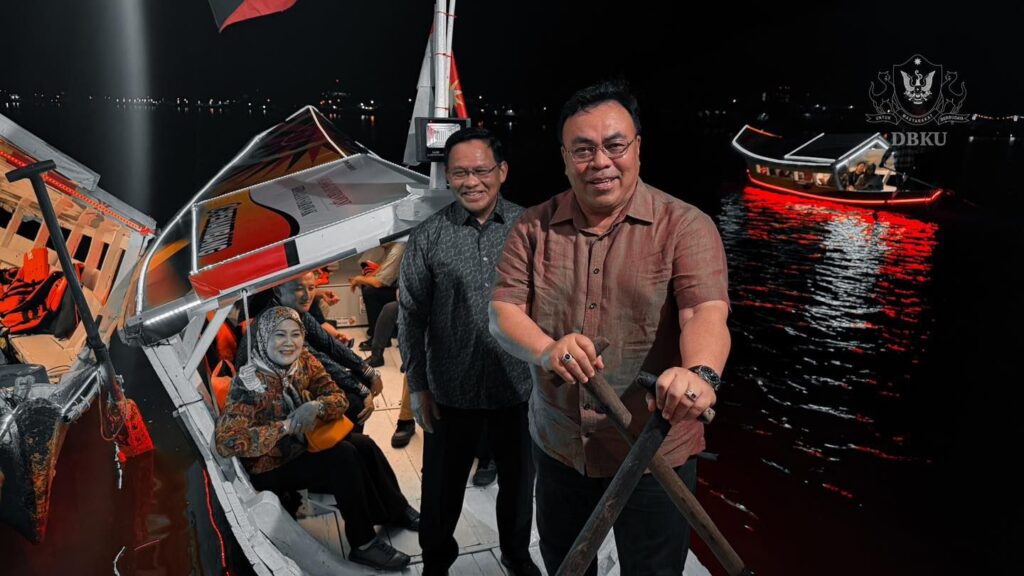
At the soft launching of the project at Kampung Sungai Bintangor Pontoon Jetty here last night (Aug 17), Deputy Minister in the Premier’s Department (Coordination of Projects for Regional Development Agencies, DBKU and Islamic Affairs) Datuk Dr Abdul Rahman Junaidi said the project is also in support of the state’s green economy agenda while supporting traditional boat operators.

“River taxis are synonymous with Kuching City, especially along the Sarawak River. Thus, we have have conducted studies to see if similar boats exist elsewhere, and it was confirmed that boats are only unique to the Sarawak River.
“This uniqueness led DBKU, through a resolution reached during the Malaysian Urban Forum we hosted in October 2023, to adopt the river taxis as a legacy project where we aimed to upgrade and enhance the performance of these boats.
“One key step is working with Sarawak Energy to reduce the carbon footprint as traditional boats uses petroleum fuel, which contributes to pollution,” he said when met by reporters last night.
He added that feedback from tourists had highlighted several issues with the traditional boats, including poor stability, limited safety exits, noisy engines and smoke emissions, and these concerns became the basis for the upgrades.
“Hence, DBKU collaborated with SEB to produce a prototype of an electric engine, and now has been developed and installed in the existing boats where its operation is more quiet and free from pollution.
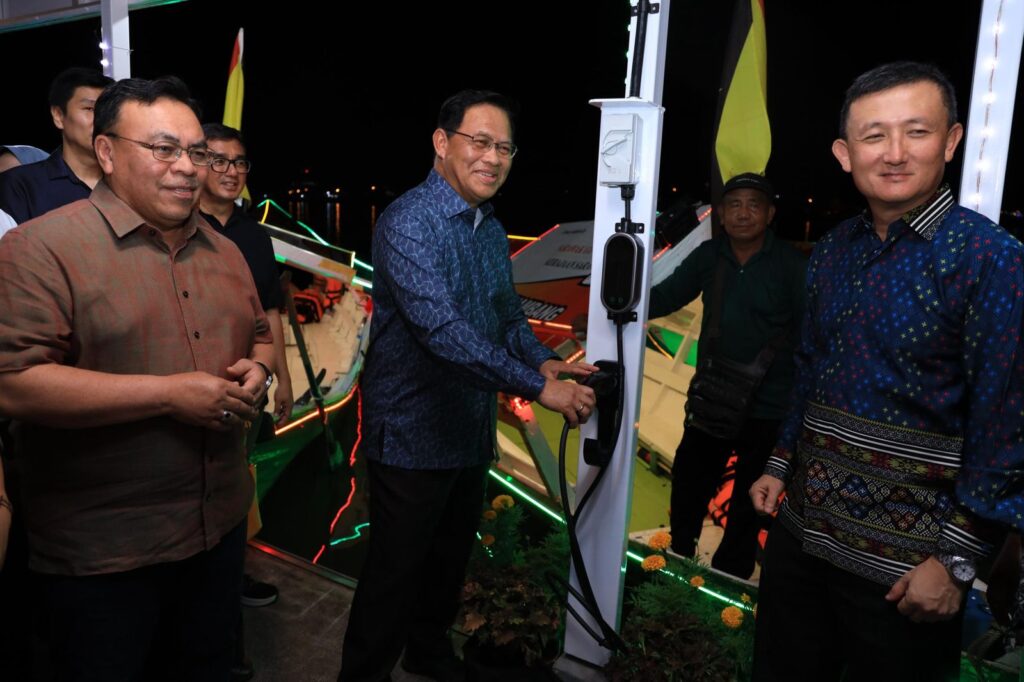
Dr Abdul Rahman said the project also include the construction of a solar charging station with 10 charging points, installed at the Kampung Sungai Bintangor Pontoon Jetty and have been running since July last year.
“The boats can recharged at the station, with a full charge takes three hours and allows the boats to operate for up to three days,” he said, while adding that at the moment, boat operators are not charged for using the facilities.
He said the next phase of the development will see 12 unit of new boats entirely built of fibreglass in collaboration between DBKU, Centre for Technology Excellence Sarawak (CENTEXS) and Universiti Teknologi Malaysia (UTM).
“The new boats are designed to further improve stability and safety, and are expected to be ready by October.
“They will retain the traditional design but fully constructed from fibreglass, featuring wider bases and larger windows to enhance safety and passenger comfort,” he said.
He said by October, this would see 21 river taxis powered by electric along the Sarawak River.
According to DBKU in a press release, the E-Penambang concept was first introduced in May 2023 through the development of a prototype by SEB, followed by the Proof of Concept (POC) trial of the first electric river taxi at Kuching Waterfront in October 2023.
One of the E-Penambang project’s key achievements is the construction of Sarawak’s first floating solar charging station, which is equipped with a 19.84kWp bifacial solar PV system.
The station operates under the Net Energy Metering (NEM) scheme with 10 charging points and has the potential to be integrated with other renewable energy technologies such as battery storage and hydrogen.