Never let your head hang down. Never give up and sit down and grieve. Find another way.
– Satchel Paige, American baseball pitcher
There is something terribly wrong with a country that can remember the goals, medals and moments of glory its sports heroes gave it, yet somehow forget the men and women who produced them once the cheering stops.
We are very good at waving the Jalur Gemilang when they win, posing for photographs when they return and delivering grand speeches about national pride, but when age, illness and financial hardship arrive, too many of our former heroes discover that applause does not pay medical bills.
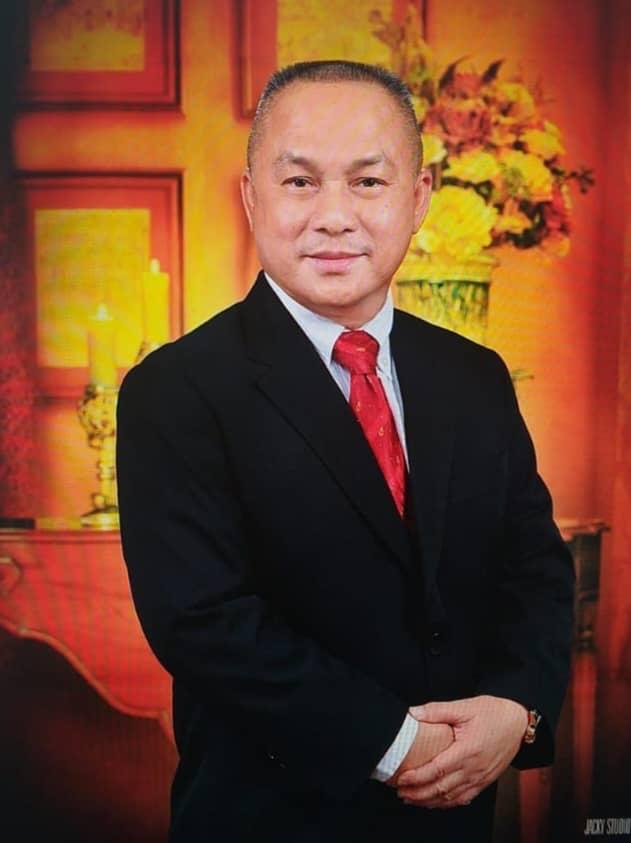
That uncomfortable truth is staring us in the face again. Former hockey World Cupper Brian Sta Maria has been in poor health and recuperating at University Hospital, while Datuk Seri Shanmuganathan, captain of Malaysia’s celebrated 1975 World Cup hockey team, has been hospitalised at the National Heart Institute following a heart attack.
Brian’s situation is particularly distressing. He has Parkinson’s disease, suffers from other health problems; when he is discharged, he will need personal assistance because he cannot move about safely on his own.
His wife Elaine, I understand, is herself not in the best of health, and the couple also have a special-needs child requiring constant care. So who cares for the caregiver, who looks after Brian, and why should a family that has already carried such burdens be left in the lurch after Brian once carried Malaysia’s colours?
That, to me, is the shameful part. I am not questioning the kindness of friends who are rallying around Brian, but why should passing the hat around become the unofficial retirement and welfare policy for men and women who sacrificed years of their lives for Malaysian sport?
We have seen this story too many times: yesterday’s champion becomes today’s forgotten name, and help comes only when somebody’s illness becomes serious enough to make the news. By then, sports officials visit, photographs are taken, sympathetic words are uttered and perhaps some one-off assistance is announced, but welfare should never depend on publicity, personal connections or how loudly friends can plead for help.
The late Olympian Sarjit Singh’s wife put the matter plainly: “I think it’s high time we widows should also get a monthly allowance. For example, Sarjit had contributed so much to hockey and sacrificed for the nation… other wives and their families are going through tough times.”
She added: “Not only government servants and wakil rakyat, but athletes too have contributed to the country. Hopefully, the government will think of something for our athletes.”
I agree with her completely, because when an athlete gives the best years of his or her life to the nation, the sacrifice is very often shared by the spouse and children.
Now tell me this: if Malaysia can provide pensions and retirement benefits to public servants, and if elected representatives can qualify for pension benefits under existing arrangements, why is a comprehensive national safety net for former athletes still treated like some extravagant idea?
We can find money for ceremonies, programmes, delegations, launches and all manner of administrative expenditure, yet somehow become accountants when an ageing national hero needs a caregiver.
To be fair, Malaysia has not done nothing. Olympic and Paralympic medallists are covered by lifetime monthly rewards: RM5,000 for gold, RM3,000 for silver and RM2,000 for bronze with substantial medal bonuses, and that is commendable. The problem is that Malaysian sporting greatness did not begin with Olympic medallists and certainly does not end with them.
What about World Cup players, Asian Games heroes, Commonwealth champions, SEA Games stalwarts and internationals from an era when representing Malaysia brought little money and even less long-term security? Many trained while holding jobs, sacrificed promotions, spent weeks or months away from their families and played through injury because wearing the national jersey meant something sacred, yet their reward in old age cannot be merely a certificate, a faded team photograph and memories.
Other nations have understood that sporting excellence deserves a life after sport. South Korea operates a performance-reward system under which elite international results can earn monthly payments, while Poland provides qualifying Olympic medallists with a state financial benefit after the age of 40, recognising that medals are not merely personal achievements but contributions to national prestige.
India has a pension scheme for meritorious retired sportspersons from age 30, with monthly payments of nearly Rupees 23,000 (about RM1,000). The sums may differ from country to country, but the principle is what matters: national service through sport should carry a measure of national responsibility after retirement.
China takes another route through its powerful state sports structure, where elite champions can receive bonuses, educational opportunities and pathways into coaching or sports administration. No system is perfect, and not every former athlete in those countries lives comfortably. But the important lesson is that sporting welfare can be designed as policy instead of being left to charity after disaster strikes.
And this is where Malaysia must stop thinking only about rewards for winning tomorrow and start thinking about responsibility for those who won our respect yesterday. A national sports heroes welfare and pension scheme should cover defined levels of representation and achievement, with additional provisions for serious illness, disability, long-term care, medical insurance and assistance to spouses or dependants after an athlete dies.
Set strict criteria if necessary; nobody is asking Putrajaya to hand out money indiscriminately. Establish years of national service, level of competition, medals or exceptional contribution as qualifying benchmarks, means-test certain welfare components if required, and create an independent panel so the scheme is transparent, sustainable and protected from political favouritism.
Most importantly, create a permanent fund rather than waiting for the next Brian Sta Maria before somebody scrambles for a cheque. Government, national sports associations, the National Sports Council, corporate Malaysia and even professional sporting bodies can contribute, because preserving the dignity of our former champions should be a shared national obligation, not an occasional act of sympathy.
There is also a larger sporting reason for doing this. We constantly ask why Malaysia struggles to become a consistent world sporting power, but what message are we sending to a talented 15-year-old and his parents when they see former national stars struggling with medical bills or depending on public donations?
Parents are not foolish, and neither are athletes. If a young person must choose between a stable profession and 10 uncertain years chasing national glory, there must be confidence that the country will not discard him at 35, 45 or 70 simply because his legs no longer run, his hands no longer hold a stick or racquet, and television cameras have moved on.
This is also about motivation because sporting excellence cannot be built merely with slogans about patriotism and sacrifice. An aspiring champion should be able to look at yesterday’s heroes and see security, dignity and respect awaiting them. Not hospital bills, appeals for donations and worried families wondering who will pay for tomorrow’s caregiver.
Prime Minister Datuk Seri Anwar Ibrahim has an opportunity to change this narrative in Budget 2027, which is scheduled to be tabled on Oct 9. Put a National Sports Heroes Pension and Welfare Fund into that Budget, PMX, and make it broad enough to recognise deserving former internationals from generations that competed before today’s lucrative incentive structures existed.
Do it not as charity, but as gratitude made permanent in public policy. Do it for Brian, Sarjit’s family, Shanmuganathan and every forgotten champion whose sweat once soaked the Malaysian jersey, because a nation that knows how to celebrate its heroes must also know how to grow old with them.
Our sports heroes gave Malaysia their youth, their bodies, their family time and, in many cases, their health. Surely Malaysia can give them something more enduring than applause; the dignity of knowing that when the stadium lights go out, their country will still be there.
The views expressed here are those of the columnist and do not necessarily represent the views of Sarawak Tribune. The writer can be reached at rajlira@gmail.com