Kuching may be known as Cat City, but beyond its iconic statues and affectionate nickname lies a growing stray cat crisis that has prompted rescuers to call for long-term solutions instead of temporary fixes.
From Rescue to Reform
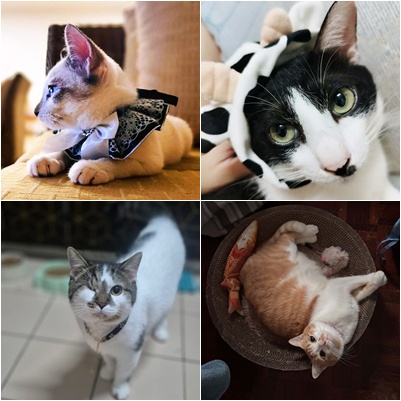
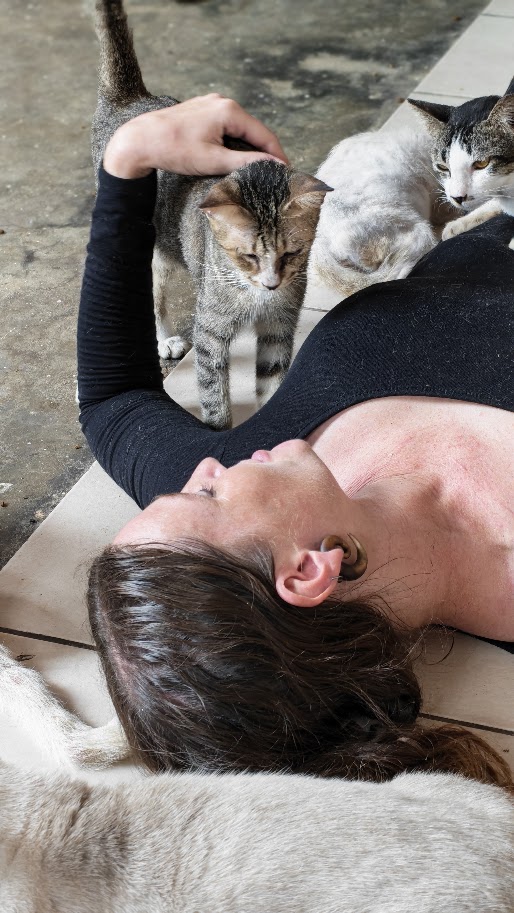
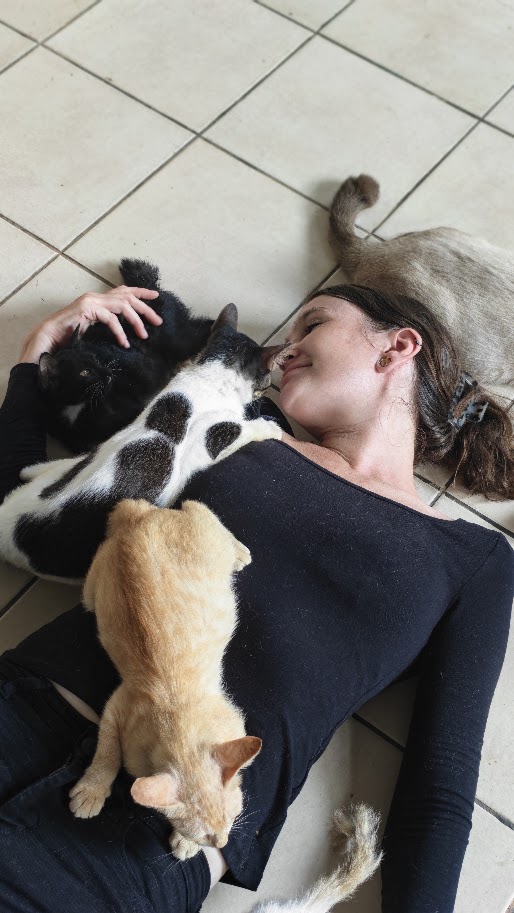
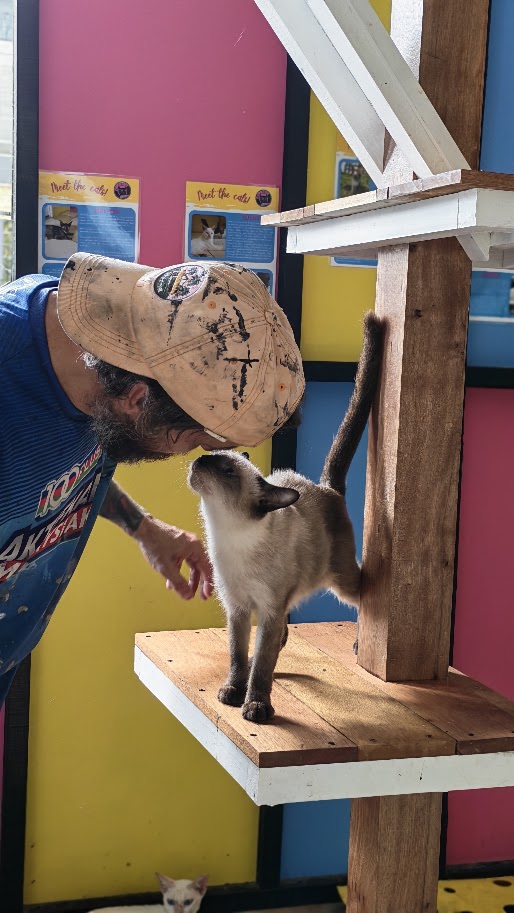
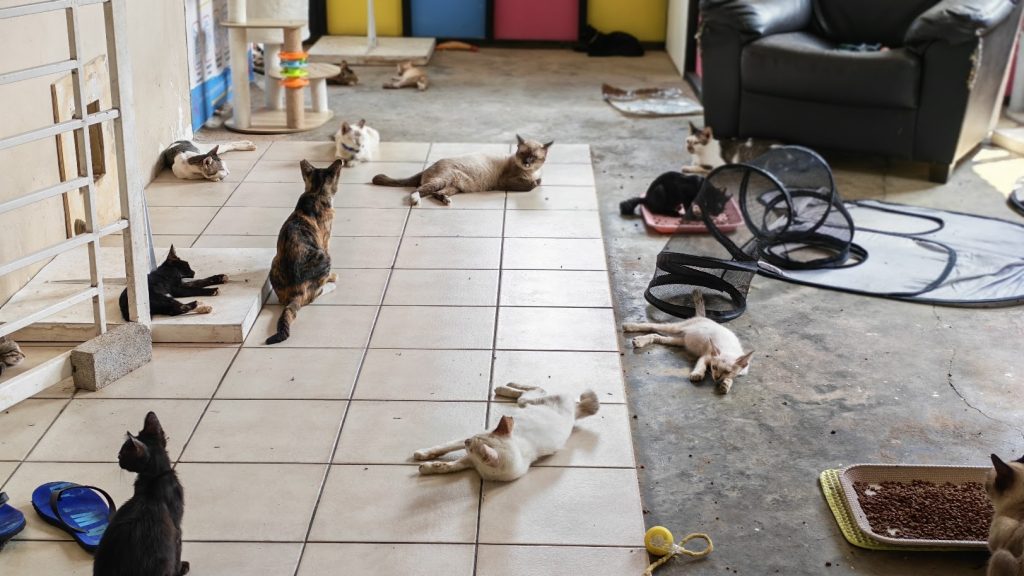
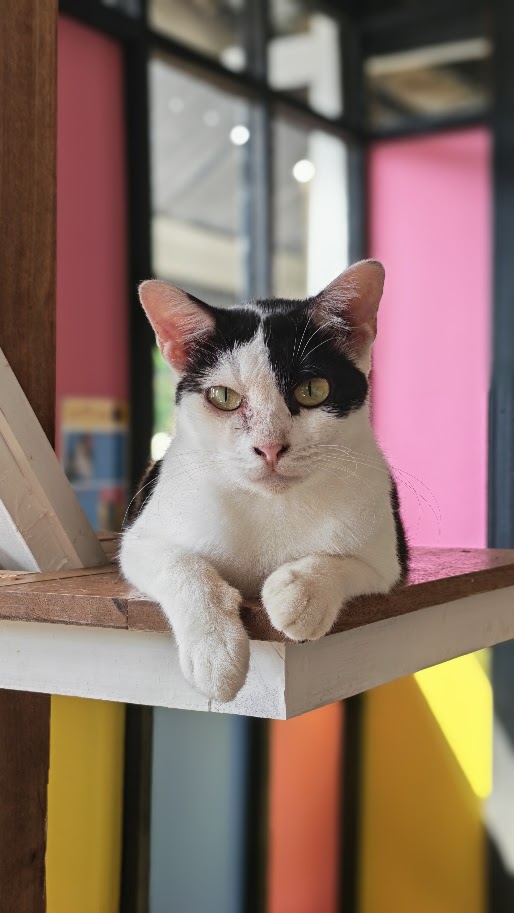
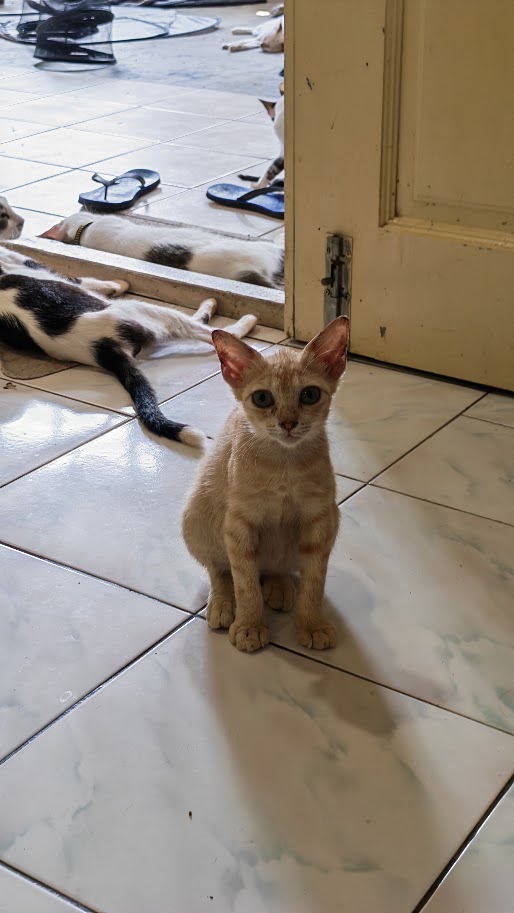
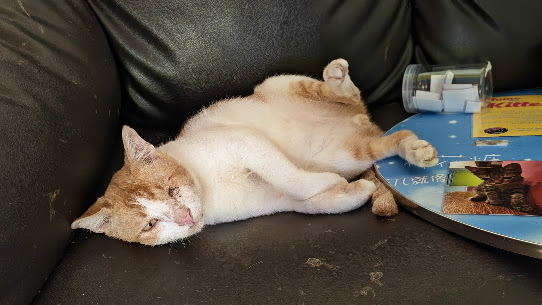
Sprawled across the floor of the cat shelter Pawsitive Vibes Kuching are cats — with different coloured furs, one-eyed cats, and even three-legged cats — each stretched out and cosy from their afternoon naps. It was a peaceful afternoon when Sarawak Tribune visited the shelter, where their caretakers, UK natives Greg Larcombe and Amy, said the routine of these cats is standard.
From playing in the morning sun at the shelter’s playground to napping after their meals.
“Because it’s hot in the afternoon, they usually sleep in and later wake up in the evening to continue playing.”
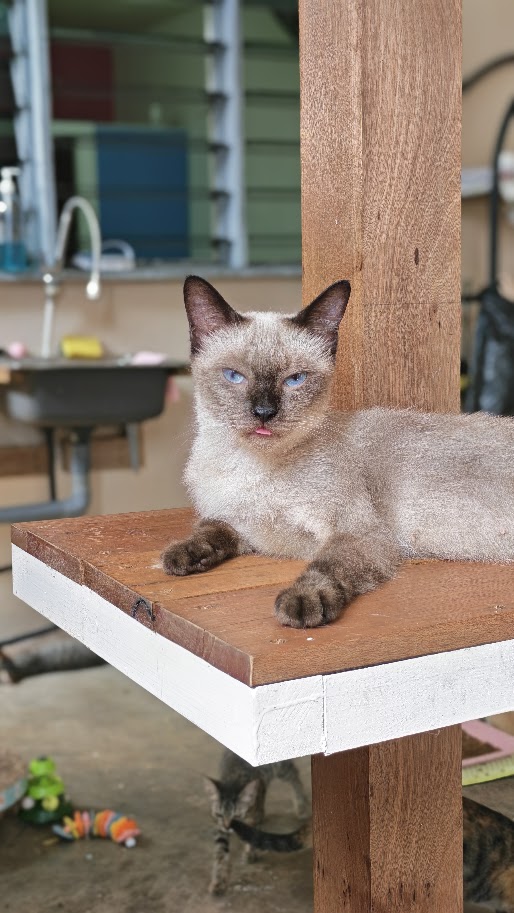
Living a carefree lifestyle, these cats are often rescued, treated, neutered and allowed to roam freely within the vicinity of the shelter at Three Hills Park, Kuching.
But not every cat in Kuching, let alone the whole of Sarawak, gets the same privilege as the cats at Pawsitive Vibes. According to Greg, the stray cat situation in Kuching has become extremely serious. Though many are not aware of the situation, it often only takes a visit to the suburbs or markets to see large colonies of cats, many of which suffer from various illnesses.
“Even in the city centre, overpopulation is still an issue, and the condition of the cats here is generally very poor. Something we have seen recently is an increase in cruelty and abuse cases, and a lot of this we believe is due to members of the public being led to believe that rabies is much more common in stray cats than it really is,” he said, adding that this misconception has prompted some members of the public to chase away stray cats by throwing objects at them or even physically abusing them.
The growing stray cat population
With the serious increase in the number of stray cats, Greg opined that the root cause is the widespread failure to spay and neuter cats. He explained that many pet owners continue to allow their cats to roam freely without sterilising them, resulting in unwanted pregnancies and litters.
“Not only does this lead to more pregnancies and births on the street, but it also increases dumping cases as often owners will dump their cat once she becomes pregnant, or dump the unwanted kittens once they are born,” he said.
However, Greg stressed that the larger issue lies with unsterilised stray cats, which continue to breed unchecked on the streets. According to him, the only proven long-term solution to slow and eventually reduce the stray cat population is through Trap-Neuter-Return (TNR) programmes, where stray cats are humanely trapped, sterilised and released back into their familiar environment.
While animal welfare groups carry out TNR efforts whenever resources permit, Greg said meaningful progress can only be achieved through large-scale, government-backed TNR initiatives capable of reaching a much wider population of stray cats.
Adding on, Greg shared that sterilising cats does not just stop unwanted pregnancies, but is also beneficial to their long-term health and can help with behavioural issues.
A sustainable solution
Every day, there is at least one cat being rescued and sent to the shelter either by the public or through Greg and Amy’s efforts. Some days, it can go up to four or five. But this situation is like fixing a dam with band-aids, waiting for the day it will break.
“We rescue not because it is the solution, but because we value every single life, and wish to help as many cats as we can while we work towards solutions that can actually make a long-lasting difference.”
With every rescued cat taken into its shelter, Pawsitive Vibes’ mission extends beyond providing refuge. The organisation is also advocating for a city-wide, large-scale, government-backed Trap-Vaccinate-Neuter-Release (TVNR) programme to address the root causes of stray animal overpopulation.
Greg also hopes that, alongside various stray animal initiatives and programmes, a new legal framework will be introduced to better protect stray animals. He said these efforts are currently being pursued in collaboration with Humane Animal Society Sarawak (HASS).
“Long-term rescue is simply not sustainable because stray cat numbers continue to rise, and rapidly. This means more rescuers are required, as well as more shelters, more funding, and generally a framework that has to grow exponentially in order to try and keep up.”
But there is just so much that an individual, or two individuals, can do. As animal rescuers for many years, efforts in rescuing strays have proven to be more sustainable through TVNR programmes compared to the current culling method. By addressing the root source of the problem, Greg said that by decreasing the prevalence of unwanted pregnancies among stray cats, only then will there be a reduction in the number of cats on the streets.
“Fewer cats means fewer rescues required.”
He continued by saying that long-term success means making rescue shelters redundant.
“And this should be the goal of every rescue project. It’s the only line of work where your goal is to work yourself out of a job!”
As a cat rescuer, true success would be a city where stray numbers are well managed humanely, and where each citizen plays a part in looking after the strays. Recalling a cat rescue case he and Amy encountered, Greg described cats that were trapped inside an apartment at MJC for two months.
“This was only brought to our attention after neighbours started to notice a smell. They managed to drop some food through a window while they sought help, at which point we came to assist. When we got inside, we discovered that multiple cats had been locked in a small room, around 4ft by 8ft, and the owners had moved away,” he recollected.
In the same rescue case, he saw two cats long dead and decomposed, while the rest were terrified and in awful conditions. Nevertheless, there is light at the end of the tunnel for these cats, as many under their care were adopted.
“Only two remained at our shelter, and despite being terrified and traumatised for months, they are now both extremely confident and friendly cats,” he said cheerily.
And this case is one of the many that gives the shelter hope, apart from showing how a community can come together when needed. With collective cooperation, Greg could see a difference.
“While there may be some bad people who are willing to do harm to animals, there are many more people here in Kuching who are willing to do good. Whether that’s donating, helping with rescues, volunteering their time, or more.”
The cost of a rescue
Though a rescue can seem easy, the effort behind each one can be costly. Before a cat could snuggle amidst others at the Pawsitive Vibes shelter, there is a standard operating procedure (SOP) that needs to be followed. Stringent parvovirus tests and FIP tests must be done, and these alone can cost RM140.
If the cats come in with illnesses or injuries, this could take up to RM500 to treat.
“Although we do get some cases that cost into the thousands,” Greg revealed.
There is also the SOP of getting a cat ready for adoption by spaying or neutering it and providing at least one core vaccine.
“Due to the length of time many cats are with us, they may complete their full course of core vaccines (another RM70) and have their rabies vaccine (RM60) before they are adopted.”
To sustain the shelter as a whole, Greg disclosed that there is a combination of fundraising through donations, events, workshops, visitor days and merchandise sales. Nevertheless, Greg understands that not everyone is able to donate financially; however, there are still ways many could help.
Just by volunteering at the shelter, people can ease the burden on the couple, as well as provide great support.
“By being able to come in for a few hours a week to help with cleaning, cat care and others can help free up our time, which allows us to do even more.”
There is also the option of fostering. By providing a temporary home for a rescued cat, foster families free up valuable space at the shelter, allowing the team to focus on rescuing and caring for more cats in urgent need of attention.
Ultimately, for Greg, every rescued cat represents hope, but he believes the ultimate goal is to create a future where fewer cats need rescuing in the first place. Achieving that, he said, will require everyone — from pet owners and animal lovers to policymakers — to play their part.
From rescue to reform
If left unaddressed, Greg warned that Kuching’s stray cat crisis will only worsen over the next decade. He said the growing population would lead to more outbreaks of infectious diseases, a rise in abuse and cruelty cases as cats compete for space around markets and food courts, and ultimately, an increase in culling to control unchecked populations. At some point, he cautioned, even rescue organisations may no longer be able to keep pace with the sheer number of animals in need.
He urged every cat owner to recognise the importance of spaying, neutering and vaccinating their pets, while encouraging feeders and members of the public to also play a role in helping stray cats. According to Greg, if every person in Kuching sterilised and vaccinated just one stray cat each year, the city could make significant progress in addressing the problem.
As the world marks International Cat Day today, Greg hopes the occasion will inspire greater compassion and collective responsibility towards the city’s feline population. Beyond celebrating the companionship cats bring, he said the day should also serve as a reminder that protecting their welfare requires action — from responsible pet ownership and community involvement to stronger support for large-scale sterilisation programmes and better legal protections. Only through a united effort, he believes, can Kuching truly live up to its reputation as a city that cares for its cats.
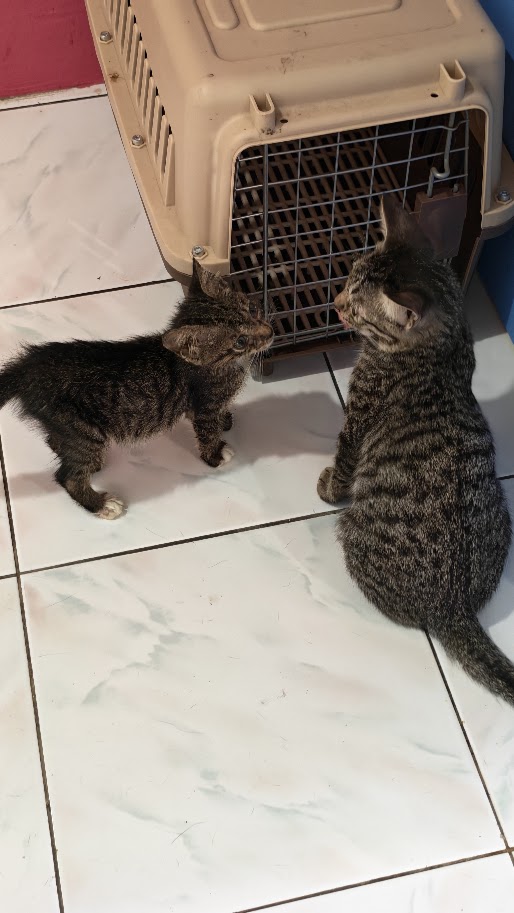
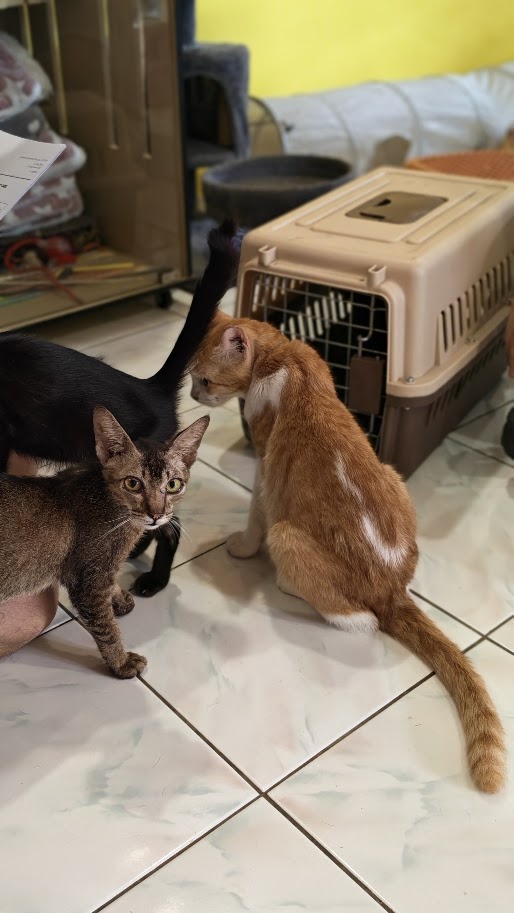
Going back to the Pawsitive Vibes shelter, a volunteer rescue brought in a new cat that same afternoon Sarawak Tribune visited. Instead of hissing at the newcomer, the older boarders at the shelter looked into the carrier — a silent welcome to their new roommate. Curious and welcoming, the cats have a way of showing kindness, offering hope that the new cat can look beyond its traumatic and lonely days.