As artificial intelligence reshapes the business landscape, Sarawak SMEs are moving beyond experimentation, finding practical ways to improve workflows, strengthen creativity and turn data into better decisions.
From Bottlenecks to Better Decisions
With the world buzzing about artificial intelligence (AI), the question for many small and medium enterprises (SMEs) is no longer whether to adopt it, but how it can build a more efficient workforce and whether the tools being used actually make sense for the business.
AI can cut hours spent on repetitive administrative tasks, giving employees more time to focus on creative work, problem-solving and decision-making. As more entrepreneurs use AI in their daily operations, the next step is integrating it into how their businesses work.
Dr Ashweein Narayanan, chief financial officer (CFO) and co-founder of technology and creative-services company Kiranamaya, video production company Ensera and deep-technology company Evolving Brilliance Technologies (EB Tech), said each business may use AI differently, but the underlying lesson is similar: start with the problem, not the technology.
Looking for the bottleneck
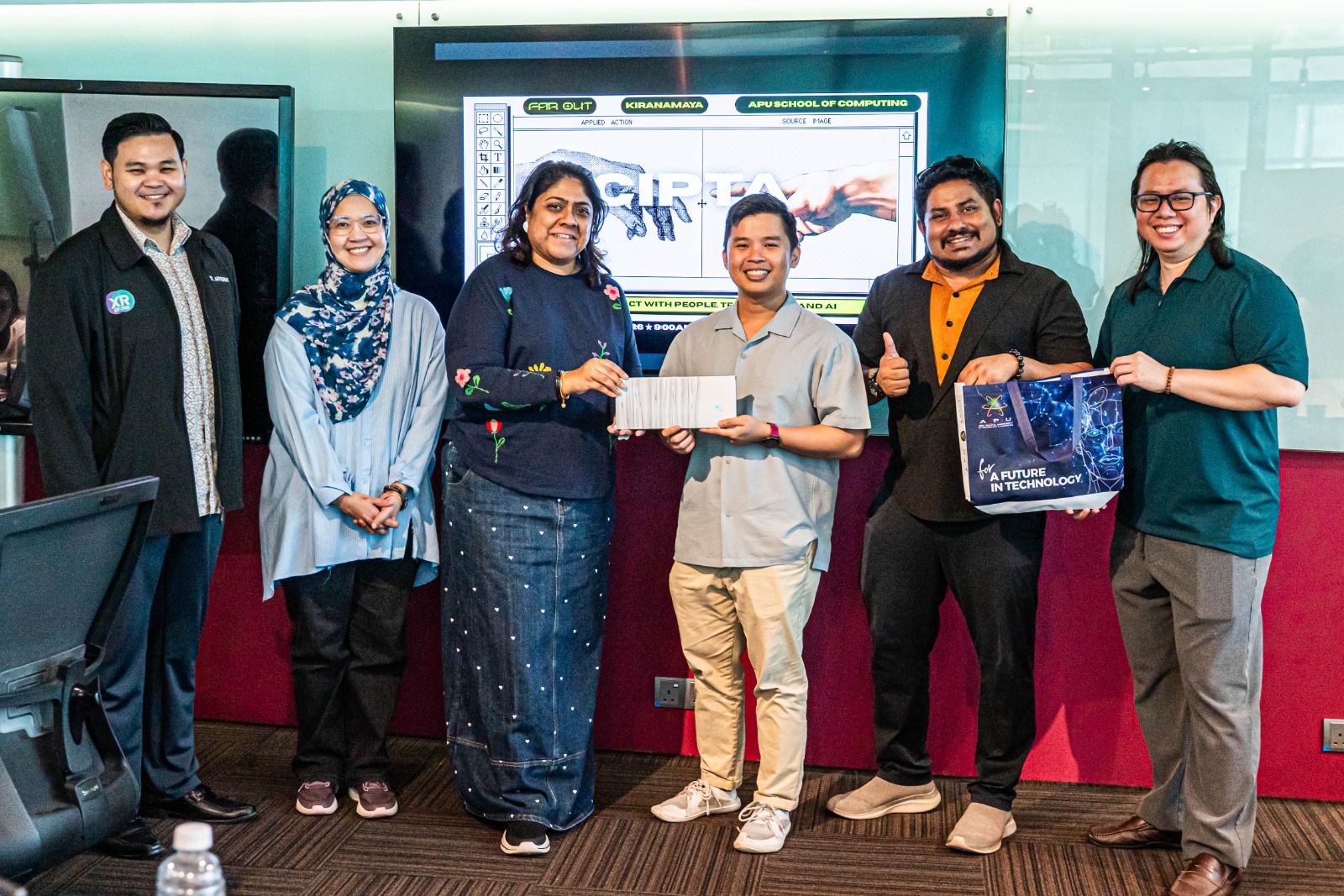
For Malaysian technology and creative-services company Kiranamaya, incorporated in 2020, AI adoption began with something far less glamorous than the technology itself — time.
“We started with repeated small tasks that quietly consumed the working day: preparing first drafts, organising enquiries, creating content variations, comparing information and turning unstructured notes into something usable.
“None of these tasks justified hiring a specialist for every instance, but together they slowed delivery,” he said.
AI allowed Ashweein and his team to produce workable starting points while leaving humans responsible for checking facts, tone and suitability.
“The business problem was not a lack of ideas. It was the time lost moving from a blank page or messy input to a workable first version,” he said.
However, he cautioned against accepting AI-generated answers simply because they are produced quickly.
“AI reminded me that speed needs discipline. For important decisions, I would ask what evidence supports the output, what information may be missing and who has reviewed it,” he said.
For SMEs wondering where to begin, Ashweein suggests identifying tasks that are tedious, time-consuming and have a clearly defined outcome.
Rather than transforming the entire business at once, SMEs can start small, test what works and measure whether the technology is actually improving the process.
“The costliest mistake is not failing to buy the most advanced tool. It is paying for technology without identifying the problem, the owner of the process and the measure of success,” he said.
When AI gives people room to create
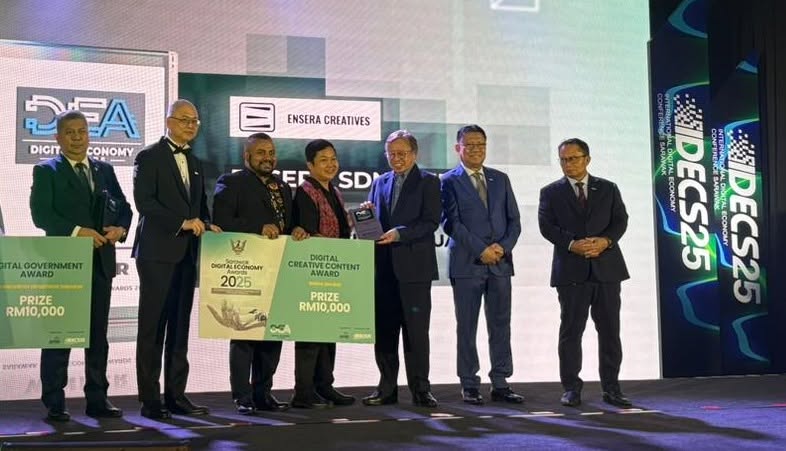
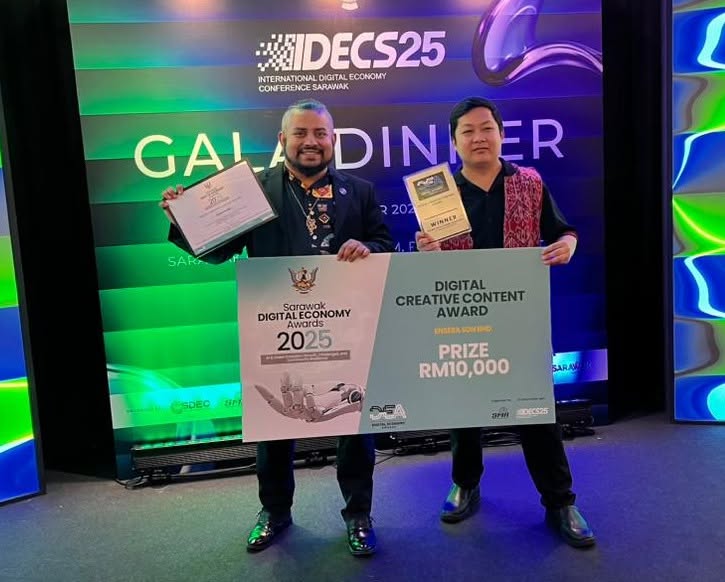
The same philosophy is taking shape differently at Kuching-based video production company Ensera, established in 2021.
Creative production involves more repetitive work than audiences may realise, from researching topics and organising references to preparing treatments and shot lists. After filming, there are transcripts, footage searches, subtitles, audio clean-up and different versions for various platforms.
“AI has definitely helped us from pre-production to post-production. Nevertheless, the final creative decisions remain with the team.
“From the brief, interviews and directing to cinematography, editing rhythm, cultural sensitivity and final approval, these remain human responsibilities,” Ashweein said.
For Ensera, AI is less about becoming an “AI company” and more about protecting the team’s time for creative judgement.
The technology also gives employees more freedom to experiment, he said.
“AI makes it inexpensive to explore a direction and discard it. Junior team members can arrive at discussions with more developed references, while experienced team members can focus their feedback on storytelling rather than formatting a first draft.”
AI may make production faster, but the people behind the camera and the decisions they make still give the final product its meaning.
From the office to the field
If Kiranamaya uses AI to tackle everyday bottlenecks and Ensera uses it to streamline creative production, EB Tech takes the technology closer to the physical economy.
The Sarawak-rooted deep-technology company combines AI with satellite and GIS analysis, IoT, computer vision, digital monitoring, reporting and verification.
Its core platform, EB TERRA, supports applications including AgriGuard for agricultural operations and CarbonGuard for carbon projects and ESG.
“For Sarawak, the opportunity is significant because many priority sectors are asset- and land-intensive. Agriculture, forestry, biodiversity, renewable energy and carbon development all benefit from better ground truth.
“The challenge is that AI cannot compensate for missing or unreliable data. Digital readiness must come before sophisticated modelling,” Ashweein said.
Managing large areas of land can be challenging when field inspections are periodic, records are fragmented and information reaches decision-makers too late to act.
With EB TERRA, remote sensing, IoT and field data can be consolidated into a common operating view, allowing AI to identify areas of interest, anomalies and trends.
Rather than replacing field teams, the technology helps direct their attention to areas where human inspection is needed. A model may flag a pattern, but environmental, agricultural and commercial decisions still require domain experts.
That makes data quality, validation and accountability as important as the technology itself.
Looking ahead, Ashweein expects AI to move further beyond the office and into physical industries.
“Beyond office assistants, we will see more computer vision, predictive maintenance, geospatial intelligence, sensor-driven operations and automated compliance reporting.
“For Sarawak, this can enable local SMEs to serve complex regional needs and export specialised solutions. The winners will be those that combine local knowledge with credible technology, not those that simply attach an AI label to an existing product,” he said.
Keeping humans in the loop
Across the three businesses, one message remains clear: AI may accelerate work, but it does not remove responsibility.
At Kiranamaya, human oversight remains essential for sensitive information and important decisions. At Ensera, creative direction stays with the team. At EB Tech, recommendations must be traceable and verified before becoming operational decisions.
As AI makes it increasingly easy to generate content, recommendations and answers, the ability to question those outputs becomes even more important.
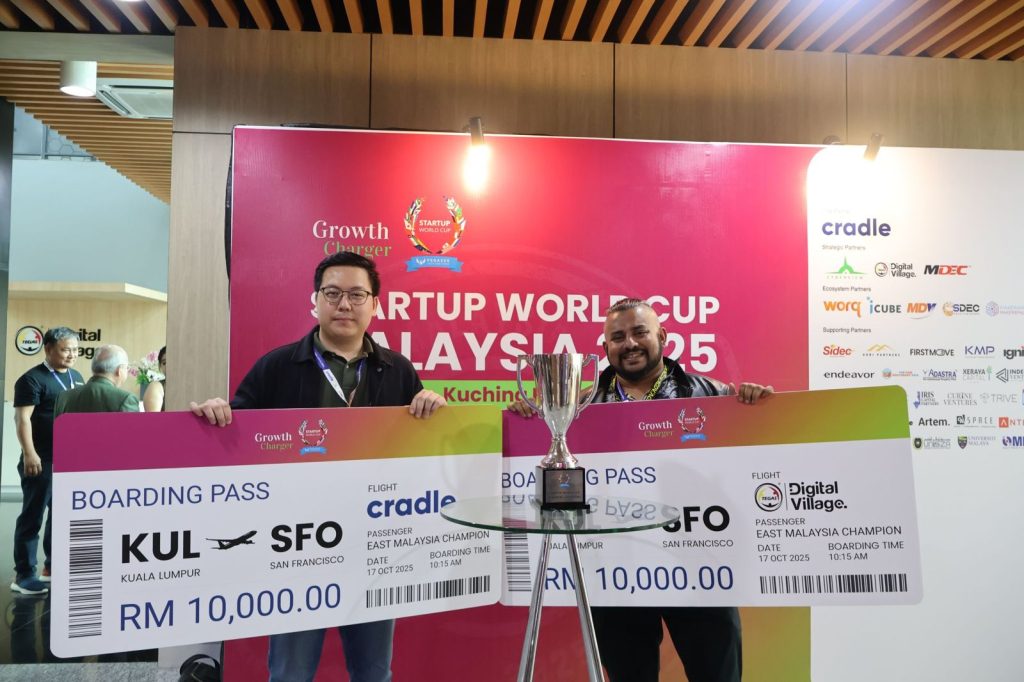
“The strongest employee will not be the person who accepts every AI output. It will be the person who can question it, improve it and take responsibility for the result,” Ashweein said.
He believes employees should treat AI output as a draft or recommendation rather than an instruction.
“Good judgement, accountability and the confidence to say ‘this does not look right’ will be essential,” he added.
For SMEs, skills such as critical thinking, fact-checking, data awareness, communication and domain expertise will become increasingly valuable alongside technical knowledge.
From tools to intelligence
Over the next three to five years, AI is likely to become less visible as a standalone technology and more deeply integrated into the software SMEs already use — sorting customer enquiries, summarising documents, suggesting forecasts, preparing routine content and supporting daily operations.
More specialised applications are also likely to emerge in areas such as computer vision, predictive maintenance, geospatial intelligence, agriculture, environmental monitoring and automated reporting.
For Sarawak, this presents an opportunity. Its economy includes industries closely connected to land, natural resources, logistics, agriculture, tourism and other physical operations.
That means the most meaningful AI applications may not necessarily be the flashiest.
“The winners will be those that combine local knowledge with credible technology, not those that simply attach an AI label to an existing product,” Ashweein said.
He added that the competitive divide would increasingly be between businesses that build reliable, human-supervised workflows and those that generate more noise without improving the customer experience.
Ultimately, the question for SMEs is not simply which AI tool to use.
It is: What is the bottleneck? What is it costing us? What information does the system need? Who will check the result? And what will tell us that it worked?
Once those answers are clear, choosing the technology becomes much easier.
The future of AI in SMEs may not belong to businesses using the most artificial intelligence, but to those that understand their business well enough to know where intelligence — artificial or human — is actually needed.