KUCHING: i-CATS University College has been entrusted with a strategic role in developing Sarawak’s rare earth elements (REE) expertise as part of the state’s push towards advanced and future-ready industries.
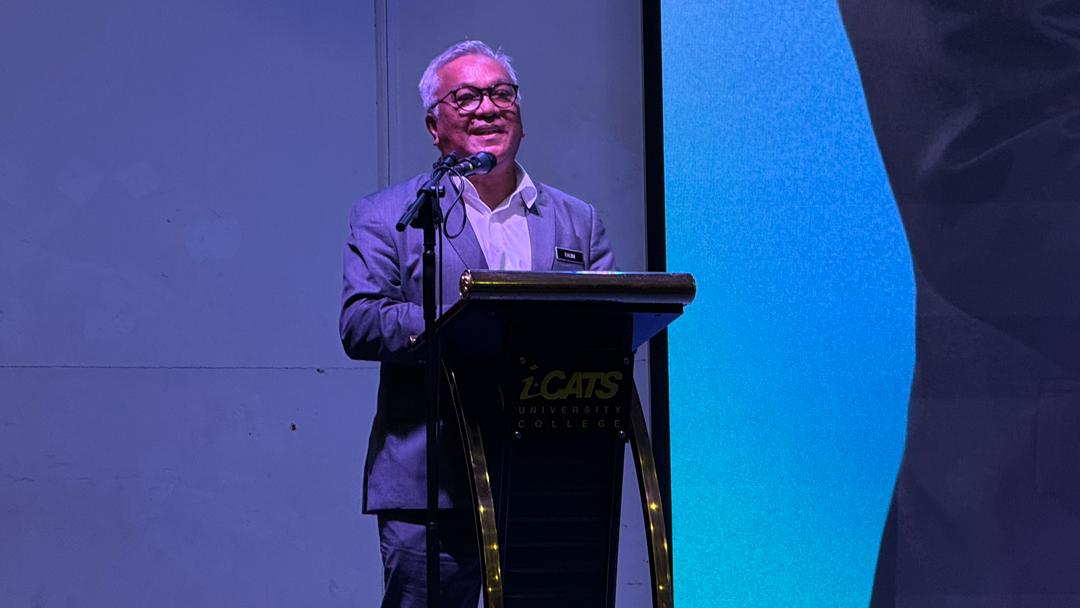
Vice-chancellor Professor Emeritus Datuk Dr Kadim Suaidi said the institution’s involvement in REE research reflects a new frontier in Sarawak’s resource development strategy, following its recent mandate from the state government.
“We are very excited because the state government has given i-CATS the responsibility to look into REE.
“This is a forward-looking area. Rare earth elements are found in almost every device we use today, especially mobile phones. We believe there is significant potential, and we are now part of the task force looking into this sector,” he said in his welcoming address at the Industry-University Research & Innovation Investment Dialogue 2026, held in conjunction with the University Research & Innovation Investment Summit (URIIS) 2026 at i-CATS University College here, today.
Kadim said early studies indicated strong potential REE reserves in Sarawak, positioning the state to tap into high-value materials widely used in modern technologies such as smartphones and advanced electronics.
He said i-CATS’ role in REE development complements its broader mandate in energy transition, including renewable energy, hydrogen, oil and gas, mining, as well as aerospace and other high-technology fields.
Kadim noted that the institution is also strengthening its Faculty of Aerospace Engineering, which is currently developing a nanosatellite expected to be launched by 2030.
Beyond REE and aerospace, he said i-CATS is also expanding its academic and research capacity through faculties focusing on energy and technology, computing and software engineering, agrotechnology and applied sciences, as well as education, business, tourism and hospitality.
He said these programmes are closely aligned with the Post COVID-19 Development Strategy (PCDS) 2030 and the state’s High Technology Agenda under the 13th Malaysia Plan, which prioritises talent development for emerging industries.
“We are working closely with industry partners to ensure our research and talent development match the needs of key sectors identified under PCDS 2030,” he said.
Kadim added that i-CATS is also expanding its physical capacity, including a new campus development in Tropics City, Tabuan Dayak, alongside its main Stampin campus, to accommodate growing student enrolment, which has risen to 2,500 and is expected to reach 3,000 by year-end.
He said the institution remains committed to supporting Sarawak’s transformation into a technology-driven economy through stronger university-industry collaboration and applied research.
“i-CATS is fundamentally a technology-driven institution. Our focus is to ensure that what we do directly supports Sarawak’s development needs,” he said.