SIBU: Kemuyang has been identified as a potential site for a new township to support Sibu’s population growth and stimulate further development of the town.
Premier Datuk Patinggi Tan Sri Abang Johari Tun Openg said Sibu needed to expand beyond its existing boundaries, with the development of another suburb complementing Sibu Jaya, which currently serves as a satellite township.
He said the proposed new township should be carefully planned to accommodate future population growth and serve as a catalyst for Sibu’s economic development.
“Of course, we already have Sibu Jaya, which serves as a satellite township. However, we should also identify another suitable area to develop into a new township that can support Sibu’s population growth and serve as a catalyst for further development,” he said.
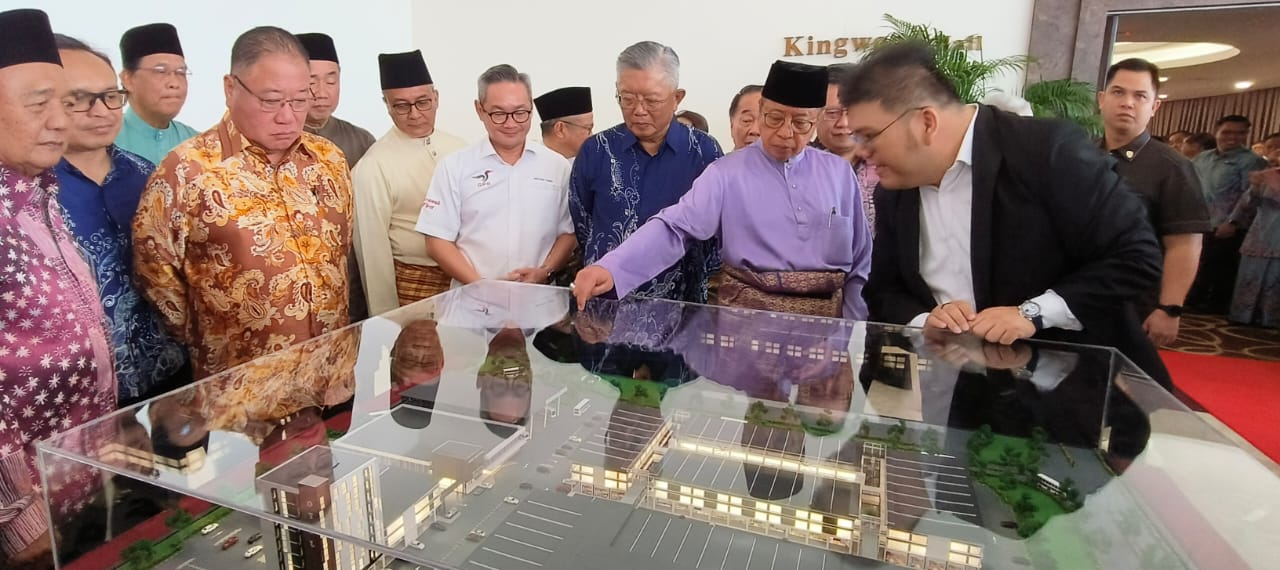
Speaking at the signing of a memorandum of understanding (MoU) for the proposed development of Sibu Sentral Bus Terminal at Kingwod Hotel here today, Abang Johari said finding suitable land for expansion was challenging because much of the land surrounding Sibu comprised peat soil and soft, muddy ground.
The MoU was signed between Sibu Municipal Council (SMC) , which was represented by its chairman Clarence Ting Ing Horh, and Sibu Sentral Sdn Bhd, represented by its director, Jamil Julaihi.
He said the selection of a suitable site would be important to ensure proper township planning, similar to the approach taken in developing Sibu Jaya.
“I have a feeling that the area outside Kemuyang is another suitable location that can support population growth and accommodate a properly planned township,” he said.
He pointed out that a road had already been constructed from Kemuyang to an area behind the University of Technology Sarawak (UTS), providing a foundation for further development.
“What we need to do now is plan the feeder roads and new road connections. Development will eventually come to that area, making Sibu more vibrant,” he said.
He also stressed the importance of making Sibu’s town centre more attractive as part of the overall development strategy.
Recalling his experience as Housing Minister, Abang Johari said he had been tasked by the former Chief Minister, the late Pehin Sri Abdul Taib Mahmud, to turn around Sibu Jaya when the township was facing serious financial difficulties.
“The late Pehin Sri Abdul Taib Mahmud once told me, ‘Bang Jo, you try to turn around Sibu Jaya’,” he said.
He said Sibu Jaya had since developed into a township in its own right, demonstrating the importance of proper planning and redevelopment.
Abang Johari also urged Sibu to keep pace with developments in other major towns, particularly Miri, where plans were being made to develop Permyjaya and the Kenyalang area into a smart centre.
“Sibu must compete with Miri. We must not lose out to Miri,” he said.
On the proposed Sibu Sentral Bus Terminal, he said the development should provide more than just a transportation facility, with an integrated complex offering services and amenities for bus passengers while supporting the wider communications and transportation sector.
He congratulated both parties involved in the MoU signing and commended the SMC for its efforts to upgrade the town and transform it into a modern and smart city.
However, he emphasised that becoming a smart city required careful planning, particularly in balancing development with environmental sustainability.
“Nature must be incorporated into our overall development plans,” he said.
He said Sibu’s increasing congestion made it necessary to review and replan the town, including the Bukit Asek area, which had been identified for redevelopment.
He cautioned against allowing stagnant water and pollution to become problems in the city, pointing out that polluted water could encourage mosquito breeding and increase the risk of disease transmission.
“Nobody wants to visit a city where people are constantly falling ill. Visitors want to enjoy themselves and, at the same time, feel safe and secure,” he said.
Abang Johari said a comprehensive development plan was therefore necessary to address Sibu’s future needs, adding that substantial funding would be required.
He said the planning must cover not only physical development but also effective water management, including better control of water levels, as well as improved public services and infrastructure.
He stressed that the investment would be considerable but necessary to ensure Sibu’s long-term growth and development.