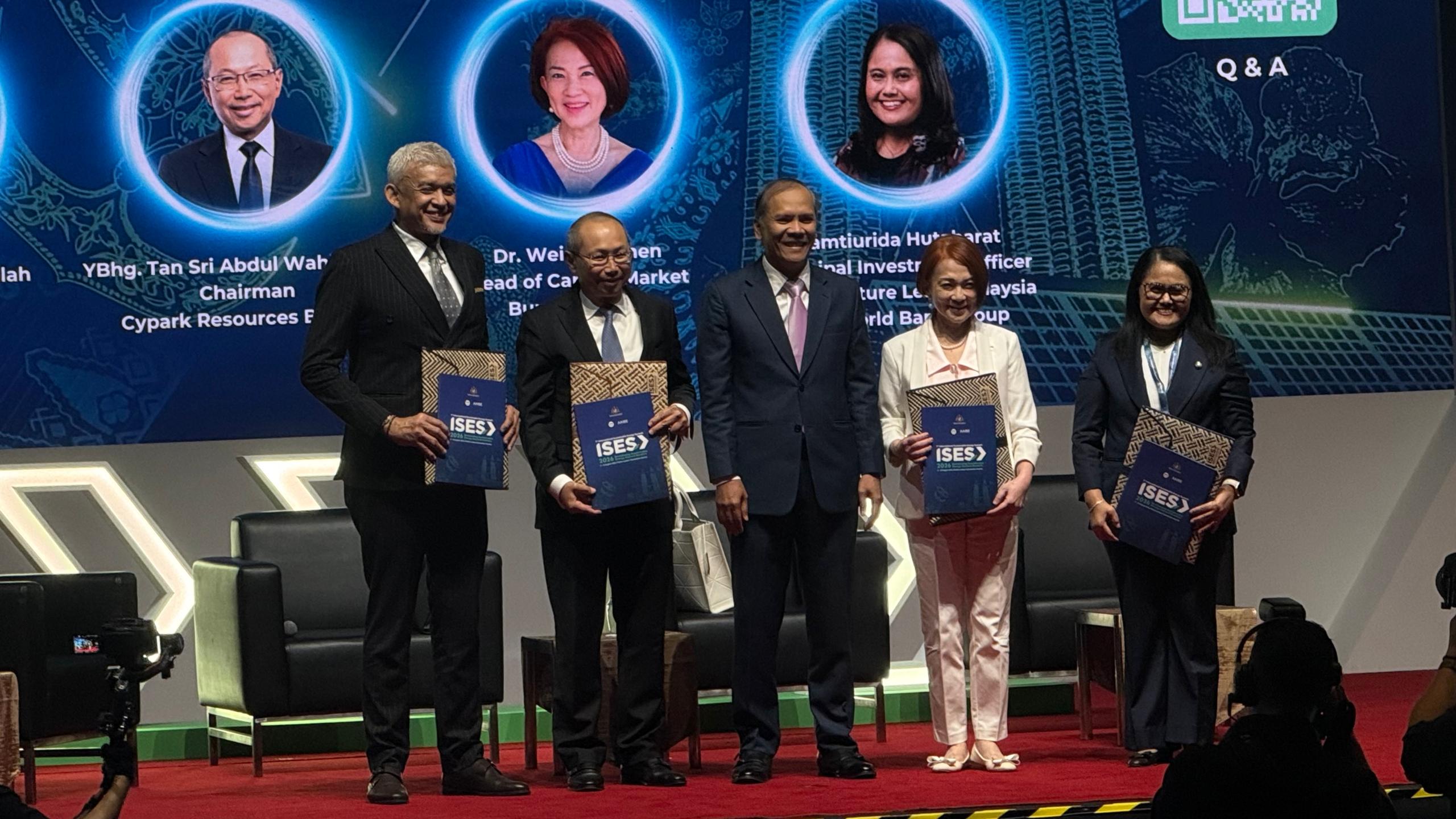
KUALA LUMPUR: The lack of bankable projects and reliable demand, rather than a shortage of capital, remains the biggest hurdle to mobilising large-scale investment for the energy transition in ASEAN.
International Finance Corporation (IFC) Principal Investment Officer Lamtiurida Hutabarat said there was ample capital available in Malaysia, ASEAN and other markets, but investors needed projects with appropriate risk allocation and reliable returns before committing to long-term financing.
“The single biggest obstacle is not really availability of capital. There’s ample capital in the region, in Malaysia and also other markets.
“The obstacle really lies in the lack of bankable projects,” she said this during the plenary session titled ‘Bridging the Investment Gap in Regional Energy Shifts’, held in conjunction with the 7th International Sustainable Energy Summit at the Kuala Lumpur Convention Centre here Tuesday.
Lamtiurida said contracts with appropriate risk allocation were crucial to attracting global institutional investors seeking long-term assets and inflation-linked revenues.
She said risks such as regulatory changes and curtailment were sometimes placed on developers or lenders who were least able to manage them.
“What we need to do is structure a bankable project, starting from good preparation, a good tender and eventually a good template of bankable contracts that enable this scaling of capital to come in.
“Capital is not waiting for a project; they’re waiting for an actual bankable project,” she said.
Bursa Malaysia Head of Carbon Market Dr Chen Wei-Nee said demand was another critical factor in determining whether clean energy and carbon-related projects could attract investment.
Drawing on her experience in the energy sector and at the Sustainable Energy Development Authority (SEDA), she said renewable energy projects had benefited from bankable power purchase agreements, including long-term fixed-tariff arrangements.
However, she said the experience was different in the voluntary carbon market, where projects could struggle if there was no consistent demand for carbon credits.
“In a voluntary market, you almost need to have an assured offtaker for your project in order to be bankable,” she said.
She added that a compliance mechanism such as a carbon tax or emissions trading scheme could help create a more consistent source of demand.
“If there is no one who is willing to pay, your investors cannot see the returns and the banks get very jittery,” she said.
Meanwhile, Cypark Resources Berhad chairman Tan Sri Abdul Wahid Omar said Malaysia would need significant investment to achieve its net-zero ambition, particularly in reducing emissions from the energy and transport sectors.
He said Malaysia currently emitted about 365 million tonnes of carbon dioxide equivalent, with the energy and transportation sectors accounting for 72 per cent of emissions.
He said Malaysia’s forests, which cover about 54 per cent of the country, helped sequester an estimated 247 million tonnes of carbon.
Under the National Energy Transition Roadmap (NETR), he said Malaysia would require between RM1.2 trillion and RM1.3 trillion in investments to support the energy transition.
However, not all projects would require the same level of public support.
Citing a study by WWF and Boston Consulting Group, Abdul Wahid said about 60 per cent of NETR projects were commercially viable on their own, including large-scale solar projects.
Another 25 per cent would require some form of carbon credit support, while the remaining 15 per cent would not be commercially viable and would require direct government funding.
“This is where the role of the carbon market will come in — carbon pricing, be it in the form of the voluntary carbon market that we already have today, or the emissions trading system, carbon tax and so on,” he said.
He said a more developed carbon tax and levy system, together with an active voluntary carbon market, would be important in bridging the remaining investment gap and supporting projects that could not be financed solely through commercial returns.