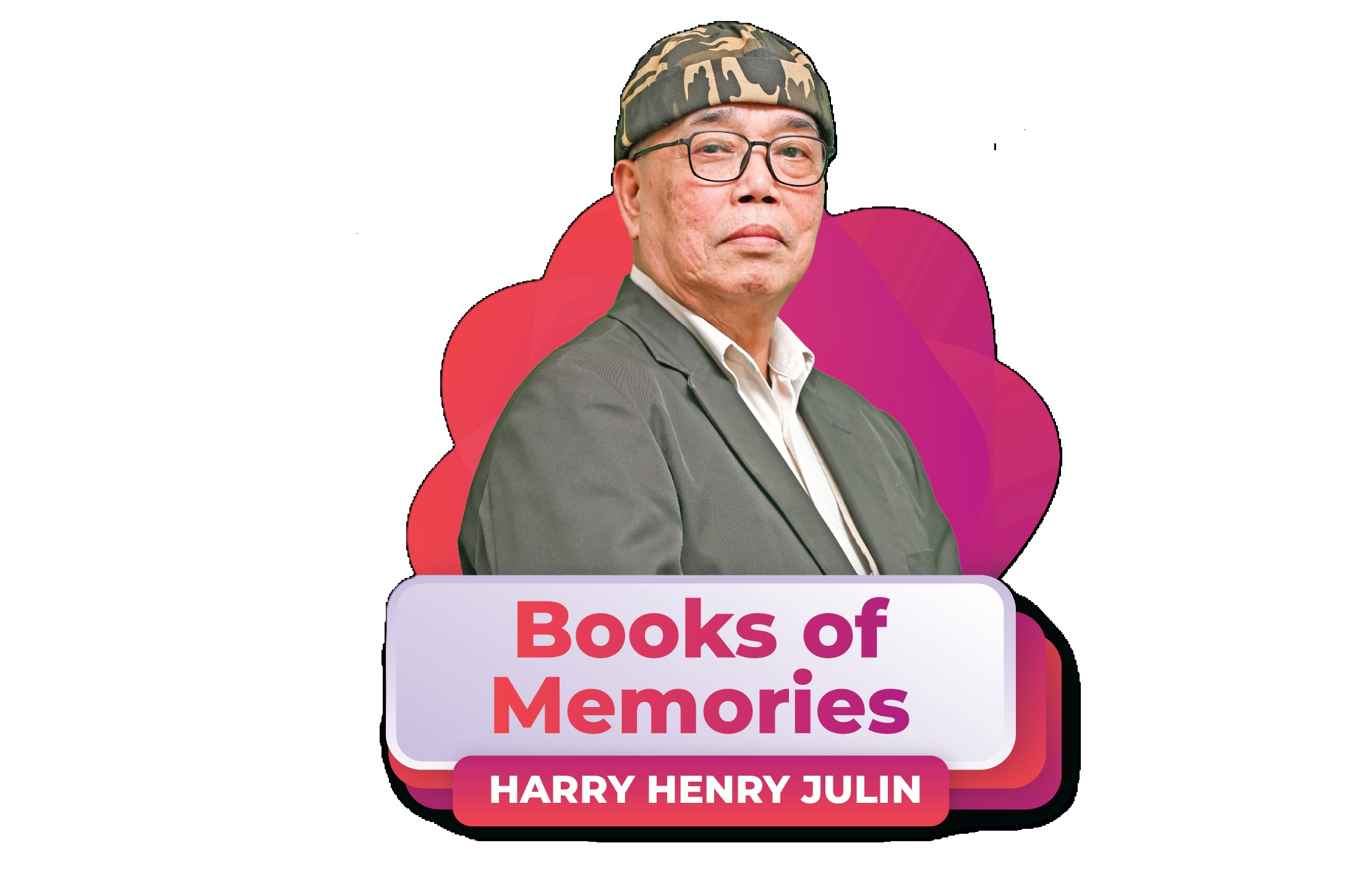
I REMEMBER Harry Henry Julin, our dear executive editor, spoke about his trip to ASNB at Jalan Satok, Kuching with his son last week. He hadn’t set foot in that branch in years. He walked in expecting the counter he remembered – the one with a person behind it – and found a row of kiosks instead.
He’s a baby boomer. Sarawakian. And standing there, he wasn’t thinking about himself. He was thinking about his kampung folks. His own parents. People who learned to count money in cash, not confirm it on a touchscreen. He wondered, quietly, how they’d ever manage this.
Here’s the part he wanted on record: the staff saved it. Patient. Present. Walking people through screens like it was the most natural thing in the world to hold someone’s hand through a login page. That, he said, was the actual story.
He’s right. But the story doesn’t end at “the staff were kind”. It starts there – and it stretches further than he realised, across both ends of life.
The six walls
Strip away the sentiment and what you’re left with is a sequence – the same six walls, in the same order, every single time a person meets a machine that holds their money:
Screen. Contract. Selection. Navigation. Comprehension. Acceptance.
Each one is a place where a person can quietly give up. Not dramatic. Not with a complaint filed or a scene made. Just a shuffle back from the kiosk, a mutter of “eh, sik ku pandei”, a walk to the door.
Three responses to that wall, and Sarawak has all three in spades:
The refusers. Won’t touch it. Full stop. Not stubbornness – self-protection. You don’t touch what you can’t trust, and trust is earned screen by screen, not declared by a bank’s marketing department.
The triers. Attempt it, fail once, and that failure becomes the whole verdict. One wrong tap and the machine has “proven” it wasn’t built for them.
The willing-but-lost. Want to. Genuinely want to. Just don’t have anyone to ask the question that feels too small to ask out loud.
And underneath all three sits the same account – grandpa’s old stash, sitting in a system that evolved past the hand that opened it. The money didn’t move. The world around it did.
As usual, I like looking at matters through the lens of the ancients. And wu wei applies again, unfailingly, in reflecting modern life – and this is one of those moments.
Some old guy in China wrote a whole book about it two and a half thousand years ago, and the short version is: the more you give away, the more you end up with.
Sounds like a riddle. It’s not. Watch a good bank teller’s work – nothing hoarded, nothing rushed, just handing out patience like it costs nothing, and somehow the whole room walks out richer for it.
Stop fighting the shape of what’s in front of you. Be water. Pour into the person, don’t make them pour into you. That’s not deep. That’s just what good tech support looks like when someone actually gives a damn.
The other end of the queue
But there’s a second generation standing at that same machine, and we almost never look down far enough to see them.
Children. Standing next to a parent at the ATM, watching a ritual they’ve been told nothing about. “I’m just going to get some money out.” Said the way you’d say I’m going to get some water. Ordinary. Unremarkable. Except it isn’t, not to an eight-year-old watching a card go into a slot and paper to come back out.
Nobody teaches this in school. Not the mechanics – card, chip, PIN, network, ledger. Not the concept underneath it – that a bank is a promise, that the number on the little screen isn’t the cash itself, but a claim on cash that exists somewhere else, held on your behalf, movable on your word. And nobody explains the failure mode: the days when there’s simply no money to take out.
Try explaining an empty account to a child who has only ever watched money appear. Try explaining it to yourself, honestly, without flinching.
Humaira, my daughter, eight years old, solved the whole thing in her own way. Watching a note come out of the machine, she looked up with a grin that already knew it had outsmarted me. “Ayah, money does grow from trees. It’s paper, right? So, to print money, we need to chop the tree.”
I laughed. Then I stopped because she wasn’t joking. She said it again, slower, proud of the shape of it: “I figured it out.” Not a joke. A riddle she’d solved on her own terms, with the only tools she had – paper is from trees; money is paper; therefore, the machine is, in its own small way, a forest. Wrong mechanically. Right philosophically.
She’d built a working model of the economy out of what she could observe, the same way every child builds a working model of everything: gravity, fairness, love, death. We call it a misunderstanding.
The Stoics would have called it something closer to right effort. Epictetus drew a hard line between what is within our power and what isn’t – our judgments, our effort, our attention – and what isn’t – the world’s actual mechanics, which arrive on their own schedule whether we’re ready or not.
My daughter did the only thing within her power: she reasoned, with total sincerity, from the evidence in front of her. That she was wrong about trees says nothing against her. It says everything about how little any of us explain before we hand a child a truth this large.
The uncomfortable symmetry
Here’s the line worth sitting with the technology needs the human as much as the human needs the technology.
Not as a nice sentiment. As an operating fact. A kiosk with nobody willing to touch it isn’t efficiency – it’s a locked door with a screen on it. The machine doesn’t complete its own purpose without someone bridging the gap on the human side. That bridge, on the day Harry was there, had a name and a face and the patience to stand there twice.
Marcus Aurelius wrote his private notes not for an audience but to remind himself, each morning, that the world would not arrange itself to suit him – so he’d better meet it as it was. That’s the discipline both ends of this queue are quietly practising, without knowing they share it.
The grandfather, who met a kiosk, never asked for it. The daughter, meeting a machine, hasn’t been given the words yet. Amor fati, the Stoics called it – not just enduring what comes, but loving the terms of the encounter itself, tree-logic and all.
Technology doesn’t get a persona from the code. It gets one from whoever’s standing next to it – old hands shaking over “Confirm Transaction”, small hands still convinced the answer is a tree, and somewhere in between, a staff member choosing, again and again, to be the current rather than the wall.
Machines don’t have hands. People do. And at both ends of that queue, someone used theirs.