THE third series looks at one of the key challenges facing the ASEAN Power Grid – making cross-border energy projects bankable. It examines why capital alone is not enough, and why reliable demand, appropriate risk allocation, clear policies and long-term commercial arrangements are needed to move projects from planning to implementation.
THE ASEAN Power Grid will require significant investment to move from a network of planned connections to a functioning regional system.
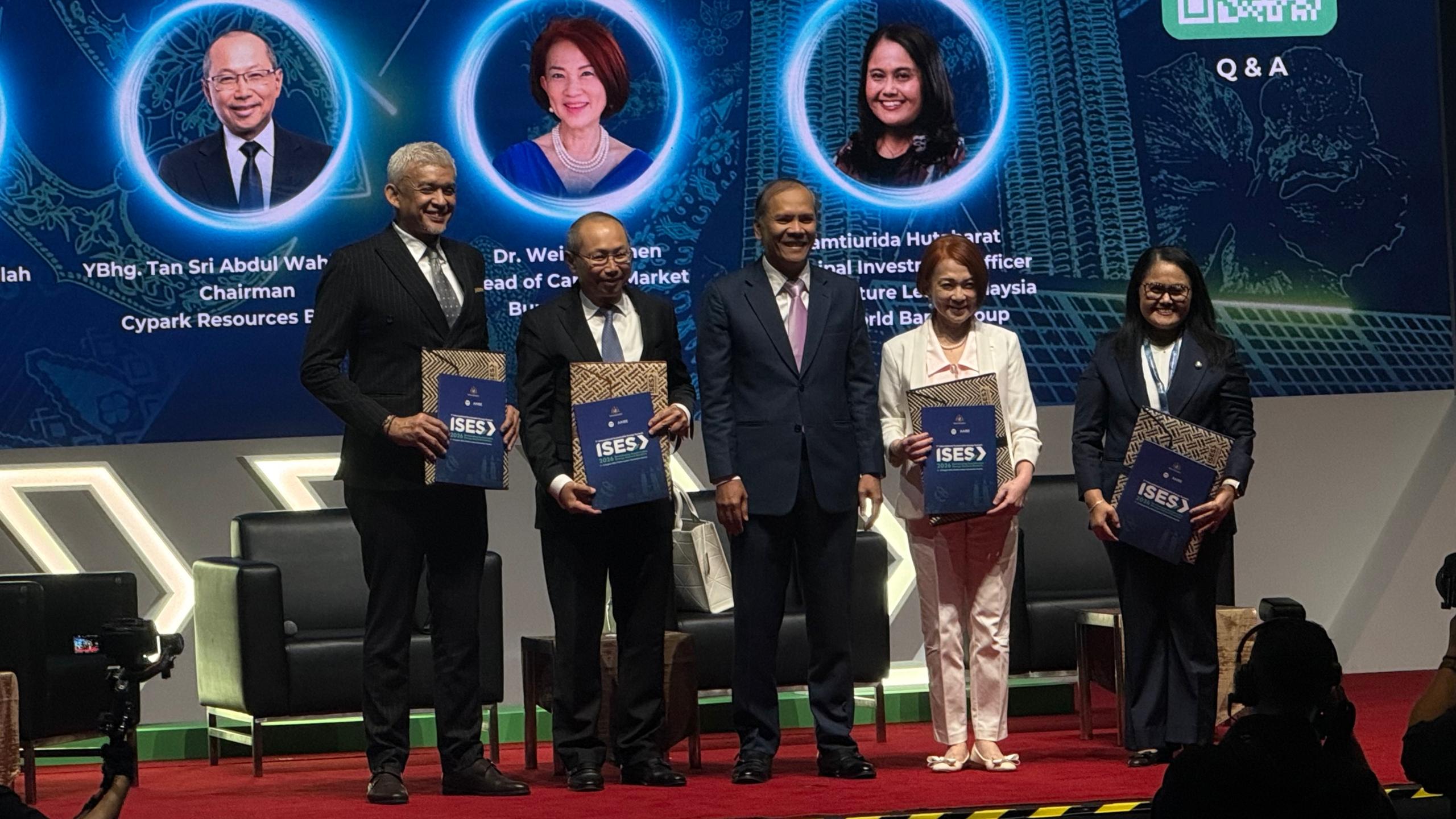
At the 7th International Sustainable Energy Summit 2026, the message from financiers and industry representatives was clear: the region does not simply need more capital.
It needs projects that investors can finance with confidence.
For Sarawak, this is an important issue as it considers future transmission projects, electricity exports and the infrastructure needed to support its growing energy and industrial sectors.
The money is there, but projects need to be ready
ASEAN Centre for Energy executive director Datuk Abdul Razib Dawood said the scale of the APG would require substantial investment.
He cited a World Bank estimate that nearly USD800 billion, or about RM3.27 trillion, would be needed by 2050 to fully realise regional interconnection, including transmission networks, generation and renewable energy development.
ASEAN has the economic scale and complementary energy resources to support such integration, he said.
Its 11 member states collectively represent about 700 million people and are on track to become the world’s fourth-largest economy by 2030.
But the challenge now is making projects bankable.
“We have the political capital now. Money is ready. There are bankers still in the room. They are ready to finance, but we have to address their pain point, their bankability,” he said.
Investors need predictable returns
International Finance Corporation principal investment officer Lamtiurida Hutabarat said there is ample capital available in Malaysia, ASEAN and other markets.
However, investors needed projects with appropriate risk allocation and reliable returns.
“The single biggest obstacle is not really availability of capital. There’s ample capital in the region, in Malaysia and also other markets.
“The obstacle really lies in the lack of bankable projects,” she said.
She said contracts needed to allocate risks appropriately, particularly for global institutional investors looking for long-term assets and inflation-linked revenues.
Regulatory changes and curtailment risks, she said, should not simply be transferred to developers or lenders who were least able to manage them.
“What we need to do is structure a bankable project, starting from good preparation, a good tender and eventually a good template of bankable contracts that enable this scaling of capital to come in,” she said.
“Capital is not waiting for a project; they’re waiting for an actual bankable project.”
Demand is part of the equation
Bursa Malaysia Head of Carbon Market Dr Chen Wei-Nee said demand is another factor affecting whether clean energy and carbon-related projects could attract investment.
She said renewable energy projects had benefitted from bankable power purchase agreements, including long-term fixed-tariff arrangements.
The same principle applied to other types of projects.
“In a voluntary market, you almost need to have an assured offtaker for your project in order to be bankable,” she said.
“If there is no one who is willing to pay, your investors cannot see the returns and the banks get very jittery.”
For the ASEAN Power Grid, this makes electricity demand and cross-border purchasing arrangements important parts of future project development.
A shift towards multilateral trading
Abdul Razib said ASEAN is working towards market mechanisms that could eventually allow electricity to be traded across borders beyond conventional long-term power purchase agreements.
The pilot involving Laos, Thailand, Malaysia and Singapore has shown that multilateral power trading is possible.
He said ASEAN’s 11 sovereign states had different electricity market structures, policies, reserve margins and power development plans.
Some have liberalised markets, while others operate vertically integrated systems.
However, he said these differences should not stop regional integration.
“This is not a showstopper,” he said.
He added that concerns over energy security and geopolitical disruptions could provide further impetus for ASEAN countries to diversify energy sources and reduce external dependencies.
The Sarawak equation
For Sarawak, bankability will be closely linked to both domestic and regional demand.
The state is developing renewable energy, hydrogen and energy-intensive industries, while also pursuing regional electricity exports.
TransitionZero Head of Market Development Ajita Mishra said Scenario Builder could help planners examine these different demands together.
New demand from hydrogen production or data centres can be incorporated alongside export commitments and domestic supply.
This allows users to test different scenarios rather than assuming that future demand will follow a single path.
For example, if industrial demand grows faster than expected, the amount of electricity available for export could change.
If regional demand increases, additional transmission capacity may become more valuable.
The ability to examine these situations can help policymakers understand how different development paths could affect future infrastructure requirements.
Policies need to support the projects
Meanwhile, SJ Group Energy senior executive director, Tan Wooi Leong said the regulatory environment would also determine how successfully cross-border power projects could be developed.
“Providing certainty for investors, utilities and infrastructure developers will be essential to support future investment and ensure efficient operation of interconnected systems,” he said.
He said Sarawak would need to continue working with regional partners on planning, regulation and market development.
Abdul Razib said ASEAN already had a five-year action plan and a clear roadmap for regional energy cooperation, but implementation needed to accelerate.
“We know what to do, the long list of what to do and how to do it. We benchmark European, Australian and other jurisdictions. We don’t have to reinvent the wheel. We can leapfrog,” he said.
ACE is working on frameworks, rules, policy harmonisation and market mechanisms to support implementation.
The final series will look at how battery storage, solar and decentralised energy solutions could complement the regional grid, support businesses and communities, and contribute to developing a skilled workforce to drive the region’s clean energy transition.