KUCHING: Malaysian game studios do not necessarily have to make games that look Malaysian to reach a global audience, but they must first make games that people want to play.
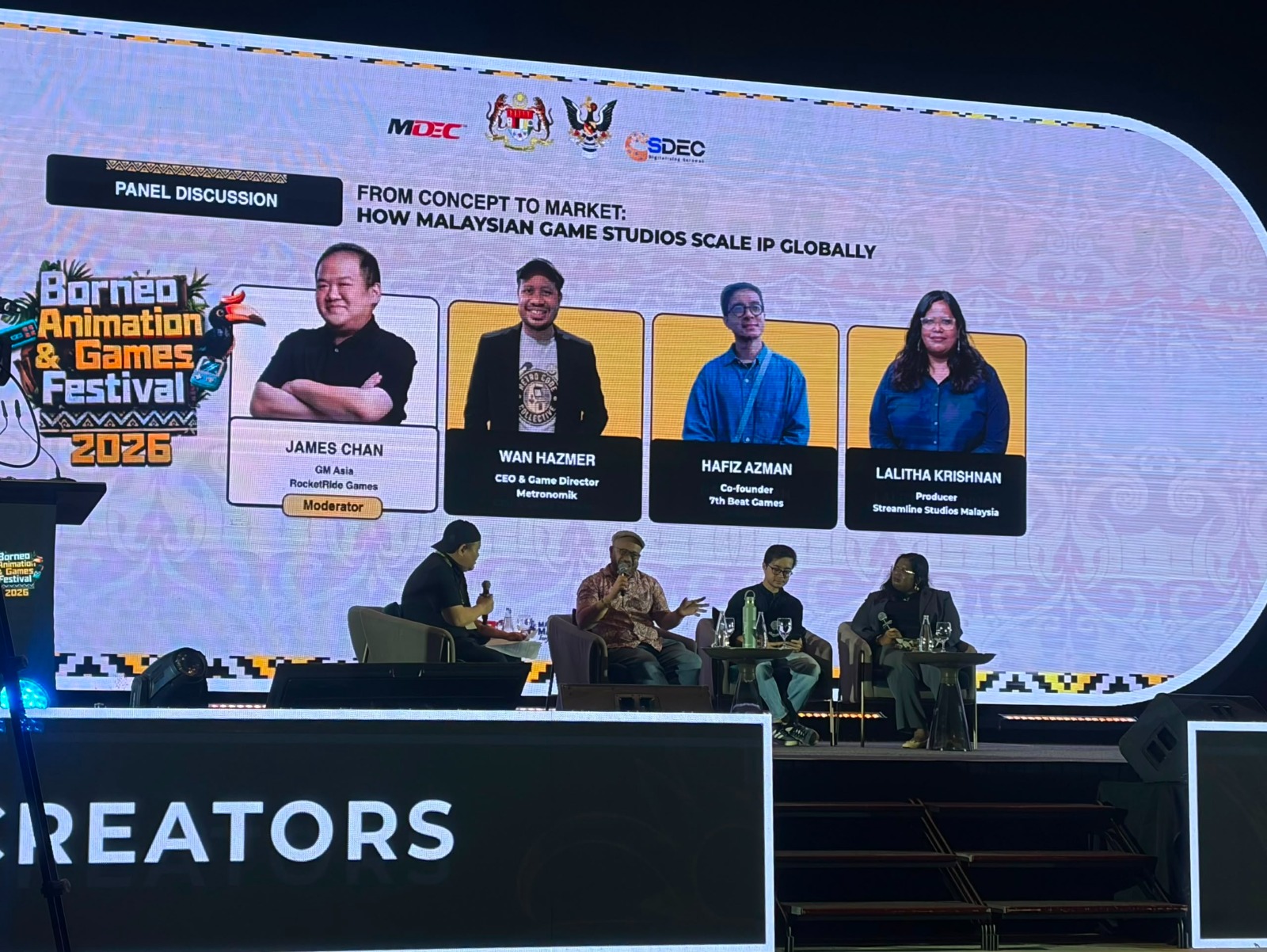
This was among the key takeaways from the panel discussion, ‘From Concept to Market: How Malaysian Game Studios Scale IP Globally’, held as part of Borneo Animation & Games Festival (BAGFest) 2026 here.
The panellists shared how strong game design, community engagement, sustainable business models and deliberate use of cultural identity can help local studios take their intellectual property (IP) beyond Malaysia.
Hafiz Azman, 7th Beat Games Co-founder, said his studio’s international journey began almost immediately after its games were uploaded to online platforms, attracting players from around the world.
Its breakthrough came when game streamers began playing its titles, including League of Legends star, Faker, whose interest helped drive a significant increase in sales.
“‘Dance of Fire and Ice’ succeeded largely because its gameplay offered something distinctive, while community features such as a level editor allowed players to create and share their own content,” he said.
Meanwhile, Metronomik’s CEO and Game Director, Wan Hazmer, said Malaysian culture could give a game a distinct identity while still appealing to audiences around the world.
He said the key was to integrate local elements naturally with universal themes, ensuring the cultural identity remained meaningful to the game rather than feeling forced.
The panel also highlighted the importance of financial sustainability as studios scale.
Lalitha Krishnan, Producer of Streamline Studios Malaysia, said working with global partners could provide revenue and production experience, allowing studios to eventually invest in their own IP.
The panellists also stressed that growth brings challenges beyond production, particularly in managing people, communication and leadership.
As studios expand, they said their internal systems must evolve alongside their teams to sustain long-term growth.
Ultimately, the panel underscored that taking Malaysian game IP global requires more than a good idea as it requires strong design, careful business decisions, adaptable teams, and the ability to connect local identity with universal appeal.