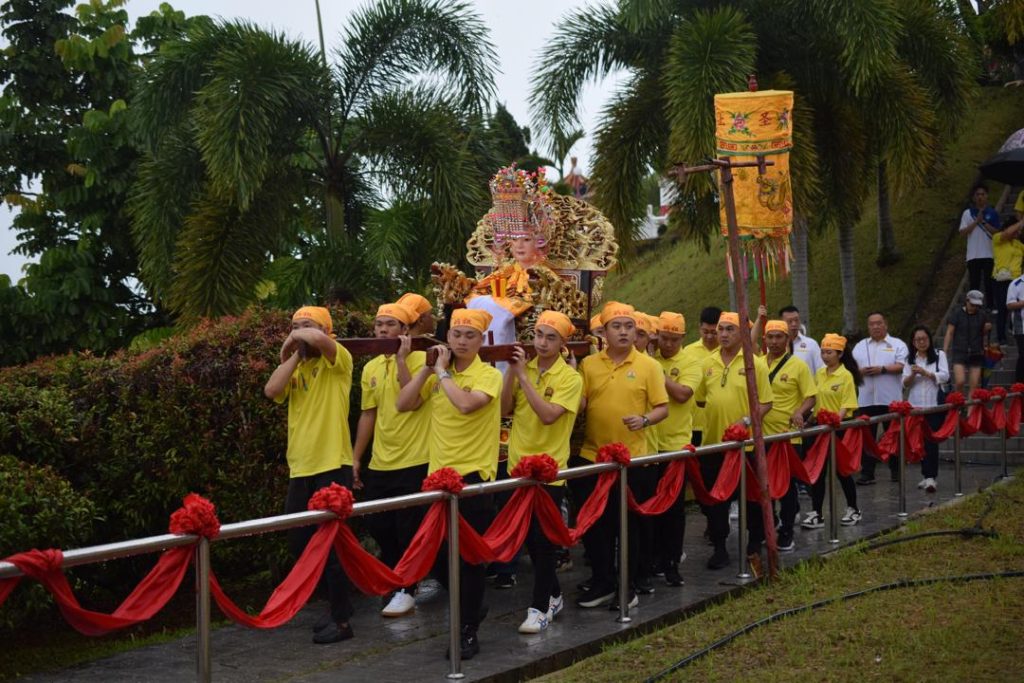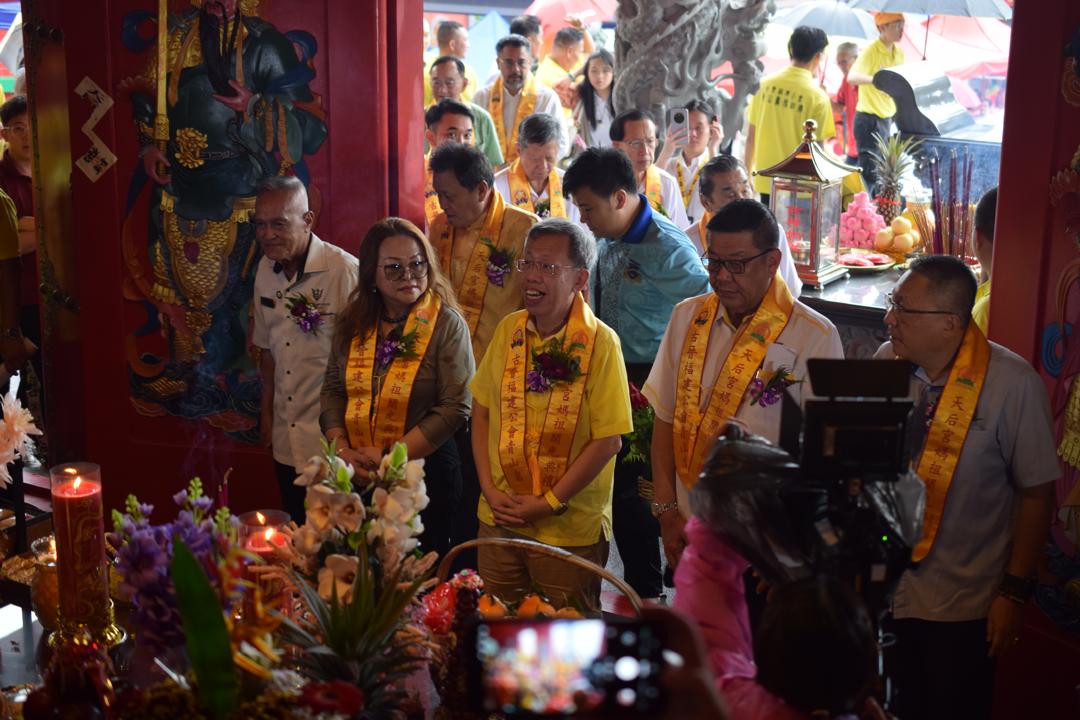
KUCHING: The consecration of the Ching San Yan (Mazu) Temple in Muara Tebas is expected to enhance Sarawak’s profile on the global religious tourism map, with the temple serving as a spiritual beacon for more than 300 million Mazu devotees worldwide.
Deputy Premier Datuk Amar Dr Sim Kui Hian said the reopening of the centuries-old temple sends a strong message internationally, demonstrating Sarawak’s cultural depth and inclusivity even from a remote corner of Borneo.
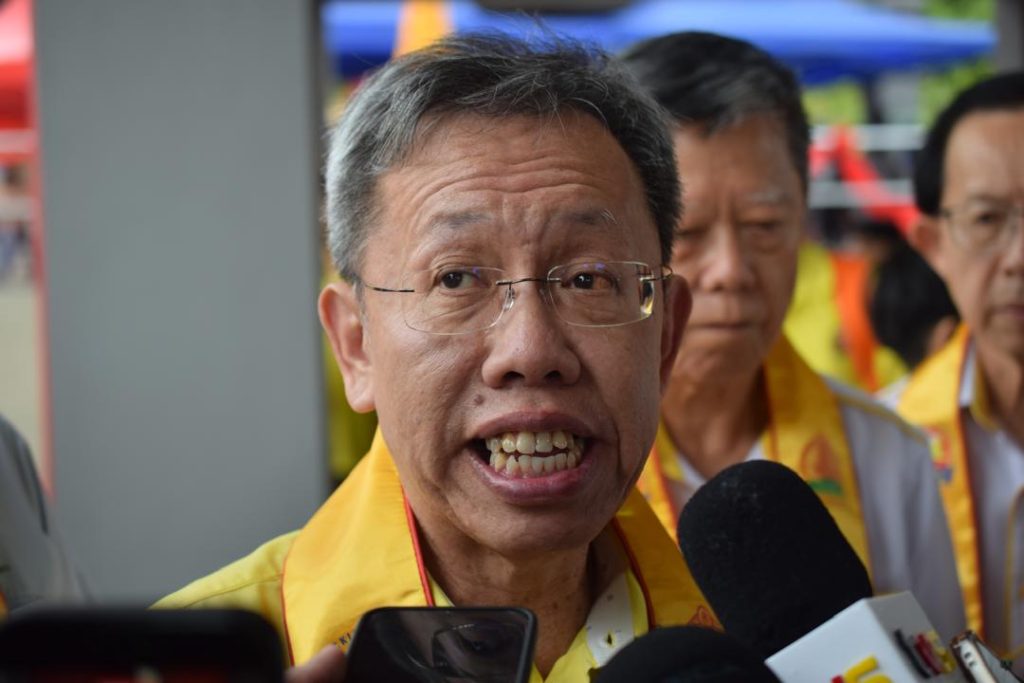
“Mazu has more than 300 million followers worldwide. With the opening of this temple, it sends a signal to devotees across the world that even here, at the river mouth of Sungai Sarawak, the faith continues to thrive,” he told reporters after attending the consecration ceremony today.
Dr Sim noted that the temple, which has stood at Muara Tebas for over 200 years, is among the oldest Chinese religious sites in Sarawak and symbolises the long-standing presence of the Chinese community at the historic river mouth.
He added that the temple’s location also places it in close proximity to major future developments at Tanjung Embang, including the proposed deep seaport, gas terminal and international airport, all of which are expected to play a significant role in Sarawak’s economic future.
“The area overlooking Tanjung Embang will be crucial to Sarawak’s long-term prosperity, and this temple stands as part of the broader historical and cultural landscape of the region,” he said.
Meanwhile, Federation of Chinese Associations of Sarawak (FCAS) President, Datuk Seri Richard Wee Liang Huat, said the temple redevelopment project involves a total cost of between RM8 million and RM9 million, with approximately RM4 million in funding received so far from the Unit for Other Religions (UNIFOR).
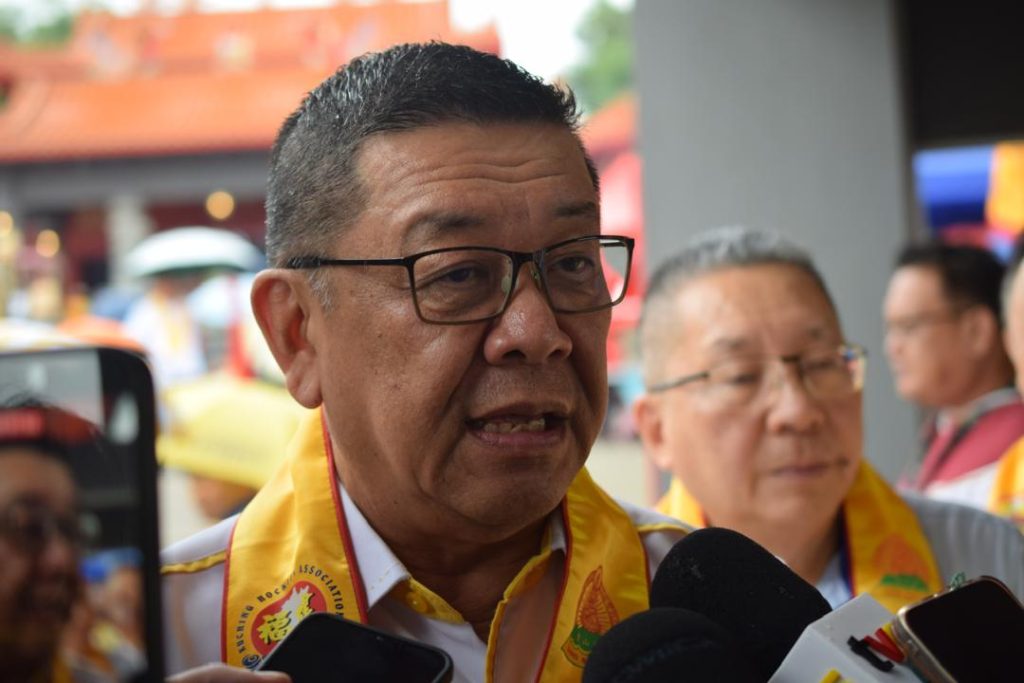
He said the association is applying for an additional RM2 million to complete the remaining works, as the project is currently about 90 per cent completed.
“The construction has progressed smoothly since the ground-breaking in 2019. Most of the major structures are already in place, but we still need additional funds to complete the final stages,” he said.
Wee explained that the temple’s design closely follows traditional architecture from China, with key materials such as statues, roof tiles and decorative elements imported to preserve authenticity.
He added that today’s ceremony marked a consecration or soft opening, allowing devotees to begin prayers ahead of the upcoming Chinese New Year celebrations.
“The official opening will be held later, likely in May, in conjunction with Mazu’s birthday, which will be a separate and larger event,” he said.
Wee also revealed that there are plans to enhance the surrounding area, including a proposal to develop a small waterfront nearby, which may involve discussions on relocating existing businesses to better open up the space and improve accessibility.