
I understand and appreciate time management and all that comes with it. Of course I do. I am a journalist, after all. I have been one since I was 20 years old. Deadlines are not strangers to me. In fact, they have been my constant companions for more than five decades.
Journalists live by the clock. Newspapers do not wait. Editors do not wait. Readers certainly do not wait. News breaks when it wants to, not when it is convenient. Throughout my career, I have learned to respect time, chase time, measure time, save time, and occasionally curse time.
Yet despite all that, I often find myself exhausted by it.
Sometimes I feel suffocated by schedules, appointments, reminders, calendars, and alarms. There are moments when I wonder whether I have spent too much of my life managing time and not enough simply living in it.
I am 73 now and still gainfully employed. Many people my age have retired, taken up gardening, or become professional supervisors of grandchildren. Not me. I am still working, still writing, still dealing with deadlines.
But as I grow older, I find myself increasingly drawn backwards rather than forwards. My thoughts often wander to my childhood in a remote village in the Serian District. Perhaps that is normal.
When one reaches a certain age, memory becomes less like a photo album and more like a favourite old film that keeps replaying itself.
The strange thing is that the scenes I remember most vividly are not grand events. They are not achievements, celebrations, or milestones.
What I remember most is freedom.
Back then, time existed, of course, but it did not rule us.
Other than school hours, we were largely free from strict timekeeping. Nobody carried a watch. There were no mobile phones, no digital calendars, no smart devices reminding us every few minutes that we were either late, early, or behind schedule.
The sun was our clock. The crowing rooster was our alarm. The setting sun was our curfew. That was about it.
As children, we roamed freely through the jungle trails. We fished in streams and wetlands near the paddy fields. We climbed trees whose names I can still remember, though sometimes I struggle to remember where I left my reading glasses five minutes ago.
Life was wonderfully inconsistent. One day we might spend hours chasing fish. Another day, we would be hunting for wild fruits.
On some days, we wandered around because wandering was an activity. No productivity targets. No strategic planning. No performance indicators. No one asked us to optimise our childhood.
Looking back, I realise I was quite like Mark Twain’s Tom Sawyer. Not the whitewashed-fence entrepreneur part. I never managed to convince other boys to do my chores. But I certainly shared his appetite for adventure, mischief, and avoiding unnecessary work.
Like Tom Sawyer, I regarded every river, path, tree, and hill as an invitation. The world was not something to be managed. It was something to be explored. Time stretched endlessly before us. A morning felt like a week. A school holiday felt like a lifetime.
Waiting for Christmas or Gawai Dayak required a level of patience that would probably qualify today’s children for a psychological evaluation.
Yet somehow, we survived. More importantly, we enjoyed ourselves.
Then adulthood arrived. As adulthood often does, it came carrying clocks. At first, it was harmless enough. You start work. You learn punctuality. You learn responsibility.
You learn that bosses become strangely emotional when employees arrive two hours late and explain they were observing the flight pattern of hornbills.
Eventually, you adapt. I certainly did. City life has a way of disciplining people. In cities, time is not merely measured; it is weaponised. Everything has a schedule. Meetings start at a specific time. Buses leave at a specific time. Flights depart at a specific time. Bills must be paid at a specific time.
Even leisure activities are scheduled. Some people actually schedule relaxation. Imagine that.
One enters an appointment into a calendar:
“4 p.m. to 5 p.m. — Relax.” The poor soul then spends the entire hour worrying about whether he is relaxing efficiently enough.
Cities train us to become managers of minutes. The clock becomes a silent supervisor hanging over our lives. Tick. Tick. Tick.
Not threatening. Just persistent. A gentle reminder that time is money. An even gentler reminder that somebody else usually gets the money.
Over the years, I developed discipline. I had to. A journalist without discipline is merely a storyteller with overdue copy. I learned how to organise my work. I learned how to meet deadlines. I learned how to operate within systems. The skills served me well. They still do.
Yet a small rebel survived inside me. A village boy hiding behind an ageing journalist. And that rebel developed a strategy. I call it stealing time.
Not in any criminal sense, of course. No police officer has ever arrested me for possession of unregistered leisure.
What I mean is that throughout my life, I have quietly stolen moments from the system. Small pockets of freedom. Fragments of unclaimed hours. Little islands of time that belonged entirely to me.
A slow morning. An afternoon nap. A walk with no destination. A fishing trip. A day spent reading. An evening doing absolutely nothing useful.
These moments may seem insignificant. To me, they are priceless. I suspect many people secretly do the same thing. They may not admit it openly.
Modern society celebrates busyness. People wear exhaustion like a medal. Ask someone how they are doing, and the answer is often: “Very busy”.
It is usually delivered with the pride of a soldier returning from battle. The implication is clear. Busy means important, successful, and productive.
But I sometimes wonder whether we have confused activity with living. After all, a hamster on a wheel is extremely busy. Yet it never actually goes anywhere.
Perhaps that is why I guard my weekends, public holidays, and annual leave so fiercely. Those periods become my little acts of resistance.
When they arrive, I quietly declare independence.
“Come what may,” I tell myself.
The world can survive without me for a day or two. Remarkably, it usually does. The newspapers continue printing. The politicians continue talking. The economy continues wobbling along.
Civilisation does not collapse because I choose to spend a morning drinking coffee and staring at the rain. This discovery was both comforting and mildly insulting.
I had imagined myself indispensable. The world politely disagreed. So, I learned to embrace my temporary disappearances. Sometimes I travel. Sometimes I visit old places. Sometimes I sit.
The older I get, the more I appreciate sitting. As a child, sitting still often felt like punishment. As an adult, it feels like a luxury.
There is a certain joy in having nowhere to be. No urgent emails. No deadlines. No alarms. Just existence.
When I find such moments, I often think about my village years. Not because life was perfect. It wasn’t.
Village life had its hardships. People worked hard. Resources were limited. Comforts were fewer.
But there was something valuable that modern life often struggles to provide. Space. Mental space. Emotional space. Time that felt owned rather than borrowed.
Perhaps that is what I miss most. Not youth itself. Youth is overrated. Young people have energy but very little wisdom.
Older people have wisdom but occasionally require assistance in locating their spectacles. Life insists on maintaining balance.
What I miss is the feeling of unstructured time. The sensation that a day can unfold naturally rather than according to a timetable.
The freedom to follow curiosity wherever it leads. Children possess this instinct naturally. Adults spend decades trying to recover it. The irony is rather amusing.
As children, we want to grow up. As adults, we spend considerable effort trying to remember how it felt not to be adults. Perhaps that is one of life’s favourite jokes.
The years teach us many things, but one lesson becomes clearer with age. Time is not merely something we manage. It is something we experience.
Modern life encourages us to treat time like a resource. We save it, spend it, waste it, invest it, and budget it.
But perhaps time is not a currency at all. Perhaps it is closer to a river. We do not own it. We travel through it. Some days the river moves quickly. Some days it moves slowly. Sometimes we fight the current. Sometimes we float. Either way, the river continues.
At 73, I know I cannot return to those childhood days in Serian. The jungle trails have changed. The village has changed. The world has changed. Most of all, I have changed.
Yet the boy who wandered through forests and wetlands still lives somewhere inside me. He emerges whenever I steal a little time from the demands of modern life, reminding me that not every moment needs a purpose, every hour needs to be productive, or every day measured by achievement.
Sometimes, a day is valuable simply because it was lived. Perhaps that is the wisdom age slowly reveals.
In youth, we believe we have endless time. In middle age, we try to control it. If fortunate, we eventually learn to make peace with it.
The clock will keep ticking. The calendar will keep turning. The river will keep flowing.
What matters is not how tightly we hold time, but how fully we inhabit the moments entrusted to us.
So protect a little space for yourself. Watch the rain. Walk without purpose. Sit beneath a tree. Remember who you were before the clocks arrived.
For life is not measured by deadlines met or appointments kept, but by those moments when time briefly ceased to matter — and we felt truly alive.
———————————————
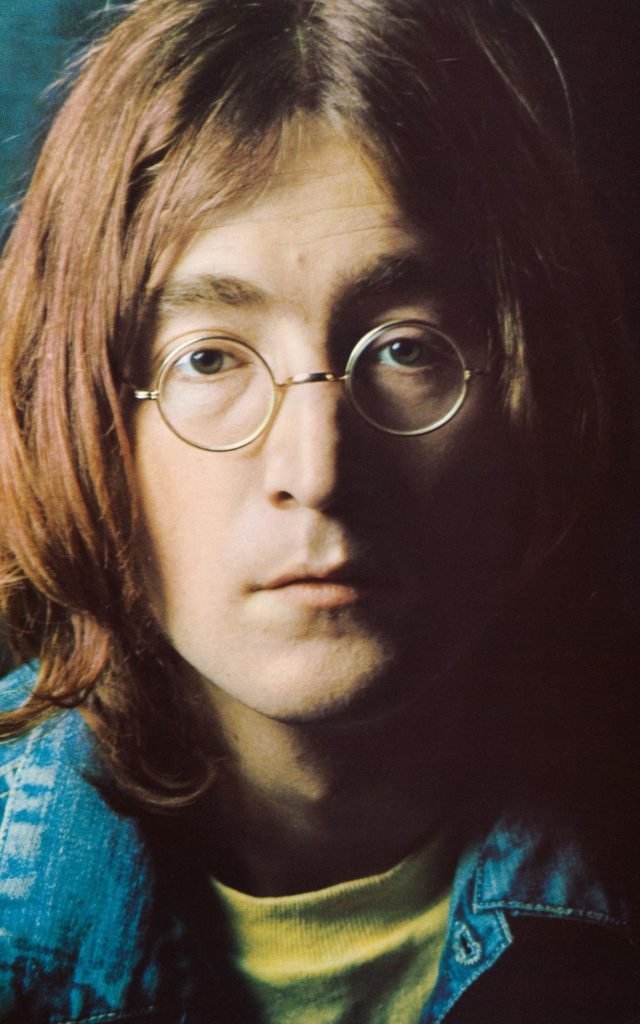
‘Life is what happens to you while you’re busy making other plans.’ — John Lennon (1940–1980), an English musician, singer, songwriter and peace activist, best known as a founding member of The Beatles, one of the most influential bands in music history.
The views expressed here are those of the writer and do not necessarily represent the views of the Sarawak Tribune. The writer can be reached at www.hayhenlin@gmail.com.