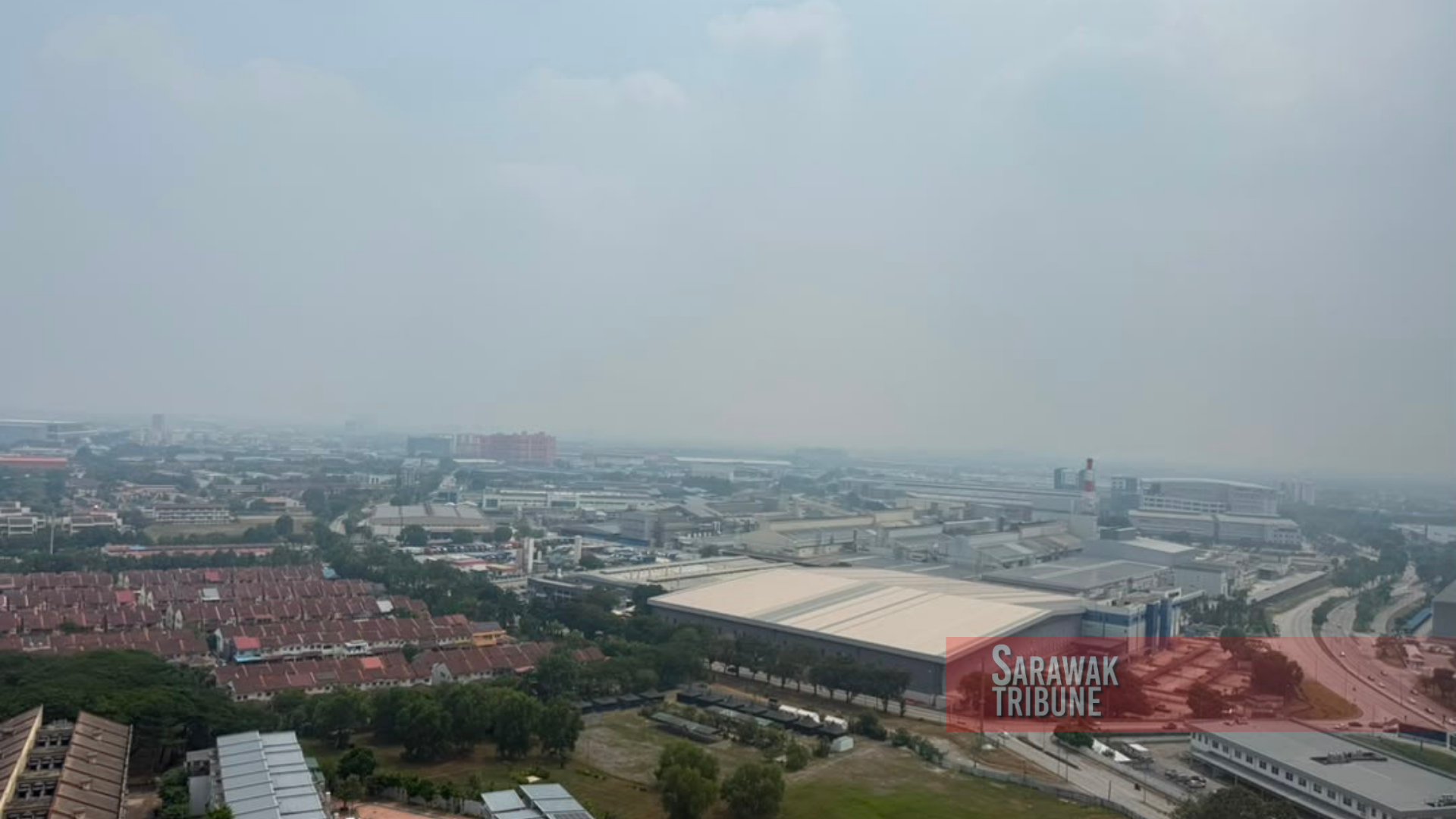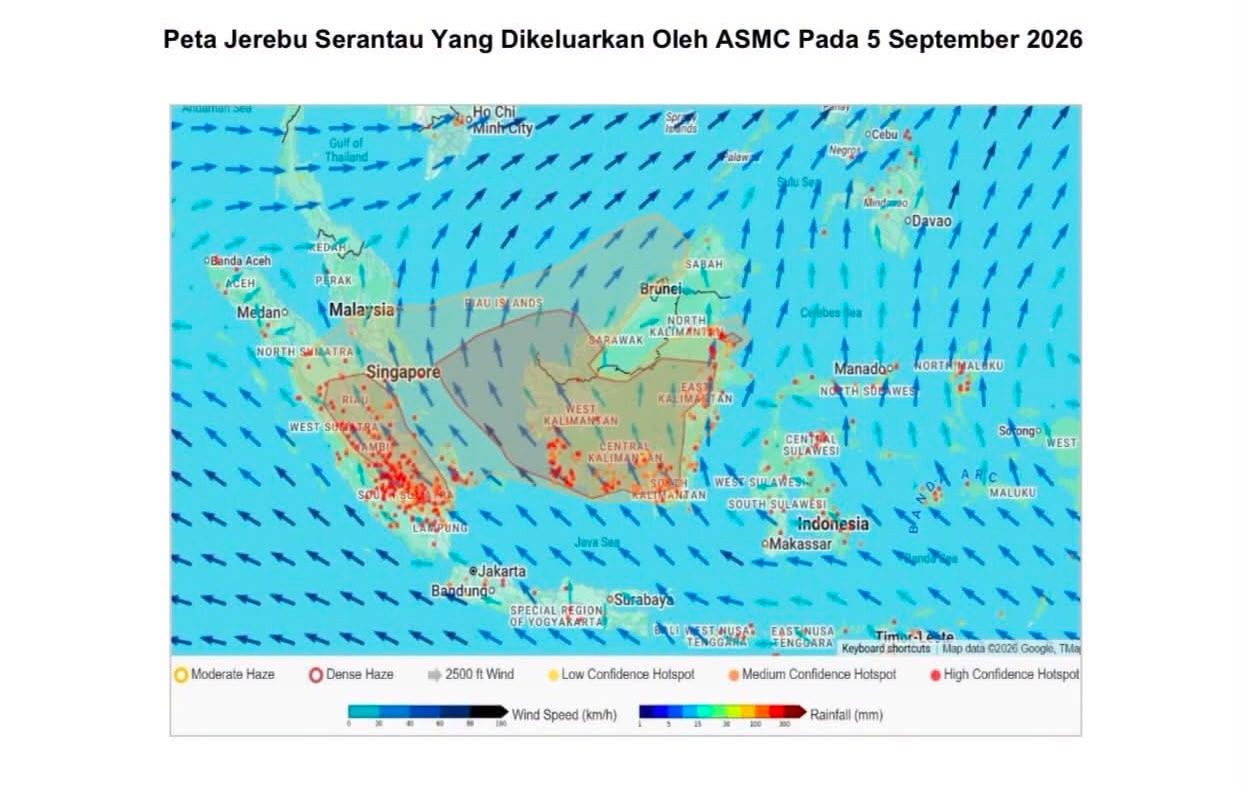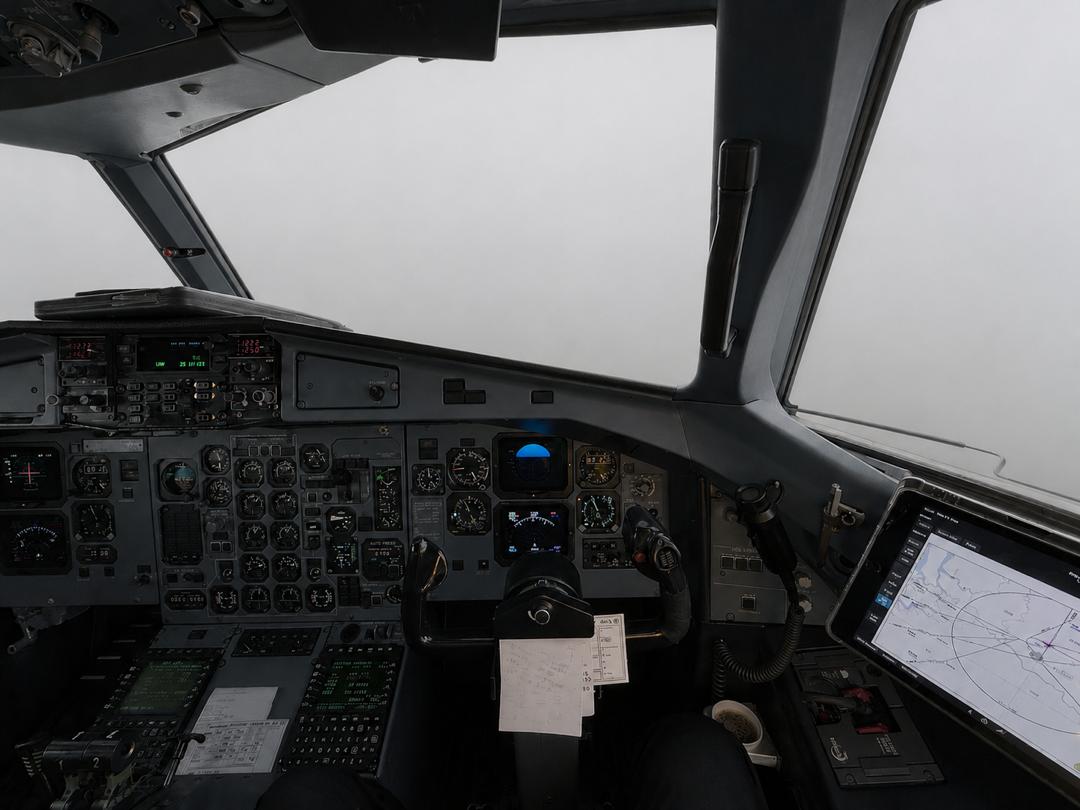
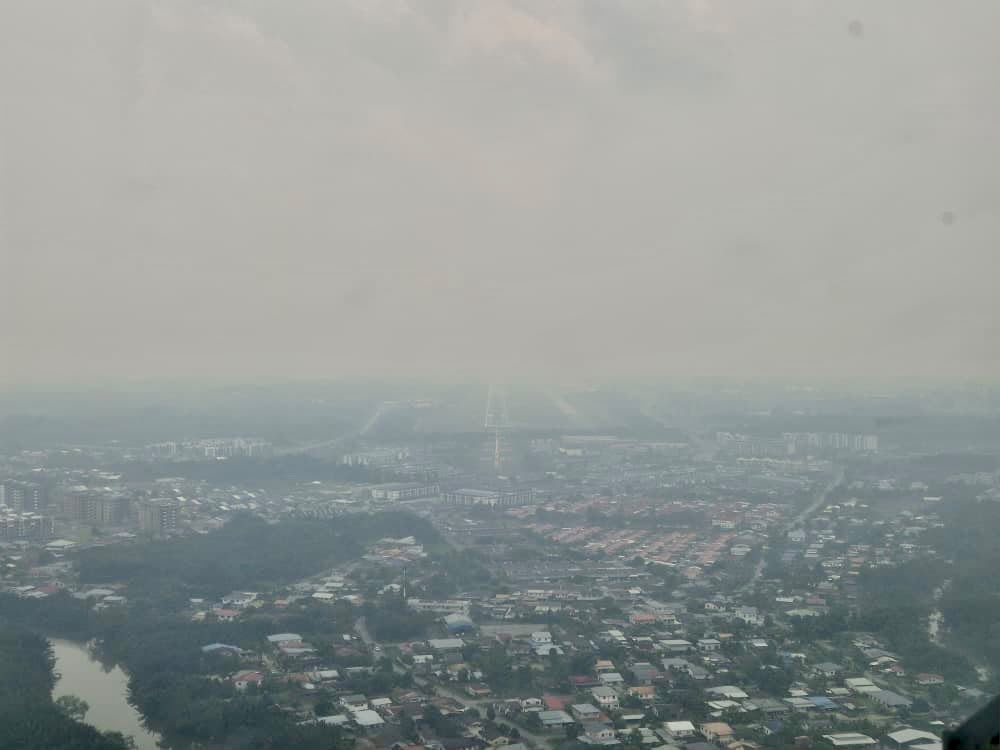
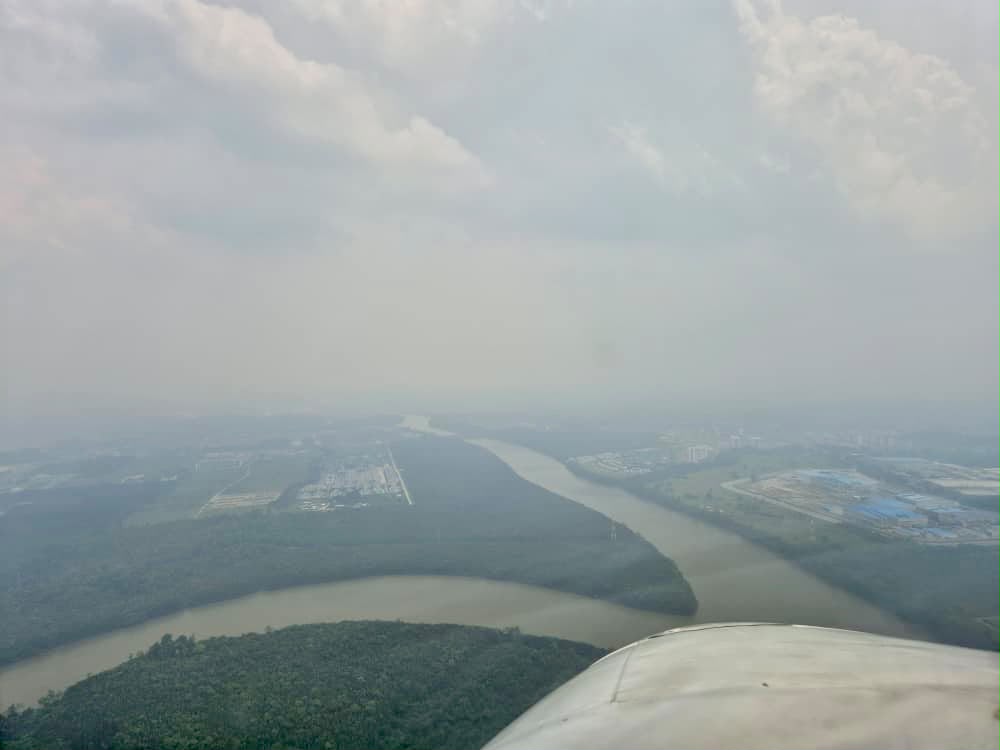
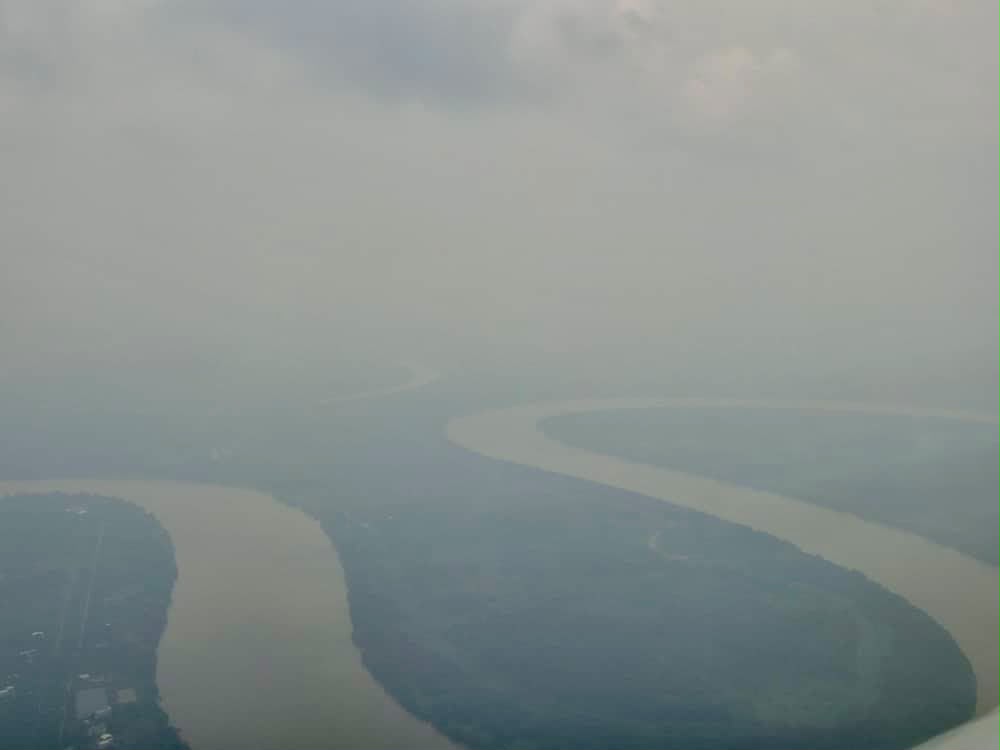
FROM a passenger seat, there is something unnerving about looking out of an aircraft window and seeing almost nothing below, as familiar landmarks disappear beneath a blanket of grey.
Behind the cockpit door where there is little room for uncertainty, pilots are relying on their instruments, training, procedures and each other to safely navigate conditions in which their eyes alone can no longer tell them everything they need to know.
For pilots Mohd Rozaimie Ramlie, 29, and Mohammad Azri Zahri, 33, flying through poor visibility is something they have been trained for repeatedly, yet neither pretends that experience makes them completely immune to the uneasiness that comes with approaching an airport obscured by thick haze.
Rozaimie said every landing presented a different set of circumstances and challenges, which meant pilots could never afford to become complacent simply because they had encountered similar conditions before.
“Every landing comes with a different experience and its own challenges,” he told Sarawak Tribune.
Azri shared the sentiment, saying any situation that reduced a pilot’s ability to see the runway naturally demanded greater attention, regardless of how long one had been flying.
“Of course, any situation that reduces our visibility of the runway can feel unsettling, regardless of how many years a pilot has been flying, but pilots are trained specifically to manage situations like this, and we follow established procedures and operating minima,” he said.
Long before the descent
For both men, safely navigating the haze begins long before passengers start peering through their windows in search of the ground, with much of the preparation already taking place before the aircraft leaves its departure airport.
Rozaimie said pilots closely monitored weather reports, particularly the Runway Visual Range (RVR), while working within the limits set out in their operations manuals and operational specifications, with potential problems and alternatives discussed before the aircraft even leaves the ground.
“Usually, we will conduct a pre-flight briefing where we discuss potential threats, weather conditions, the flight plan, fuel requirements and possible en-route diversions or alternate airports,” he said.
As the aircraft approaches its destination, that discussion becomes more specific.
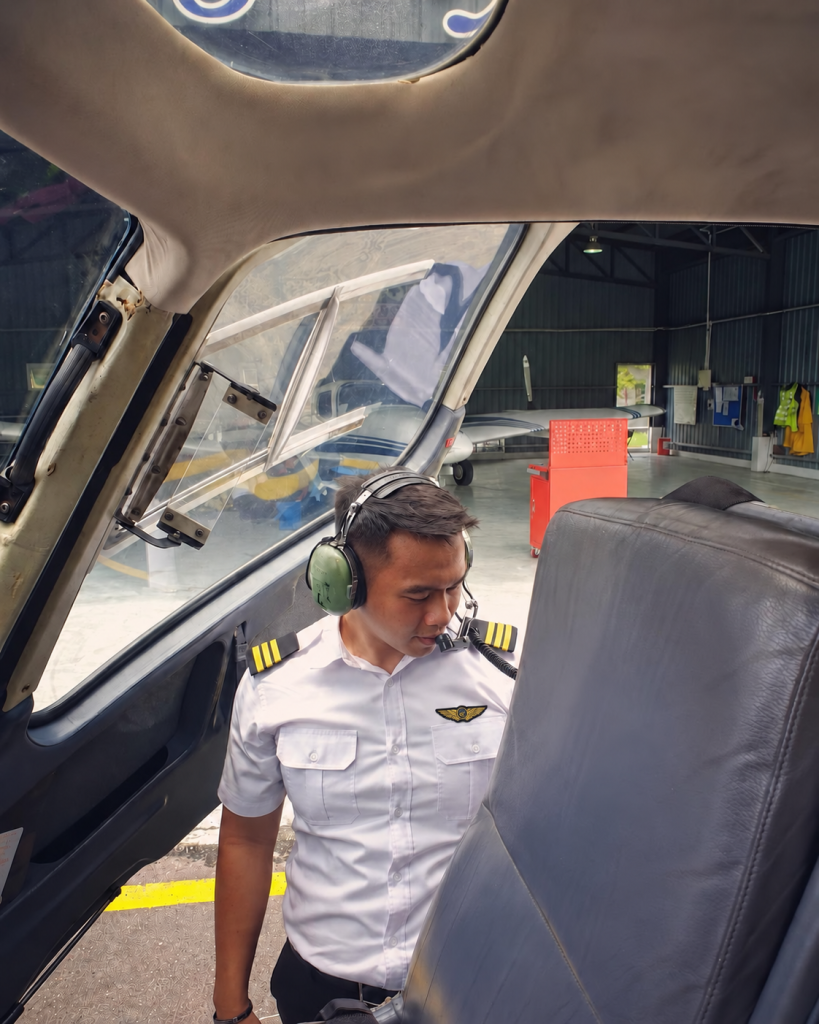
Rozaimie said pilots review the airport chart and determine the type of approach to be conducted while also preparing for the possibility that they may have to abandon the approach, enter a holding pattern or proceed elsewhere.
“For the descent, the crew will discuss the airport chart, the type of approach to be conducted and the plan if we need to go around or enter a holding pattern,” he said.
Azri said those decisions were also governed by established operating procedures and approach minima, which took into account the aircraft, equipment, airport facilities and applicable regulations, meaning there were clear limits on whether an approach could be continued.
“There are specific visibility requirements that determine whether an approach can be continued,” he said.
While a passenger looking outside may see little more than grey, however, Azri stressed that pilots were not simply searching through the haze and hoping for the runway to appear.
“Our navigation systems are our best friend. They tell us where we are and where we need to be,” he said.
Rozaimie agreed and explained that instrument-rated pilots were trained precisely for situations where visual references outside the aircraft became limited, allowing them to continue navigating safely using the information available inside the cockpit.
“Pilots will focus on the aircraft instruments as well as the airport and approach charts to safely navigate towards the runway during low-visibility operations,” he said.
‘One head down, one head out’
Having the technology and information available is only part of the equation, however, because safely managing an approach in poor visibility also depends on how the two pilots inside the cockpit work together.
Azri explained that duties were divided between the Pilot Flying (PF), who concentrates primarily on flying the aircraft and following the approach, and the Pilot Monitoring (PM), who monitors the aircraft, communicates with air traffic control and keeps track of information the other pilot may need.
As the aircraft gets closer to the runway, both pilots continuously compare what their instruments are telling them with whatever visual references remain outside, a principle he described simply as “one head down, one head out”.
“This means while one pilot focuses on the instruments, the other maintains a visual lookout, allowing both to maintain situational awareness when visibility is restricted,” he said.
For Rozaimie, that sharing of responsibilities becomes even more important during low-visibility operations because pilots are dealing with information from several sources at once, from weather conditions and aircraft instruments to approach charts and communication with air traffic control.
“It is also where training becomes critical. When visibility deteriorates there is less room for hesitation and pilots to know not only what the aircraft is doing at that moment but what their next course of action will be if conditions change,” he said.
Technology has undoubtedly expanded what is possible in poor visibility.
Rozaimie explained that modern navigation and flight systems could assist crews and reduce their workload.
He said some larger and more advanced aircraft were equipped with autoland systems capable of controlling the aircraft during the final approach and landing, provided the aircraft, airport and prevailing conditions met the required criteria.
“But technology does not remove the human element from the cockpit, nor does it mean pilots simply hand control over to the aircraft when they could not see clearly outside. We don’t rely solely on what we can see outside the cockpit.
“We continuously monitor the aircraft’s instruments, navigation information and the weather, and we make decisions based on established procedures and safety margins,” he said.
Sometimes, the safest decision is not to land
And sometimes, after all the preparation, monitoring and careful approach towards the runway, the safest decision is to climb away again.
For passengers, few moments can be as startling as feeling an aircraft that appeared moments away from touching down suddenly accelerate and climb back into the sky, particularly when the world outside is already obscured by haze, but for pilots, a go-around is neither a failure nor necessarily a sign that something has gone wrong.
Rozaimie said there were circumstances in which breaking off an approach was simply the better decision, particularly if the aircraft was no longer stabilised for landing.
“Breaking off an approach is a good decision if the approach is not stabilised rather than trying to continue with it,” he said.
Rozaimie said go-arounds, holding and diversions were all manoeuvres pilots trained for, although the decisions surrounding them could become more challenging when other factors, particularly remaining fuel, began limiting the options available to the crew.
“A go-around or diversion itself is not difficult to execute because these are manoeuvres we are trained for. The difficult judgement comes when your fuel is just above the minimum and your options become limited,” he said.
Azri has similarly experienced numerous occasions when an approach had to be discontinued.
He said passengers should take comfort rather than be alarmed by the fact that a pilot was willing to climb away and try again.
“I have experienced quite a few situations where we had to go around, which basically means discontinuing the approach and climbing away from the runway. While it may sound scary to some passengers, it is actually a normal procedure in aviation,” he said.
Such situations are repeatedly practised during simulator training so pilots are familiar with what needs to be done before they encounter the same circumstances in an actual flight, and Azri said the decision ultimately came back to one principle.
“The priority is always safety, and there is never any pressure to land if the conditions are not suitable,” he said.
Staying several steps ahead
Being trained for poor visibility, however, does not mean flying through it places no additional strain on those inside the cockpit.
Both Rozaimie and Azri acknowledged that the workload increases considerably when pilots have to monitor more information, maintain greater concentration and anticipate how conditions may develop.
Rozaimie said prolonged concentration could contribute to fatigue and stress, which was why pilots relied heavily on Crew Resource Management (CRM), ensuring tasks were properly divided and communication remained clear rather than allowing the burden of managing a difficult situation to fall on one person.
“By delegating tasks among the crew members, relying on our training and maintaining good CRM, it helps us remain calm while handling the aircraft,” he said.
The preparation carried out before and during the flight also meant pilots were not waiting for something to go wrong before deciding what to do, with alternatives such as holding, going around or diverting already considered should conditions deteriorate.
For Azri, that means thinking beyond what is happening at that particular moment and trying to anticipate what could happen several minutes later.
“I must say it does take a greater mental toll. Poor visibility means we have to monitor everything more closely and constantly anticipate what might happen next.
“We always try to stay four or five steps ahead and have a plan for different situations before they arise,” he said.
Azri said the ability to remain composed came from repeatedly practising difficult situations until the response became familiar even when the circumstances outside the cockpit were anything but.
“We remain calm because we are thoroughly trained for these kinds of situations. We practise them regularly, so when faced with a challenging situation, we know what to expect and how to respond,” he said.
The passengers behind the cockpit door
Yet amid the instruments, weather reports, approach charts and procedures, there is another consideration that never completely disappears from a pilot’s mind — the people sitting behind them.
They may be seasoned travellers who barely look up from their phones during the descent, nervous flyers gripping their armrests, parents travelling with young children or simply people trying to make their way home, but each has placed the same trust in the pilots sitting at the controls.
Azri said pilots were acutely aware of that responsibility, particularly during challenging conditions when passengers might be anxious because what they could see through the windows appeared far more worrying than what was actually happening inside the cockpit.
“Knowing that there are families, children and hundreds of passengers behind us is always in the back of our minds. It is a responsibility that we take very seriously,” he said.
Azri said what passengers see from their windows tells only a fraction of what is happening at the front of the aircraft.
“Even when the visibility outside looks worrying, there is a lot happening in the cockpit that passengers may not see. We are constantly monitoring the aircraft, the weather, our navigation and the situation ahead, while making sure we are following all the required procedures,” he said.
Rozaimie, meanwhile, offered a simple reassurance to passengers who might find themselves becoming anxious when the familiar landscape disappears and all they can see outside is grey.
“Pilots are well trained for these kinds of conditions, and newer aircraft are capable of autoland even in very poor visibility. Just sit back, relax and enjoy the flight,” he said.
Someone is waiting for them, too
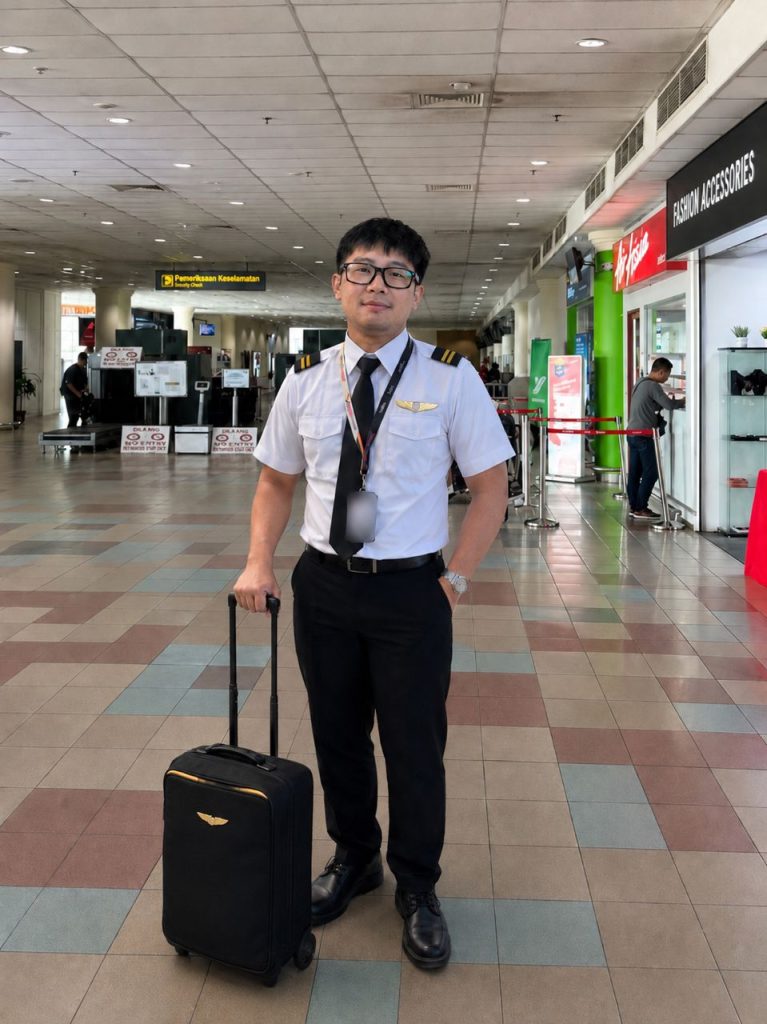
Perhaps what passengers rarely think about when they see a pilot walking through the terminal in uniform is that the person about to take responsibility for bringing them safely to their destination also has someone waiting for him to return.
For Rozaimie, his family naturally worries when they know he is flying through severe haze or poor visibility, but he reassures them by explaining that the decisions made in the cockpit are governed by procedures designed precisely to keep the aircraft, its passengers and crew safe.
“I always tell them that we have our operations manual as a guideline to keep us safe throughout the flight. As long as we operate within the standard operating procedures, those procedures are there to keep me safe,” he said.
It is much the same for Azri, whose family also worries when the skies turn grey and he still has to go to work.
He said he always reminded them that pilots did not take unnecessary risks and that there were clear limits governing what they could and could not do.
“Of course my family does worry, especially during this severe hazy weather. I think that is natural when someone you love is flying in those conditions.
“If the conditions are not suitable for landing, we have options such as going around, holding or diverting,” he said.
For Rozaimie, following procedures is what allows him to reassure those waiting at home that challenging conditions do not mean unnecessary risks are being taken, while for Azri, the reason safety remains non-negotiable is ultimately much more personal than any operations manual.
“At the end of the day, just like they want me to come home safely, that is exactly what I want too. That is why safety will always come before anything else,” he said.
For passengers looking through an aircraft window into a wall of grey, it can be easy to imagine the people at the controls as somehow untouched by the uncertainty that comes with poor visibility.
However, pilots do feel the increased pressure as they carry the responsibility of those travelling behind them and know that somewhere on the ground, somebody is waiting for them as well.
The difference is that when the runway disappears from sight, their training takes over — trust the instruments, trust the person sitting beside you, stay several steps ahead and, when conditions demand it, have the discipline to climb away rather than force a landing.
Because whether seated in the cabin or at the controls, everyone aboard ultimately wants the same thing — to make it home safely.